1800doorbell

Category: Door Chime Resources Blog

  • Wired Vs. Wireless Doorbells – What’s the Difference?

    Wired Vs. Wireless Doorbells – What’s the Difference?

    Door Chimes, Doorbells, Entrance Alert, & Panic Notification Products for Employee & Customer Safety, Please Note:

    For businesses, warehouses, manufacturing facilities, hospitals, and other facilities that need products to notify you when a visitor arrives, or other entrance alert products, please visit our business door chime products page.

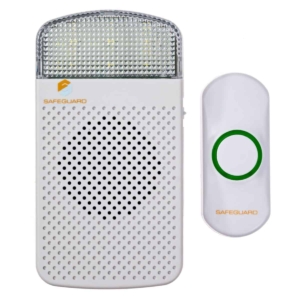
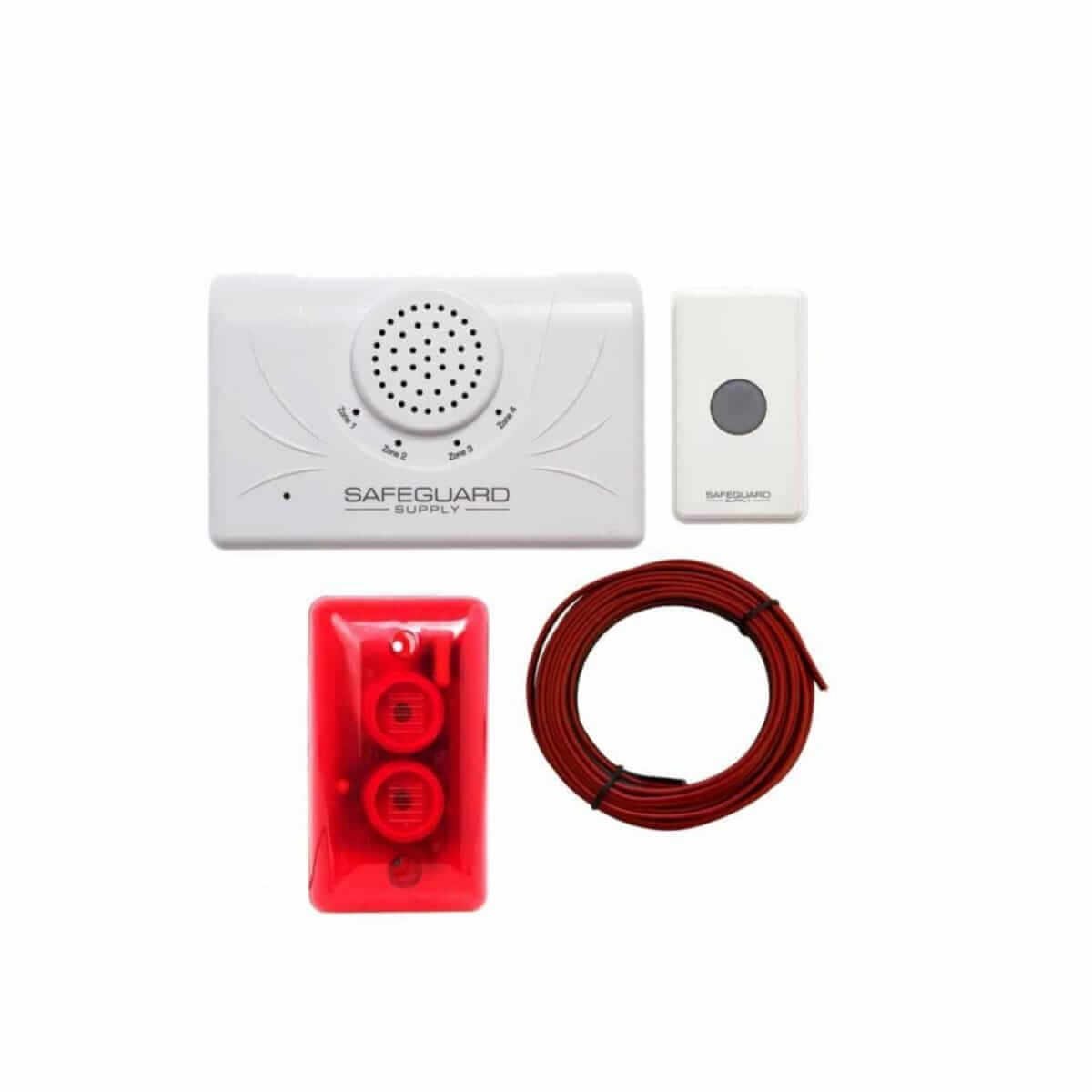
    We recommend the ERA products by Safeguard Supply for their long-range capability, reliability, ability to add multiple sensors and receivers, and ability to add accessories such as strobe lights, sirens, and more.

    If you need a new doorbell for your home or business, the easiest path for you would be to choose wireless. However, the majority of homes do have existing wiring for a doorbell, even if it no longer works. Often, you can use the existing wiring and add a new doorbell button and indoor speaker.

    If your home is already wired to include a doorbell or is just being built, you’re in a true either/or situation. You can just make your choice about wireless vs. hardwired doorbells based on whether you like the features and flexibility of a wireless doorbell. Or you may decide that you prefer the large selection of decorative doorbell styles available for hard-wired doorbells, allowing you to complement your home’s décor perfectly.

    Wireless doorbells have more features, but fewer designer options. Many wireless doorbells offer functional plain white or beige components, with a few more elaborate designer styles. If you choose a hard-wired doorbell, however, you will find lots more designer choices. Looks range from retro brushed steel to ornate, antique metallic scroll designs to sleek, polished wood doorbell covers.

    What’s Good About Wireless Doorbells?

    Affordable and versatile, battery-operated wireless doorbells can be placed almost anywhere and take just minutes to install. Radio waves connect the transmitter (the outdoor button or buttons) to the receiver (the bell or speaker inside the house). This renders physical electrical wiring unnecessary. Here are some of the advantages of wireless doorbell technology:

    • Versatility: It’s simple to move the location of a wireless doorbell to better fit your home’s layout.
    • No changes to the house are required: Some people would rather not drill holes in their walls (although they are very small holes) and run wiring. No holes are needed for a wireless doorbell.

    Simple installation: The transmitter button can simply be attached to the wall with the adhesive strip on the back of the unit. The indoor receiver may plug into the wall or run on batteries.

    • Range is sufficient for most homes: The range of wireless doorbells has been improved to the point that the radio signals, transmitted from the front porch doorbell button to the indoor receiver can be heard throughout the entire house. Signal ranges vary from 150 feet up to 1000 feet.
    • Extenders are available: If you have a large home, extenders (additional receivers) are available to relay the doorbell signal for a larger property. There are also portable receivers that you can take with you. These are handy if you’re working in the backyard or garage.
    • Multiple channel operation: With this feature, your wireless doorbell avoids interference from a neighbor’s doorbell. If your bell is sounding when the neighbors have a visitor, simply change the frequency of your doorbell to another channel.

    Battery-powered with long-life batteries: The transmitter buttons are typically powered by long-life lithium batteries, which are usually supplied with the transmitter. The receivers inside the home may plug right into a wall outlet – or may be run by batteries. (These batteries are not usually supplied.) Most wireless doorbells will operate for up to 2 years before battery replacement is needed.
    Chime variety: If you’d like to have the option to change the doorbell tone, tune, or melody, many wireless doorbells offer several choices – some even offer 50-plus. This multi-tone capability is also helpful if you want to use multiple doorbell buttons, for instance, front door, back door, side door, etc. You can assign a different tune to each door.
    Advanced features: Some wireless doorbells offer security and convenience options like intercoms, motion detectors, and/or window sensors. Some models offer a visual signal – a flashing light – along with (or instead of) the audible doorbell. These audible and flashing light doorbells work well for the hearing impaired. The visual signal is also handy for a business where the noise level would prevent you from hearing a doorbell.

    Wired Doorbell Advantages

    • More decorative options: Many wireless doorbells offer purely functional plain white or beige components and also offer some designs that are more ornate to match your décor. If you choose a hard-wired doorbell, you will find more designer choices. Looks range from retro brushed steel to ornate, antique metallic scroll designs to sleek wood doorbell covers and more.
    • Pricing is about the same: As wireless models.
    • Fairly easy to install: Since your home may have most of the wiring already.
    • Can accommodate a lighted push-button: If your doorbell is completely hard-wired with no batteries to run down, a lighted button will usually work. With a wireless doorbell or any battery-operated doorbell, a lighted button would burn through the batteries too quickly to be practical.
    • No concerns about interference or range: The hardwired system can have a range as long as you have wires to support it. There are no signals transmitted over the air, so no interference. (Although wireless systems have options to eliminate these issues.)
    • More traditional chimes: For those who prefer the classic doorbell chime tones with rich symphonic sound over whimsical sound options – and those who would never want to change the sounds anyway, hard-wired doorbells work great. You do generally get a unique front door and back door chime sound with a wired doorbell, that’s enough for many homeowners.

    How is a Hard-Wired Doorbell Installed?

    If you decide you’d like a wired doorbell, electrical wiring must be fed through or run along your walls. Holes must be drilled. Doorbell buttons must be mounted outdoors. Indoors, a speaker or speakers must be mounted and wired to run between them and the button outdoors. (Much of this doorbell wiring may already exist in your home.)
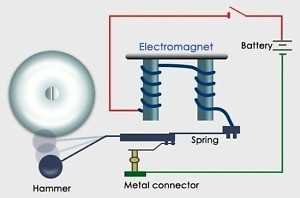
    wired doorbell with buzzer attached

    The doorbell wiring must then be wired into a transformer near your circuit breaker box to make sure the right amount of voltage goes to the doorbell. A transformer may sound like a big deal, but they’re often in the $20 range and available right here at 1800Doorbell. On our website, you can purchase your favorite doorbell and any add-ons or upgrades for security or motion sensing. Once your hard-wired doorbell is installed, it can’t be moved or extended without running more wire and drilling more holes.

    Now for the Difficult Choices: Doorbell Styles, Security Features, and Options

    Once you decide which you prefer in the wireless vs. wired doorbell dilemma, now you have some more difficult decisions to make and options to Ch2401 UO Unfinished Wood Wired Doorbellchoose from. When choosing a wireless doorbell, you can select models with a variety of safety and convenience features. You can purchase wireless doorbells that offer many different sound options. You can use a different sound for each door and change the doorbell tunes (or sound effects) to celebrate holidays or just for fun.

    If you’re going with a hard-wired doorbell, you have a large selection of styles to choose from to fit any décor: from traditional to contemporary to vintage and more. You might choose a hard-wired brushed-nickel contemporary doorbell, a doorbell with a handcrafted wood design, or another style.

    Get Professional Advice and Support from secure.1800doorbell.com

    When you need a wireless or hard-wired doorbell, look no further than 1800Doorbell.com. Please browse through our huge selection of doorbells and accessories. Order online nationwide! If you have questions, just call our toll-free number: 1-800-DOORBELL (366-7235). One of our trained doorbell experts can help you with your decision or answer any questions about products, features, and installation. Or, send us an email and we can help you with your choices that way too!
  • Entrance Alerts and Driveway Alarm Receiver Sounds

    Entrance Alerts and Driveway Alarm Receiver Sounds

    Entrance Alerts, Exit Alarms, and Driveway Alert Receiver Sounds

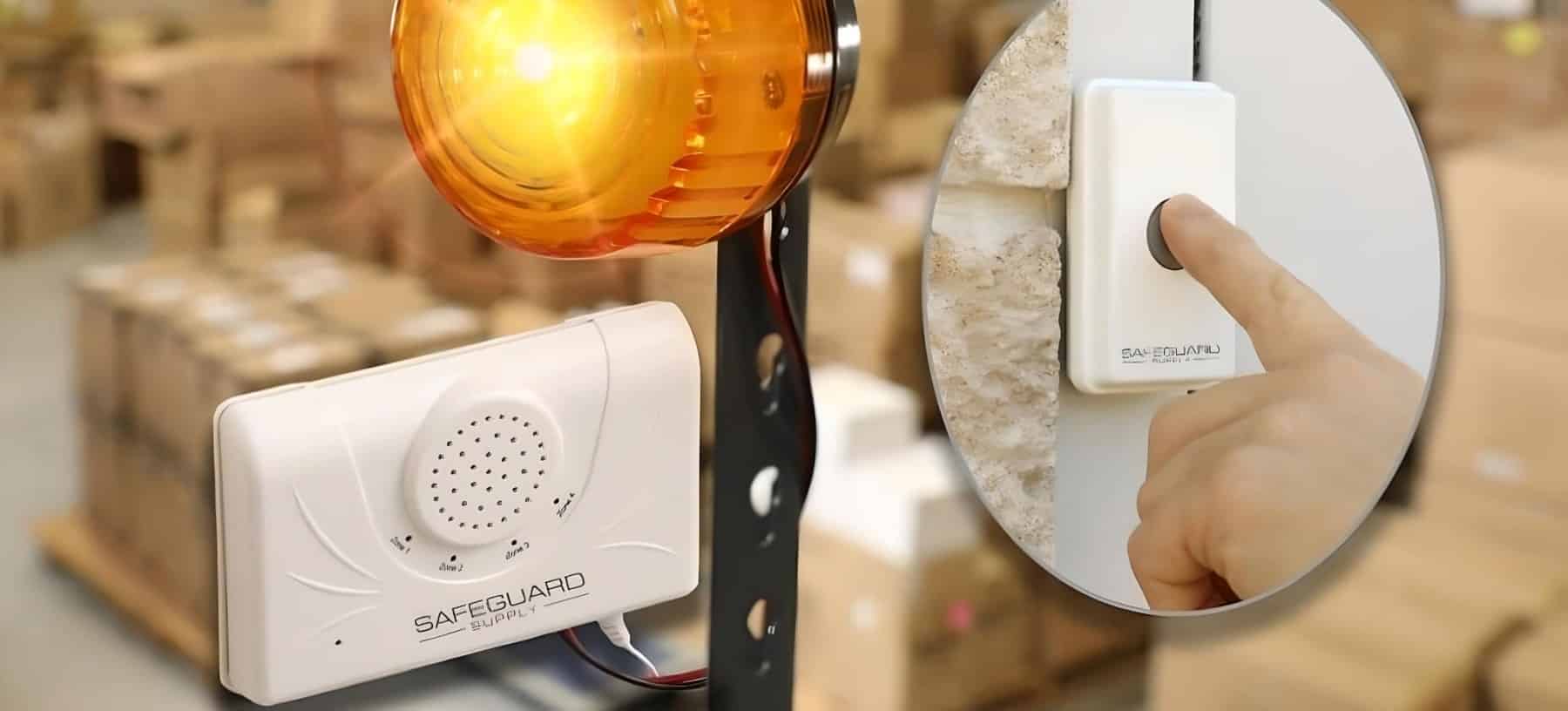
    On this page, you will find a collection of sounds and/or melodies played by the different driveway alarms, entry alerts, and exit devices we carry on secure.1800doorbell.com.  We are continuing to build this list so if you want to hear a particular sound and it isn’t here, please check back as we are adding more sounds all the time.

    If you have visited a similar page on our website, Door Chime Receiver Sounds, you might have noticed that many of the sounds found on that page are also on this page.  That’s because the same receiver (where the sound comes out) might be the same receiver in a door chime kit and an entrance alert kit.  For example, the LRA-D1000 is a wireless door chime kit, while the LRA-C1000 is an entrance alert kit.  Both kits feature the same receiver, the LRA-DCRX.

    What are Driveway Alarms, Entrance Alerts, and Exit Alarms anyway?

    Before we get into the different sounds the receivers play, it’s important to understand what an entrance alert, driveway alarm, and exit alarm are.  Let me start by saying that in most cases the same product or kit may be used as an entry alert or exit alarm, it just depends on how you want to use them.
    Entrance (entry) Alert (Alarm):  These types of devices alert you when someone enters or passes through a monitor zone.  For example, you have a showroom and want to receive an instant alert when someone enters the showroom.  You might be busy in the office, but as soon as the door opens, an alert is triggered, alerting you that someone has opened the front door.

    Another example may be the sensor on the front door of your gas station/convenience store.  You could be stocking the cooler and need to know when a new customer enters the store.  There are a variety of different sensors to choose from and the decision comes down to what the entrance is like that you would like to monitor.

    Driveway Alarms: The idea is similar to that of an entrance alert, but in this case, you want to be alerted when a car enters your driveway or passes through a monitored zone.  For driveway alarms, the sensor/transmitter needs to be outdoor rated and is typically mounted at or near the driveway or other outdoor entrances.  When a car passes through a monitored zone, the sensor triggers and transmits a wireless signal to the receiver, thus alerting you that an automobile has entered your driveway.

    Exit Alarms: The opposite of entrance alerts, whereas you want an alert when someone exits an area.  A good example of this might be an emergency exit lock on a door.  If that door is opened, you want to know because it was either a) an unauthorized exit, or b) an emergency.  It is easy to imagine how the same products can serve dual roles.  The same entrance alert may tell you when someone enters your store, but also alert you when someone leaves.

    LRA Series of Long Range Entrance Alerts and Driveway Alarm

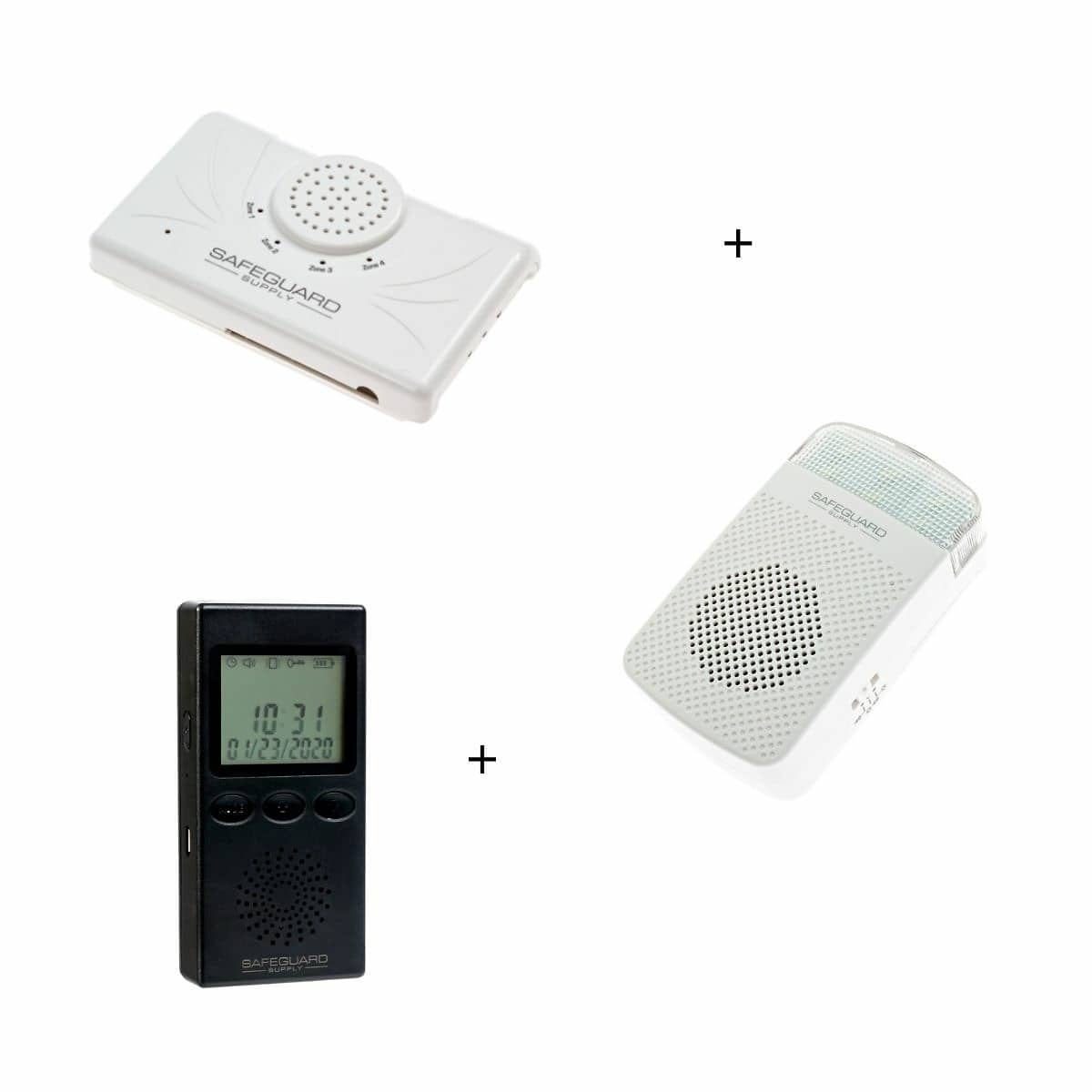
    There are currently two different receiver features in the LRA series of products.  The LRA-DCRX is a battery-operated (plugin is available) desktop or wall-hanging receiver.  The LRA-VPRX is a portable receiver.  Each of these receivers has four different zones, allowing you to pair a transmitter (push button, motion sensor, etc.) to each zone and each zone will have a unique sound associated with that zone.
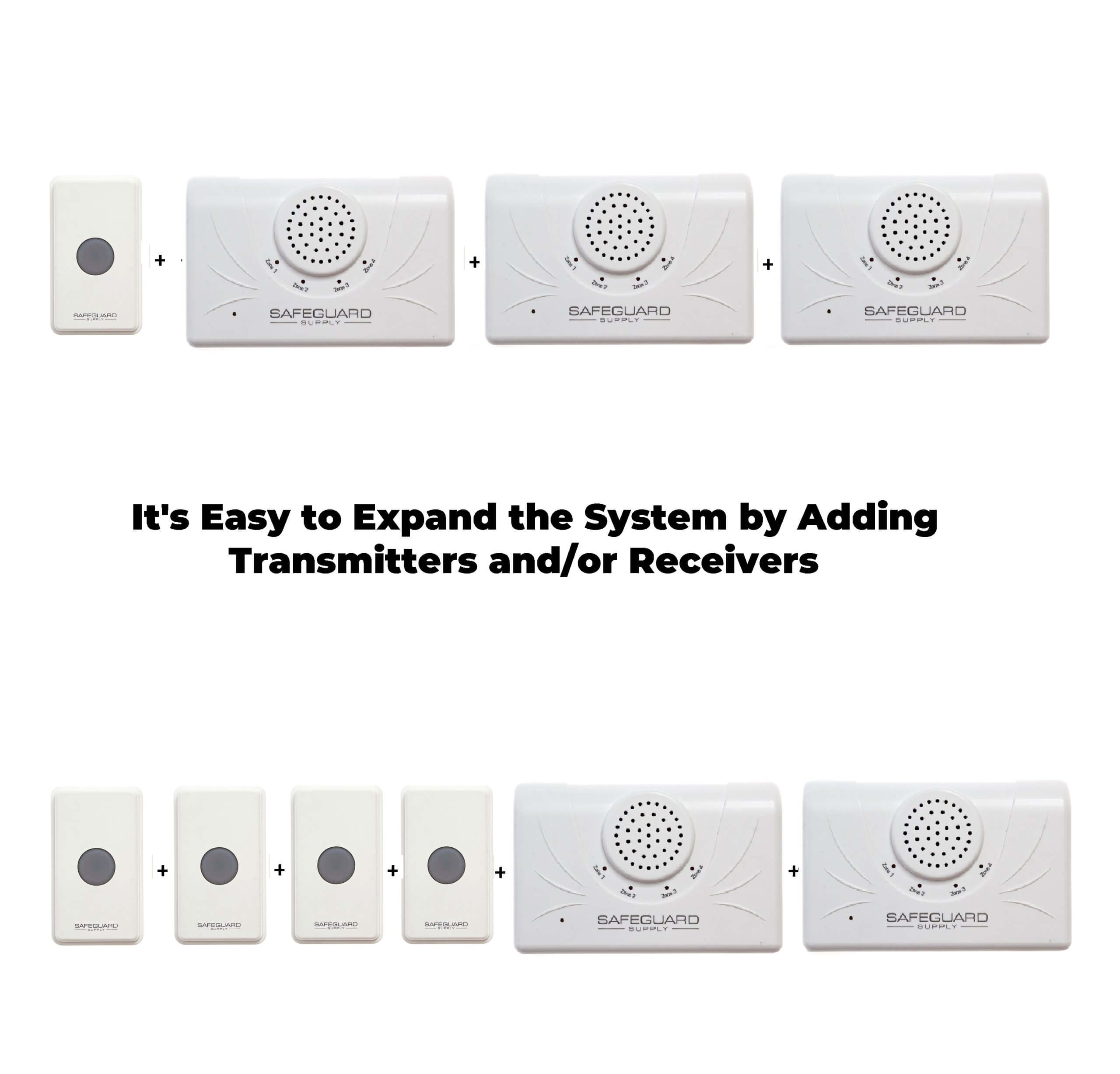
    Below are three kits in the LRA series of products, along with the receivers that play these sounds.  The fact that all the products in the LRA series are compatible with one another means you can have multiple receivers, as well as multiple transmitters/sensors.

  • Get Creative! The Most Interesting Doorbell Ideas…Ever
    Get Creative! The Most Interesting Doorbell Ideas…Ever

    Creative Uses for Versatile Doorbell Components

    If any of the following problems sound familiar, let us help you plan a doorbell setup to fit your unique needs!

    Doorbell Buzzers: To Call Out the Bears

    WDK-ERA-SS Doorbell Kit for Warehouse With Very Loud Siren at 115 dBA
    WDK-ERA-SIREN Commercial Doorbell Kit with Loud Siren

    PROBLEM: Zoo doorbell needed for bear training! A customer from a zoo wanted to train the polar bears to come out into public view in their exhibit area at the sound of a buzzer.

    This customer used the ERA-UTDCR long-range wireless doorbell kit, with the DH920 buzzer wired into the ‘C’ relays on the back of the receiver. The push-button was mounted outside the cage. The buzzer receiver was placed inside the cage. When pushed, the push button triggered a wireless signal sent to the receiver, activating the buzzer sound.

    Driveway Alarms: Help to Protect Your Property Fence Line – and Your Cattle

    Driveway Informer Di2000s

    PROBLEM: Darned cows breaking through the fence line and wandering off!

    • 1800DOORBELL SOLUTION: The rancher used the Di2000S-A Driveway Informer at each corner of the fence line where his cows were kept. When wandering cows passed the fence line, the driveway alarm receiver was triggered to warn the ranch hands. No more lost cows!

    Entrance Alerts: Help Protect a Family Member with Dementia

    • PROBLEM: Dad keeps wandering off in the night. A woman had an elderly parent (father) with dementia living with her family. Believe it or not, her dad opened his window one night and crawled out in his pajamas. The next morning the police called from a nearby city. Dad had walked miles to a train station and was trying to go somewhere.
    • 1800DOORBELL SOLUTION: The LRA-C1000 Long Range Entry Alert w/ Strobe – in this case, used as an EXIT alert. The alert device was installed over the door of the elderly dad’s bedroom and exterior windows. If the windows were opened, a chime sound would generate from the receiver, alerting the family that Dad is taking a midnight stroll – giving the family time to head him off and keep him safe.

    Special Doorbells for Special Needs

    Helpful resources for your unique needs:

    When you need a creative and interesting doorbell for a unique purpose, contact us at 1800Doorbell.com. Browse our site for ideas or give us a call for some creative brainstorming! We will help you find the doorbell or driveway alarm you need. Call us today!

  • Choosing the Range of Your Wireless Door Chime

    Choosing the Range of Your Wireless Door Chime

    sending smoke signals as a doorbell notification
    • What is “wireless range”
    • The “published range” versus the actual range
    • Factors that interfere with the range
    • Tips on improving range

    What is Wireless Range When it Comes to Door Chimes?

    When talking about wireless door chimes, entrance alerts, and driveway alarms, the wireless range of products is defined as the distance, usually in feet, from the transmitter to the receiver. Doorbell transmitters are the pieces in a kit that will generate and send a wireless signal to the receiver.  For door chimes, transmitters are the push button, the part a visitor presses when they ring your doorbell. For entry alerts and driveway alarms, the transmitters are built-in with a motion, magnetometer, or contact-based sensor.  When these sensors are triggered, the transmitter sends a signal to the receiver. Door chime receivers are battery-operated or plugin units that receive the transmitted signal and play a tune, tone, melody, or other doorbell sounds.

    The Published Range vs. the Actual Range of Wireless Products

    When manufacturers publish the wireless range of products, they have to use a standardized way to determine the range.  For testing purposes, they use line of sight, which is essentially the unobstructed distance in a straight line, usually determined in a lab environment. Although this isn’t how consumers will use the products, it’s the easiest way to ensure manufacturers are measuring the range the same way this gives an apples-to-apples comparison.  In most situations there will be at least one wall between the doorbell transmitter and the receiver, but if manufacturers published ranges this way, how would you know if it was a brick wall, or a thinner, dry-wall constructed wall? How does this affect your decision?  If the distance from the doorbell button to the receiver is 150 ft., and you purchase a common wireless door chime kit with a published range of 150ft., chances are you will have reliability issues.  On the other hand, if the published range of a kit is 75ft., but you only need 20ft., chances are you won’t have any issues.

    Factors That Interfere with Wireless Door Chime Range

    • walls
    • building materials
    • mounting material you mount the transmitter on
    • surrounding environmental factors
    • other wireless devices

    Walls Will Reduce the Range of Your Wireless Device

    The most obvious factor that will interfere with the range of a system is a wall.  The type of material the wall is made of will play more of a factor.  The general rule of thumb is that each wall a signal passes through will diminish the signal by 20%.  For example, if you have a sensor at the driveway entrance with a receiver plugged into an outlet in a room adjacent to the exterior of your home, that’s one wall the signal needs to penetrate.  If the product has a published range of 1,000 ft., one wall takes the range down to 800ft.  If the receiver is behind another wall, even an interior wall, the signal will diminish by another 20%.  Another 20% off 800ft. is now 640ft.  If the wall is solid concrete, you need to take 30%-40% off, steel, 50% off.  These numbers are not set in stone, but they do provide a general idea of how signals are diminished. I took a call yesterday from a lady who purchased the Carlon Wireless Kit, RC3250.  She wanted to mount the wireless doorbell button on a wrought-iron gate.  She called and said sometimes the doorbell would ring and sometimes it wouldn’t.  I asked how far it was from the doorbell button to the receiver and she said it was less than 100ft., therefore the product should work as advertised. Ultimately, the problem was the range.  Not only was the exterior wall of her home stucco, which automatically reduced the signal by 30ft. (taking it down to 120ft.), the push-button was mounted against a solid wrought-iron gate, another factor to consider.

    The Mounting Surface Matters

    The fact that these transmitters are wireless poses another issue to consider and that’s what you mount it against.   When triggered, the transmitters emit a wireless signal that the receiver needs to pick up.  When metal is directly under the product, problems occur because the wireless signal will bounce off the metal.  Weaker signals will lose a tremendous amount of range due to this bouncing around, while stronger signals will not be as effective. In the case above with the wrought-iron gate, we were already stretched to the max because of distance, and exterior wall material, the metal right up against the transmitter was too much for this system to handle. This is why we typically recommend commercial applications purchase a motion-based entrance alert versus a door/window contact entrance alert.  Door/window entrance alerts sit right up against the door frame, which is usually metallic in commercial applications.  A motion sensor sits a few inches away from the metallic frame, which is usually enough for the wireless signal to emit uninterrupted.

     Surrounding Environment and Other Wireless Devices

    Other environmental factors will play a role in the effective range of your wireless device, however, under normal circumstances, they are not as important as walls and mounting surfaces.  When I refer to environmental factors I am talking about any outdoor elements that could interfere.  Trees, hills, rocks, etc. will play a role, but in many cases, there are easier ways to overcome these obstacles than dealing with unmovable factors like walls. Trees between the receiver and transmitter won’t play a major role unless it is an extremely heavily treed area.  Hills and valleys should not play a major role unless there is a huge dirt hill right next to the transmitter. Neighboring wireless devices could also cause some interference, but privacy codes help alleviate this problem.  Simple adjustments to the privacy codes on your doorbell will usually eliminate this issue.  We have an entire article that covers this topic here: How to Avoid Doorbell Interference by Changing your Privacy Codes.

    Tips On Improving Wireless Range

    In most cases, there are some basic things you can do to ensure you are getting the maximum range of your product.  These tips won’t work in every case, but when making your decision on what product to purchase, or deciding if you need to return your product, think about these tips and see if they work.

    1) Make sure the product you have is within the published range of the product.  I know this sounds simple, but in many cases, this isn’t something people think about.  If the distance from the doorbell button to the receiver is 100ft., don’t get a doorbell kit with a range of 75 ft. Our driveway alarm systems are available with a variety of wireless ranges.  If you know the distance from where you place the sensor to where you place the sensor is 600ft., I would not go with a product like the WMA-3000 which has a range of 650 ft.  I would get a product like the Di2000S-A Driveway Alarm with a range of up to 1,000 ft.  Another option would be to move the sensor closer to your home or try to move the receiver to the closest exterior wall facing the sensor.

    2) Place your receivers closer to a window or wooden exterior wall.  I would recommend upgrading your system to a stronger one, but if the range is close (when considering interference) then simply placing your receiver closer to an exterior window of your home might do the trick.  The only caveat to this is making sure it is an exterior window or wall.  If your home is brick, for example, it is easier for the signal to penetrate glass than brick.

    3) Moving the transmitter off a metallic surface is another tip to consider.  If you want a wireless doorbell system but the door frame, we recommend placing a wooden shim in between the push button transmitter and the surface.  A thin piece of wood should do the trick.  By doing this, it lifts the transmitter from the surface giving the wireless signal just enough room to escape the interference from the metal.  Many users who have screen doors face this problem and in almost every case, wood, or even a piece of cardboard helps.

    4) Get a High Powered Wireless Doorbell. Unless you are trying to install a wireless doorbell system where the receiver is inside a solid concrete enclosure (like a bomb shelter) a higher-powered doorbell system will often do the trick. Here are the top two long-range wireless door chime systems that we carry.

    choosing-range-wireless-door-chime
    License: Creative Commons

    The LRA-D1000 is the most popular long-range system that we carry.  With a published range of up to 1,000 ft. from the push button to the receiver, this product usually has more than enough range to get the job done.  The kit ships with one battery-powered receiver (optional plug-in receiver sold separately) and one push button.  Additional buttons are also available. This product will play several different melodies and also have visual indicators, one that flashes an LED strobe and one that flashes a Roman Numeral that corresponds to the zone the transmitter is associated with.

    The ERA-UTDCR Commercial Door Chime System – our most powerful door chime system with a published range of up to 4,000 feet!  This kit ships with one push button and one receiver.  This system uses a “universal transmitter” the ERA-UTX that may be used as a push-button OR a door/window contact.  It communicates with the ERA-DCRX plug-in receiver. This transmitter is great because of its versatility.  This transmitter is great because of its versatility.  Another great feature of the ERA-UTX is the NO and NC inputs that allow you to integrate it with other devices.  For example, you could wire a decorative wired doorbell button to the transmitter and when the wired button is pressed, the wireless transmitters send a signal to the receiver.   The receiver is expandable and has four different tones it plays.   It is also compatible with additional receivers, and other types of sensors like motion sensors, door/window contacts, and magnetometer sensors.


    We hope this article provided you with a basic understanding of wireless transmission ranges as published by manufacturers.  These principles will hold when evaluating the range for just about any wireless product. For more information about this topic, our products, or anything else, please feel free to contact us.

  • Top 10 Most Decorative Doorbell Chime Covers & Buttons

    Top 10 Most Decorative Doorbell Chime Covers & Buttons


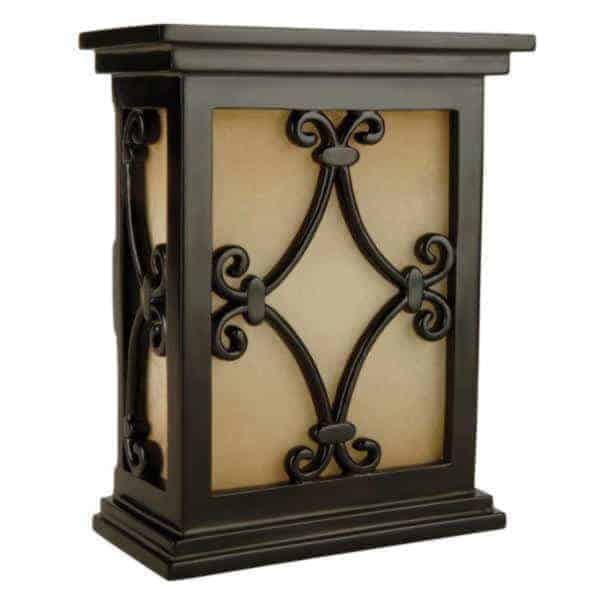
    1. Hard Carved Scroll Doorbell with Tea Stained Glass Model CH1515

    Hand Carved Scroll Doorbell With Tea Stained Glass Ch1515 Bk V 1 1

    This lovely Craftmade decorative style doesn’t look like a doorbell at all. It could be just another piece of designer décor in your home. The hand-carved cover has a matte black scrolled finish over the tea-stained glass. This timeless design will complement contemporary furnishings, as well as more traditional home décor.

    Inside the stylish cover, when you buy the unit from 1-800doorbell.com, is one of the finest wireless door chimes available. Manufactured by Carlon, the inner workings come from one of the leading names in doorbell engineering. With this pairing of technology and beauty, you’ll also enjoy performance and ease of installation.

    • Height 10″ x Width 7″ x Depth 4″


    2. Old World Artesian Wired Design Is Elegant and Rustic Model CAB-RC

    CAB-RC Hand Carved Scroll-Work Box Cover with Renaissance Crackle Finish by Craftmade

    This ornate, scrolled resin design is finished with a hand-painted and distressed crackle finish for an ancient look. This chime sounds as awesome as it looks, and is truly a functioning work of art. Hang this versatile design vertically or horizontally to coordinate with your décor. A two-note chime alerts you of a visitor at the front door and a single note for the back door or secondary door.

    • Manufactured by Craftmade
    • Height 6.75″ x Width 8.50″ x Depth 2.50″
    • 1-year manufacturer’s warranty

    3. Pewter Framed Wired Doorbell Frosted White Glass Model ICH1405-PT

    ICH1405-PT-Half-Cylinder-Lighted-LED-Chime-in-Pewter

    This sleek, sophisticated contemporary cover has a rounded pewter frame over the frosted white glass. Six rivets in the center of the pewter frame add detail. This stylish chime can be hung vertically or horizontally to accommodate your design needs and space. Another great feature about this wired doorbell from Craftmade is the illuminated LED adjustable light that emits a ware glow behind the frosted glass. A dial inside the chime mechanism allows you to adjust the intensity of the light.

    • Manufactured by Craftmade
    • Height 9.5″ x Width 6.75″ x Depth 3.125″
    • 2-year warranty

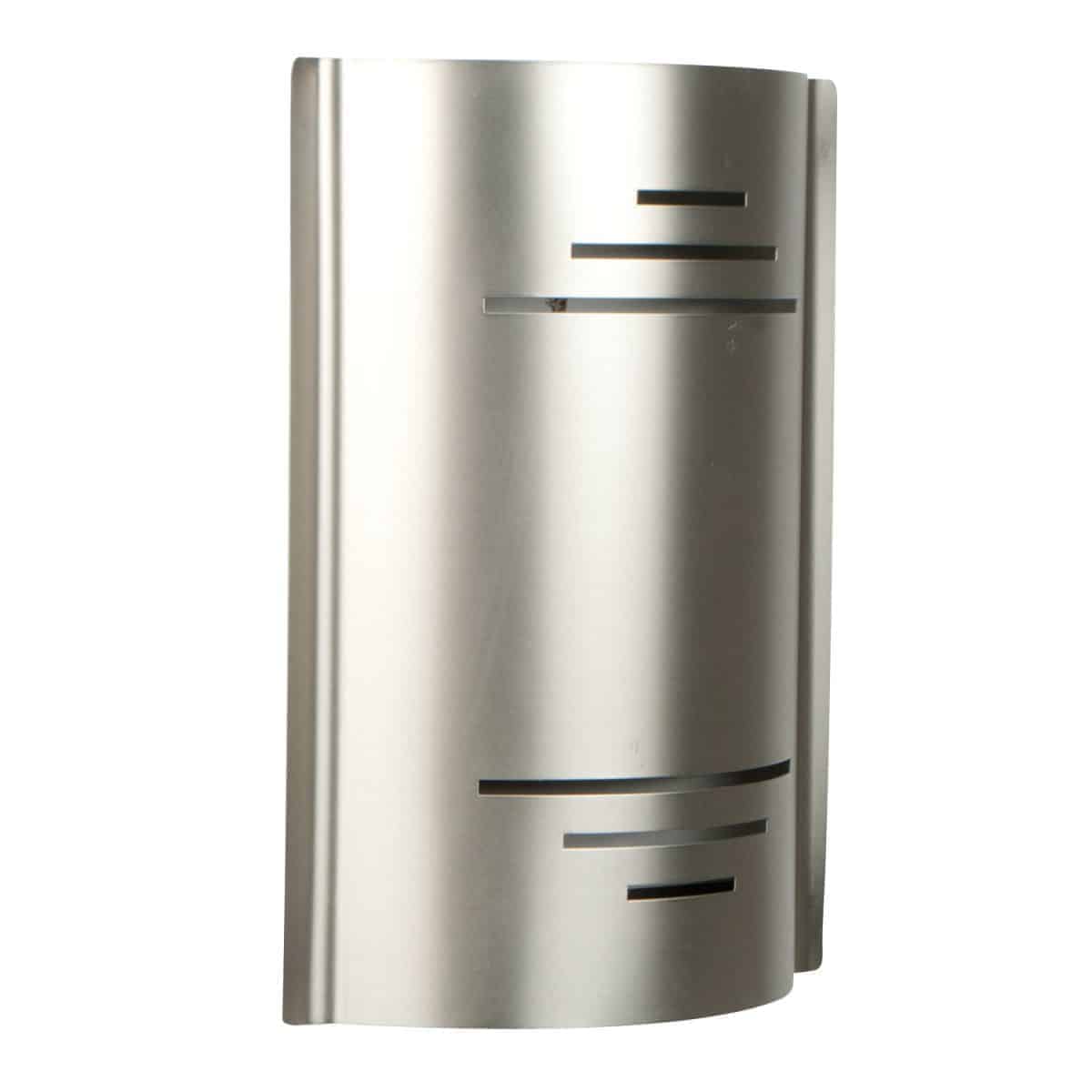
    4. Brushed Nickel Contemporary Wired Doorbell Model CC-BN


    CC-BN Contemporary Design Chime in Brushed Nickel Wired Door Chime

    Is it futuristic or retro? It’s open to interpretation – and that’s what makes this versatile, elegant curved design finished in brushed nickel so great. A beautiful detail is added with thin bands cut into the metal. This vertically mounted doorbell cover would be a wonderful addition to your modern décor at home or in an office.

    • Manufactured by Craftmade
    • Height 10.25″ x Width 7.50″ x Depth 2.125″
    • 2-year manufacturer’s warranty

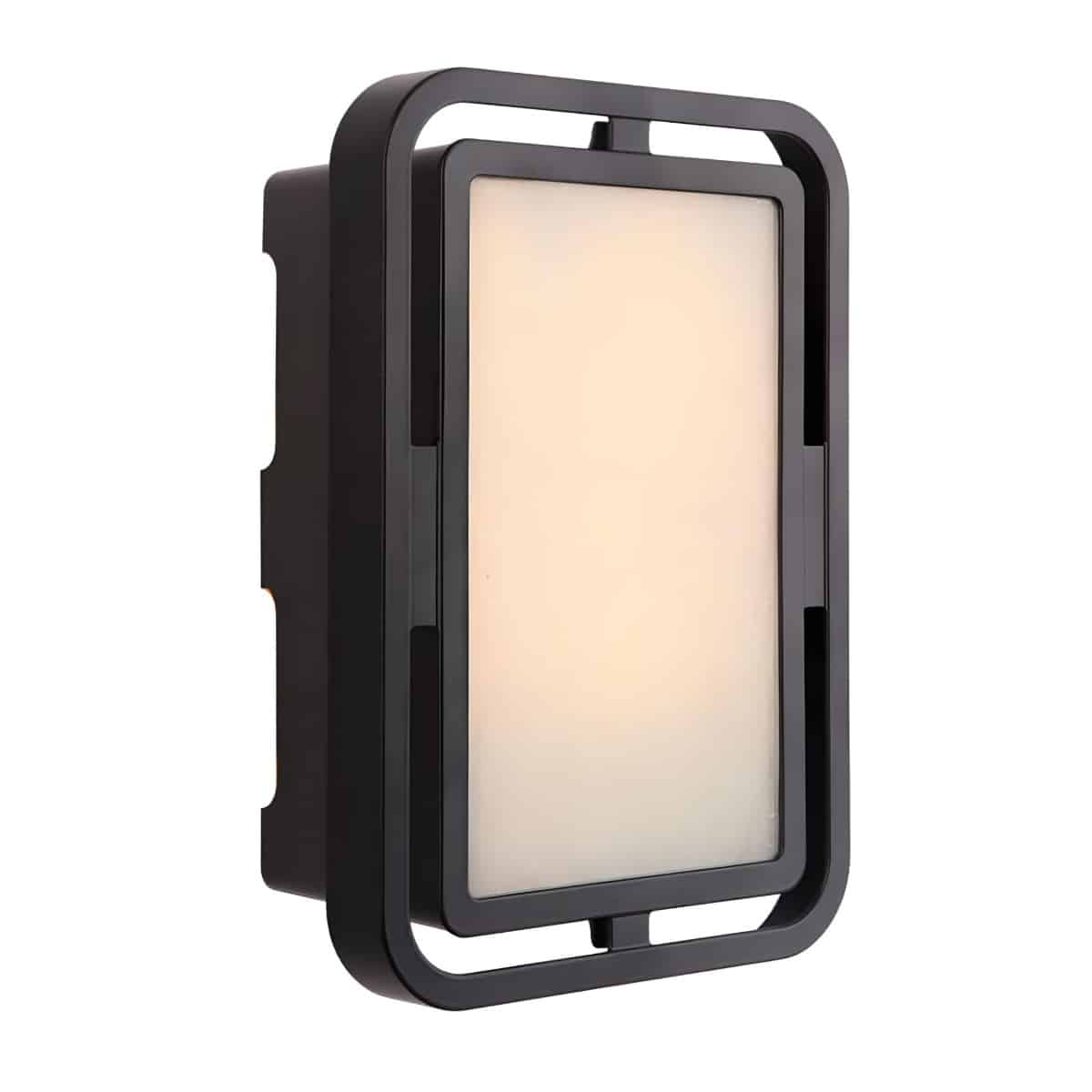
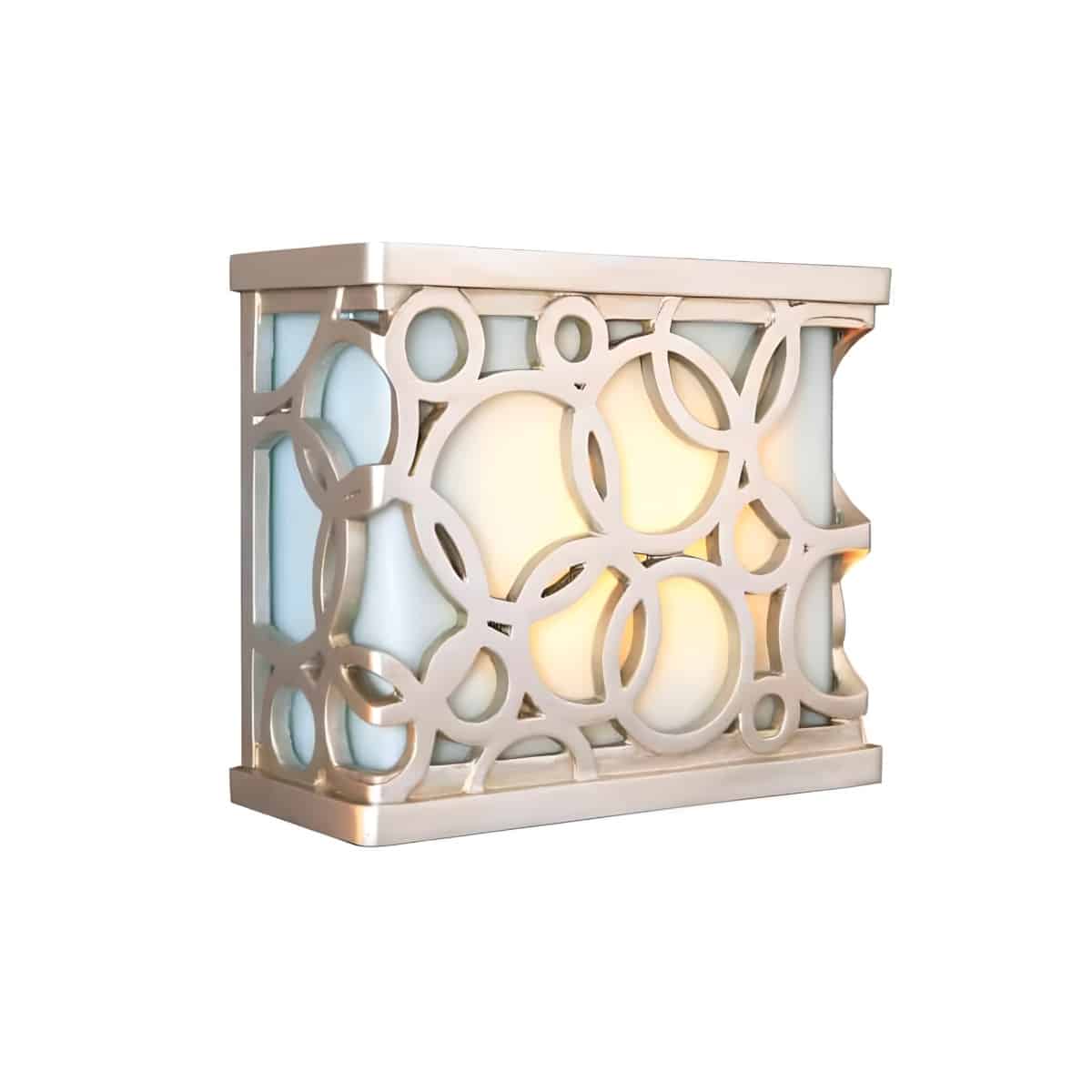
    5. Detailed Scroll-Work Cover Over Illuminated Frosted Glass Model ICH-16260

    ICH1620 BN Brushed Nickel Connected Rings Illuminated By Led Light Wired Doorbell
    ICH1620 BN Brushed Nickel Connected Rings Illuminated By Led Light Wired Doorbell 1

    New to secure.1800doorbell.com is the “ICH” series of wired products by Craftmade. Not only do these covers carry the same detailed designs as their other products, these features a backlight LED with an adjustable knob for brightness.

    • Manufactured by Craftmade
    • Height 9.7″ x Width 7.25″ x Depth 4.38″
    • 2-year manufacturer’s warranty
    • Backlighted with LED

    Top 5 Decorative Buttons

    Here are some of the most interesting and innovative doorbell buttons you’ll find anywhere. 1800Doorbell stocks doorbell buttons in handsome and functional styles in a variety of metal and polished wood finishes including brass, copper, brushed nickel, cherry, oak, and maple as well as sturdy plastic models. Some are weather-resistant to hold up for years of use in challenging weather conditions.


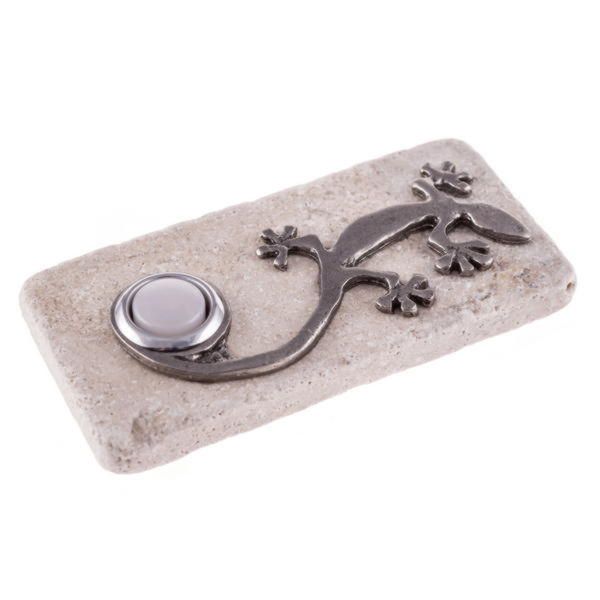
    1. Gecko Lizard Basks on Top of the Travertine Stone Wired Button Model DH1711L


    Dh117l Flat V 1 1

    If you have a southwestern theme in your home or if you love travertine stone tile – you’ll love this gecko doorbell button. A silver-colored metal gecko sits on a slim piece of unfinished travertine. The lizard has his tail artfully wrapped around the LED-lighted push-button and looks like he is enjoying the desert sun. At night, the lizard picks up a bit of the light creating a welcoming effect.

    • 2×4″ mounts directly on the wall
    • Three-year manufacturer’s warranty

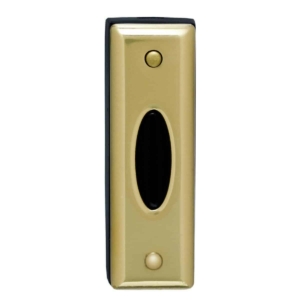
    2. Wireless Carlon Push Button with Brass Finish Model RC4130


    RC4130 Carlon Wireless Push Button with Faux Brass Finish
    RC4130 Carlon Wireless Push Button with Faux Brass Finish

    Yes, you can get style with a wireless door chime, too. Here’s a perfect example: this slim, rectangular design features a raised oval push button. This button can stand up to most weather conditions and temperatures from super hot (130 degrees) to well below freezing.

    • Also available in a satin nickel finish
    • Selectable frequencies to avoid interference from nearby sources
    • 10-year lithium battery included
    • 150 ft. range
    • 5-year warranty

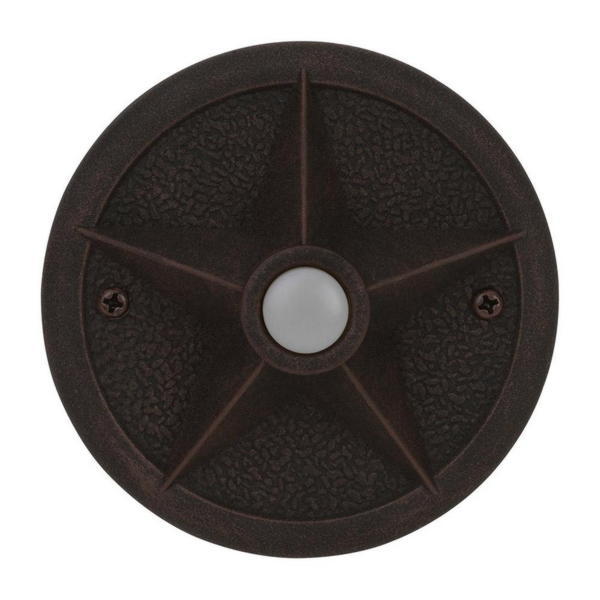
    3. Rustic Iron Star Doorbell Wired Push Button Model PB3036-RI

    Pb3036 Rt Push Button 1

    If you live in the West (especially Texas) or have decorated your home with a western theme, this rustic circular doorbell button is for you. It features a lone Western star (or town sheriff’s star) in the center surrounding the LED-lighted push button.

    • Also available in Rust and Antique Bronze finishes
    • Diameter 3.75″
    • Depth 1″

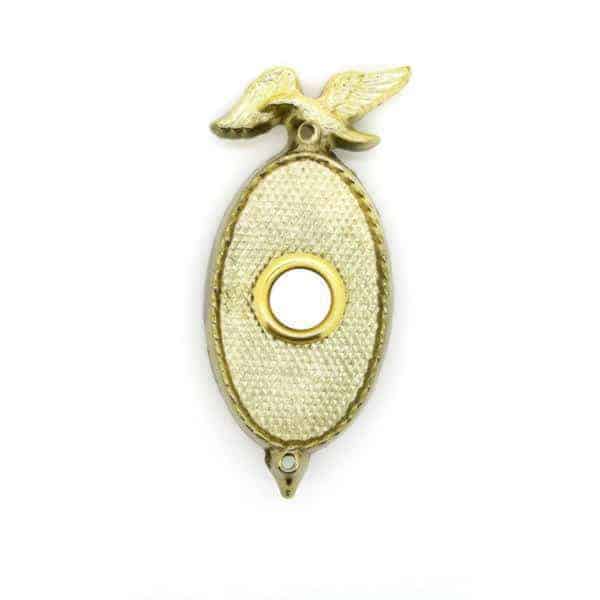
    4. American Eagle Brass Wired Doorbell Push Button Model HZ-870

    American Eagle Brass Wired Doorbell Push Button Hz 870 V 1 1

    This solid brass doorbell will announce your patriotic feelings to every visitor. The design features an American Bald Eagle atop an oval plate that surrounds a lighted white push button. This is a very patriotic doorbell button.

    5. Craftsman Print Solid Brass Wired Chime Pushbutton Model DH1691L

    dh1690l-aged-brass-wired-lighted-push-button-rectangle

    This unique and beautiful button will dress up the front door of a craftsman-style home, or any home for that matter. Its shape is rectangular. And the button is halo-lighted which illuminates the outer edge of the button.  This wired button features a lovely antique brass finish and is also available in an antique copper finish (DH1695L). The push is circular, which adds to the overall design.

    • Manufactured by Thomas and Betts
    • Dimensions 2 7/8″ H. x 1 1/4″ W. x 3/8″ D
    • One-year manufacturer warranty
  • The History of the Doorbell: Who Invented the Doorbell

    The History of the Doorbell: Who Invented the Doorbell

    The plain old knocking was, and still is, a reasonable method for announcing your arrival. The major flaw is that people inside may not hear you when you knock, so manual or mechanical doorbells were devised. The simplest pre-electricity example of a “visitor-announcement system” was the door knocker, which has been used since ancient times. This older-version door-sill or door-mounted device made a doorbell sound when the visitor banged the hinged knocker onto the metal plate installed under it, protecting the door. These door knockers also served as decoration, but they worked a little better than knocking, being only somewhat louder.

    Mechanical Types

    brass-victorian-mechanical-doorbell-dh950
    victorian mechanical doorbell dh950

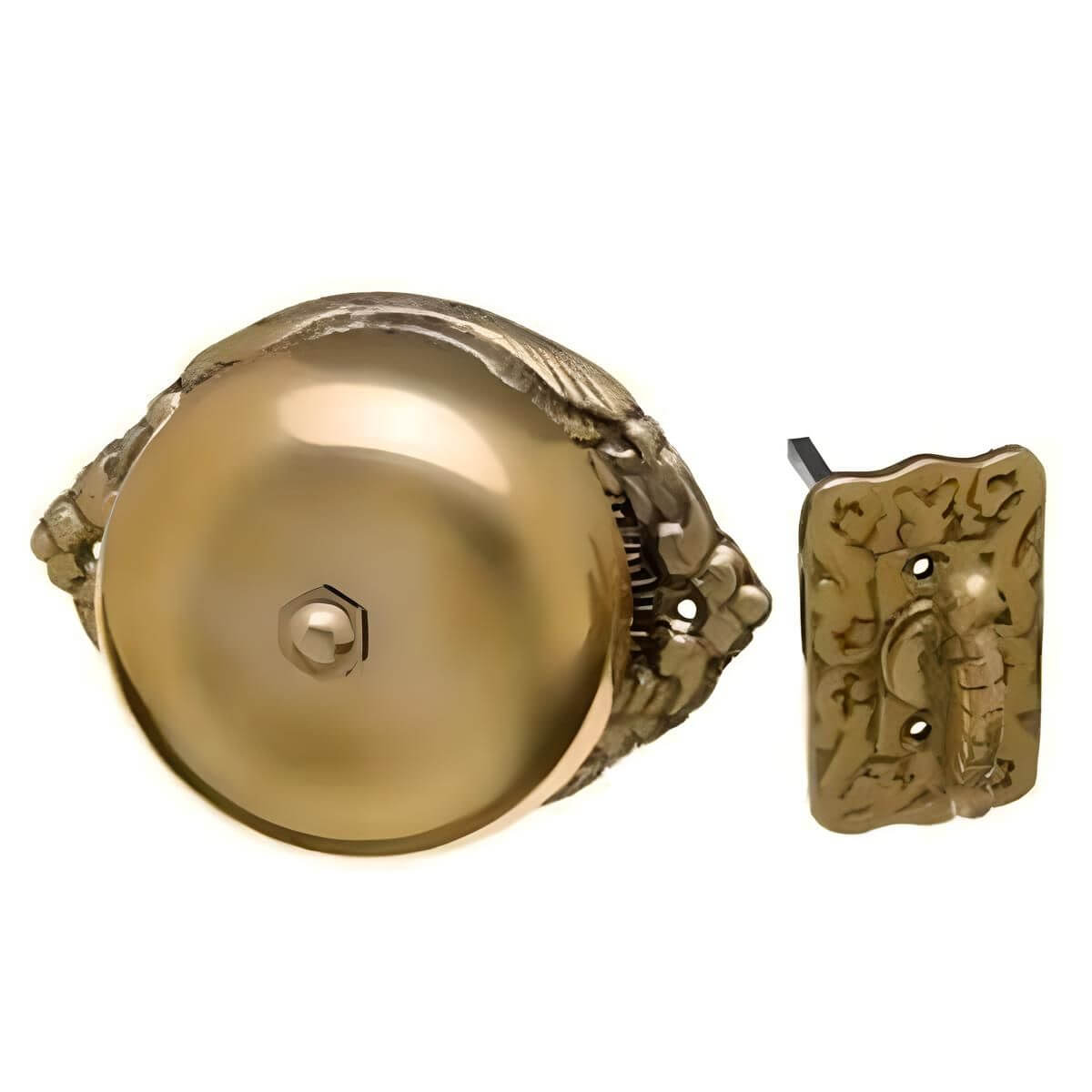
    Vintage styles then took a step forward from door knockers to better alert people indoors to visitors. Mechanical doorbells were made using a small bell installed inside the house, manually activated when a visitor pulled a chain or string to ring the bell. This bell is the same design as the “servants’ bells” in period films from the late 1800s. In this setup, a bell rings in the maid’s quarters when someone, far away, in one of the rooms of the main home, pulls a chain to summon them.

    Another early Victorian-era doorbell design used a twist handle—like turning a key. When the visitor turned the handle, a tiny hammer or clapper struck a bell inside the door, producing a rapid trill or ringing sound. These relatively crude mechanical bells were loaded with charm, and sometimes, “ye olde” doorbells featured ornate outdoor buttons, pulls, or levers. Retail stores and small shops often used door-mounted mechanical bells to announce when a customer entered a shop. A version of these is still in use today.

    Electric Doorbell Invention

    Who invented the doorbell? Was there a “not-so-famous” Alexander Graham Doorbell hidden somewhere back in ancient history? We can thank a scientist and the first secretary of the Smithsonian Institution, Joseph Henry, for inventing the electric doorbell in 1831.

    electric-doorbell
    “DoorBell 001” by HNH – Own work. Licensed under CC BY-SA 3.0 via Wikimedia Commons

    In the early 1900s, expensive batteries were replaced by transformers, allowing the use of a household current. Until the early 1930s, most doorbells were loud electric buzzers. Musical chimes with pleasing tones became popular in the 30s. The Depression and WWII quieted development, which surged again in popularity during the 1950s. In the mid-1960s, decorative and multifunctional door chimes became more popular. They were built with clocks atop the chimes and decorative plaques hiding indoor components.

    How They Work

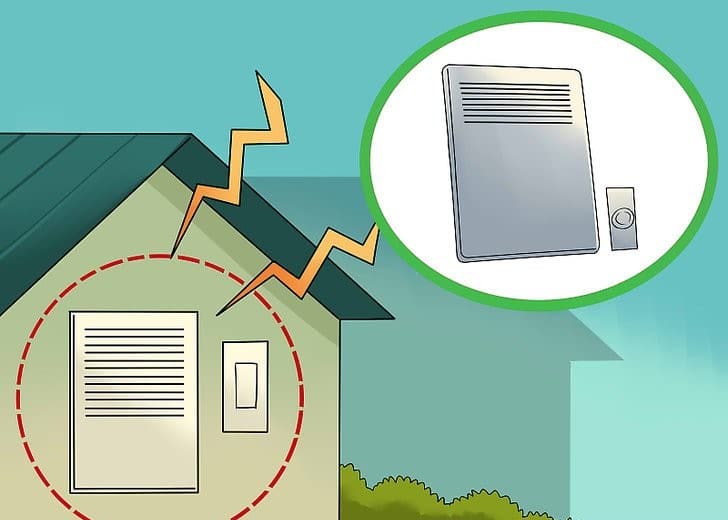
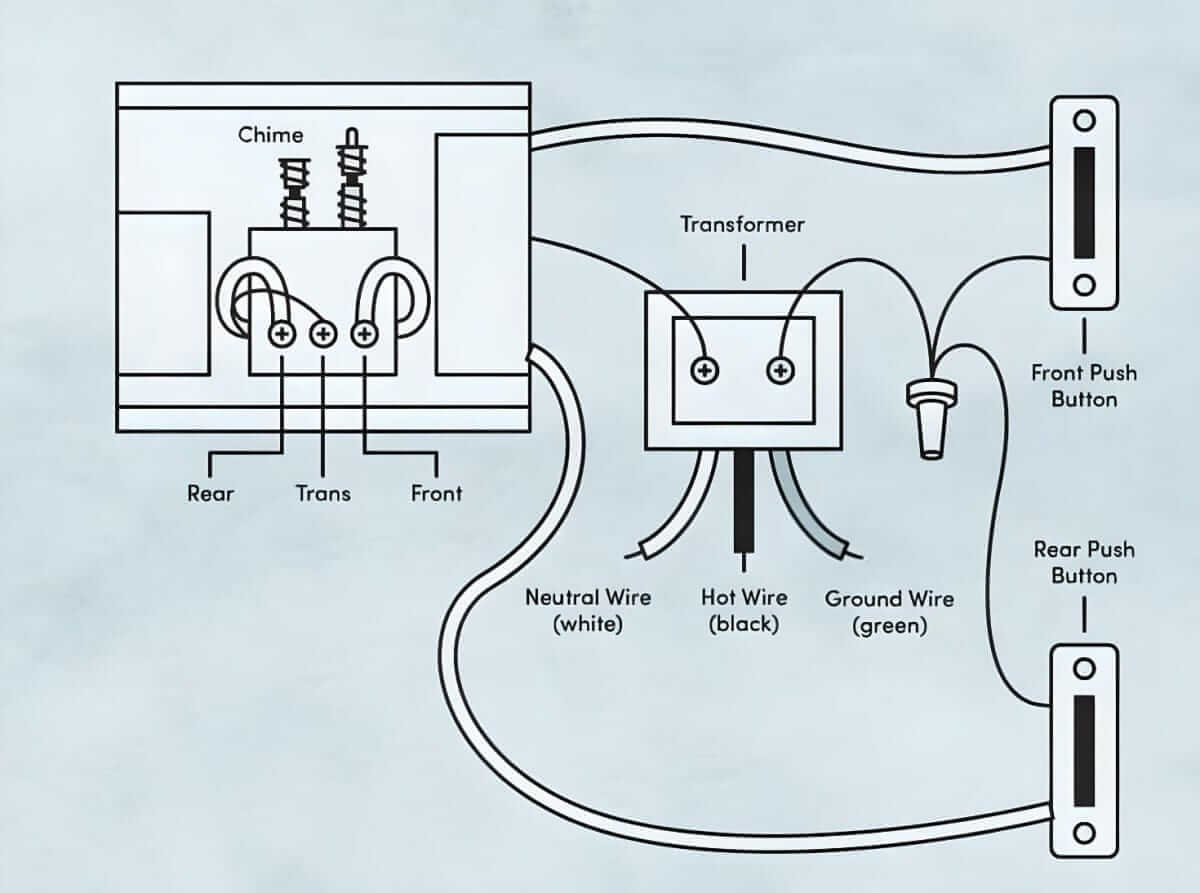
    Hard-wired electric doorbell components include the outdoor button, wiring, transformer, and chime or bell. The electric chime functions when the door bell button outside the home is pushed, causing electrical current to flow into a transformer. The transformer takes the electrical energy from the circuit/source and transforms it into the lower voltage needed to power the door chime inside. The current activates a chime or some sound signal. The doorbell’s sound may come from a buzzer or a bell instead of a chime.

    How Wireless Doorbells Work

    Wireless doorbell systems are popular due to their ease of installation. With no wiring along baseboards or inside walls, wireless receivers can be plugged into a wall socket (using a small transformer adapter) or battery-powered. The transmitter is the button, which is commonly battery-operated, using long-lasting lithium batteries.

    ERA-DCKIT-Wireless Door Chime Kit Guaranteed to Work in Your Location
    Wireless Business Doorbells the ERA-DCKIT

    When a visitor pushes the button, it transmits a radio signal to the receiver(s) inside the house. The signal activates a sound chip in the receiver, which plays the sound through a speaker. Several radio channel options are available to avoid interference from wireless devices on the same frequency.

    Advanced Features: Wireless Doorbells and High Tech Features

    • Chimes and tunes: If you don’t want to listen to the same sound every day, enjoy the variety of variety of tunes, multiple sound effects, and melodies. Some doorbells offer eight tones, notes, and songs, while others provide 58 sound options; some offer only 2 or 3 basics.
    • Extended range: For long-range capability, you can purchase units with a range of up to 1000 feet. Innovative doorbell extenders can extend the range of your existing unit so that it is audible where you need it.
      Safety: A wireless driveway alarm and a motion sensor can alert you much earlier to someone coming up the driveway. Motion sensors are compatible with many systems as well.
      Visual signals: These days, some doorbells or door alarms also feature visual signals, such as a blinking light for loud areas or as an aid to the deaf or hearing impaired.

    Decorative Styles with Rich Sound

    The advent of wireless and multi-featured doorbells has brought a resurgence of popularity to the wired doorbell. Both wireless and hard-wired systems have begun offering a broad range of tones, melodies, songs, and sound effects. These options allow homeowners and businesses to customize the look and sound of their entryways. Decorative indoor receiver/speaker unit motifs vary from architectural designs to contemporary, sophisticated, streamlined, polished wood, brushed metal, hand-crafted wood styles, antique-look scrolled designs, and more.


    Most systems have at least a few basic chime options, such as a basic “ding dong” sound and other deep or high bell-like sounds in single notes or groups of 3 or 4 tones. Deep tones can sound serious, elegant, rich, or ominous, similar to a large bell tower bell. Higher chimes mimic the clear notes you might get from tapping on a crystal wineglass.

     Hard-wired and Wireless Melodies, Sound Effects, and More

    If you’re looking to go beyond the basic, classic door chime sounds, now that is possible. Choose musical doorbells that can greet visitors with a holiday theme, including Halloween songs, Christmas tunes, New Year’s, 4th of July, and more. Some offer as many sound choices as the proverbial jukebox.
    If you’re considering adding, replacing, or upgrading your current system today, browse the online catalog at 1800Doorbell for a wide selection. We offer the best brands and models available in the latest designs. Here, you’ll find full-featured wireless doorbells, driveway alarms, and more. We also offer realistic vintage designs to add character to your space.

    Contact 1800Doorbell.com for more product information and assistance in choosing the right one for your home or business. Contact us today!

  • Doorbells for Hearing Impaired & Elderly – Never Miss a Visitor

    A deaf person, someone with profound hearing loss, or even a person with moderate hearing loss, faces challenging issues in their daily lives that people with normal hearing often take for granted. One of these is something as simple doorbells & wireless doorbells.

    If you are not affected now, hearing impairment will affect you or someone you love at some point in your life. For people with hearing impairment or hearing loss, it’s hard to hear sounds, even loud sounds, especially an extra loud doorbell in their home. Hearing aids help people with hearing issues, but they are missing a design feature that would be very helpful for deaf people.

    Visual Alert Doorbells is a Wireless Doorbell with Strobe Lights for the Seniors & People with an Audio Impairment

    SS STROBE RED SM 1

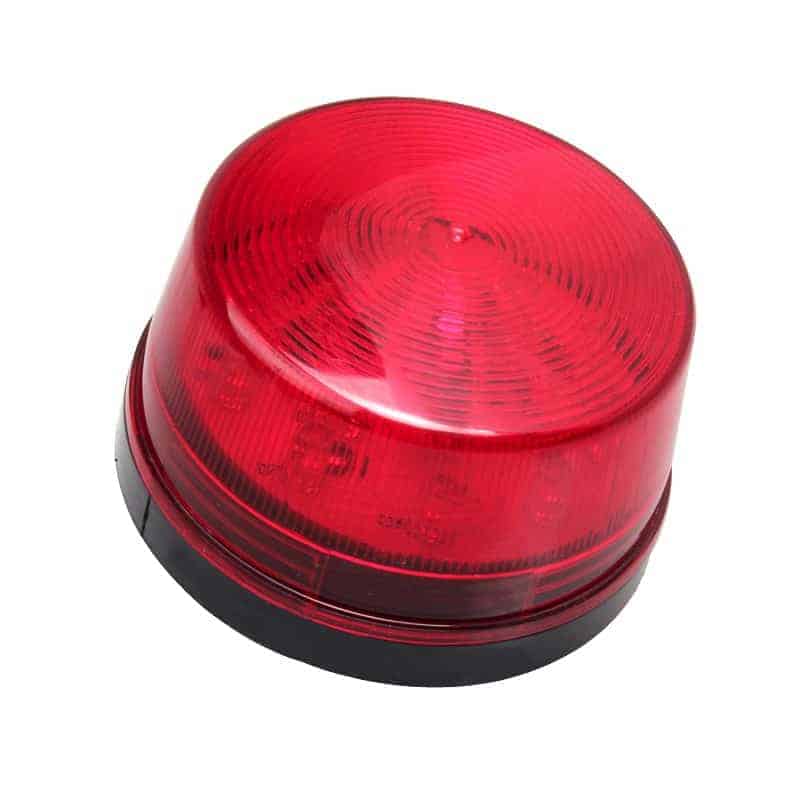
    A hearing-impaired doorbell strobe light that activates a flashing strobe light can be (and often is) the best option, and not just for the hearing impaired. Visual alert doorbells provide a visual cue that aids by providing a visual alert when a visitor arrives.

    When the door chime receiver is triggered, strobe lights provide a visual cue. Some folks may have a Ring Video Doorbell in their home, but for deaf people, without some flashing light for an alert, a Ring Video Doorbell simply doesn’t provide the alerting notice deaf people need.

    If someone in the home is entirely deaf and hearing aids won’t help, a visual flashing light is often an ideal wireless doorbell. It must be installed somewhere central to the home or have several places throughout the house that flash when the doorbell is triggered.

    Visual Cues from Lights Flash for Wireless Doorbells

    It’s important to note that visual signalers are a great feature of your home; however, don’t forget about the doorbell benefit for those with hearing impairments.

    You need to ensure that your guest alert and visual alarms can notify everyone in your home when activated.

    For example, your wireless doorbell needs the ability to produce loud sounds when members of your home are asleep at night. In addition, most people with hearing loss don’t sleep with hearing aids. You want a product capable of delivering a loud sound when a guest’s knock is unheard. You want all members of your home to sleep at peace without missing anything. In addition, a Ring Video Doorbell won’t help either.

    A hearing-impaired doorbell strobe light can be handy even outside of deaf households, such as in very loud or noisy environments.

    Conversely, something we will cover near the end of this article is using a LED Strobe wireless doorbell in an office or somewhere that you do not want a loud sound. New mothers or childcare workers often tell you that a loud doorbell is a sleeping baby’s worst friend.

    Lights Flash & Alert Doorbell for Deaf & the Elderly

    wc180 Strobe Plugin Door Chime Older Man With Chime in Background
    wc180 Strobe Plugin Door Chime Older Man With Chime in Background

    Consider installing a flashing light doorbell to help keep all house members happy and well-rested.

    Finally, some pets just lose it when they hear the doorbell. Although they’ll often quickly associate flashing lights with the doorbell, it’s less intrusive to their world, and they’ll have little to no reaction to visitors at the door.

    The selection is quite vast, whether considering a louder or flashing door chime for the hearing impaired (or for other reasons). It is worth investigating several models to find the proper doorbell for your needs. Doorbells for the hard of hearing can be very helpful and an important part of maintaining a normal lifestyle. Browse our selection of hearing-impaired alerts and notifications.

    Get Notified When a Door Is Open, Motion is Detected, or a Guest Presses the Doorbell Button

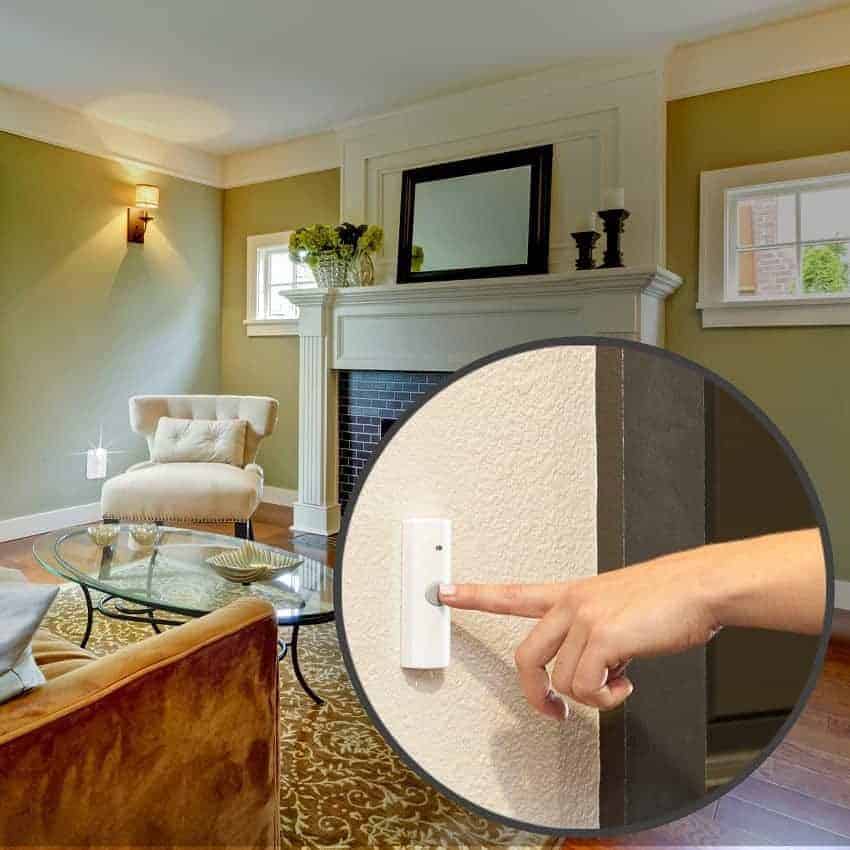
    WC180 Flashing Strobe Installed in a Home with Push Button Being Used

    If your goal is immediate attention or simply to be alerted when a visitor arrives, wireless products can cover all these bases and make you feel more secure.

    Nowadays, wireless transmitters are typically compatible with one another across brand series, so a person can easily add a variety of different sensor types, such as push buttons, motion sensors, door alerts, driveway monitor sensors, and more.

    In the ERA series, for example, portable doorbell receivers add portability for users and provide vibration for the deaf to know when a visitor arrives.

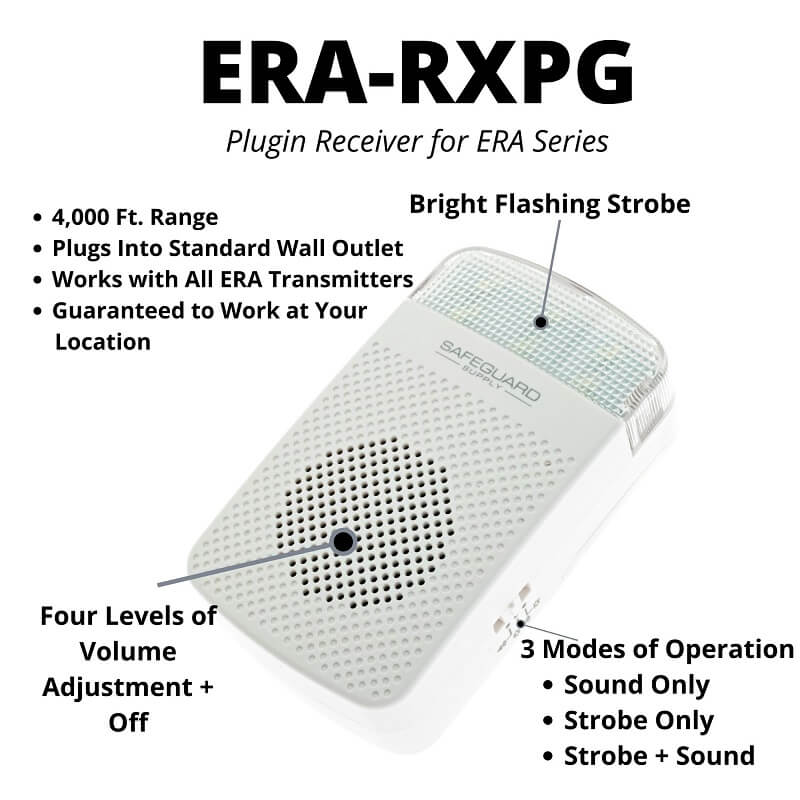
    There is also a plugin doorbell receiver with adjustable volume and a bright strobe signaler.

    The staple of the ERA series is the ERA-DCRX, a desktop and wall-mounted receiver. This product features 4 x 12V DC outputs that allow for the integration of an extra loud siren, a strobe with a siren, and more.

    Another example of expandability is the ERA-VPRX. portable doorbell allows users to range up to 4,000 feet from the transmitter or sensor. When an outside button is pressed, the portable receiver is immediately triggered.

    This vibration means you don’t have to see or hear anything to be notified. The portable receiver may be silent, meaning there will be no sounds, just gentle vibration.

    Add ERA Wireless Entry Alerts & Doorbell Push Button Transmitters

    Add ERA Wireless Entry Alerts & Doorbell Push Button Transmitters

    Add ERA Wireless Desktop, Plugin Chimes & Portable Receivers

    Add ERA Wireless Desktop, Plugin Chimes & Portable Receivers

     Want to see an example of a Wireless Doorbell that Flashes?

    At secure.1800doorbell.com, we recommend many products that address the problem of missing a visitor who presses the push button outside your home.

    Below is a down-and-dirty video we took the other day for a customer who wanted to review the LED strobe and hear how loud the chime is at maximum volume. We wanted to show them an example of such a product: the flashing on our LRA-D1000 Long Range Chime with Flasher. This example uses batteries and is not plugged in, although that option is available for purchase.

    This battery-operated doorbell is one of the best for deaf, elderly, or customers who are missing a visit or delivery.

    The model in this video has a new design to make it a little more stylish. The system consists of a battery operated chime (plugin available as an add-on option), and a wireless button (transmitter). It has an adjustable sound level and can add multiple receivers and multiple transmitters to provide a complete system for your home or office.

    Place receivers in the kitchen, living room, garage, or other areas of your home so you have a reliable way to ensure the security of never missing a visitor again. Installation is easy and only takes a couple of minutes.

    The receiver can be mounted on a desktop or the wall. If it runs on battery power, it can easily be moved from location to location, making it portable.

    An Example of a Flashing Doorbell Strobe

    The ERA-DCKIT is One of Our Newest Deaf Doorbell Models

    ERA-DCKIT-Wireless Door Chime Kit Guaranteed to Work in Your Location
    Wireless Door Chimes

    The ERA set of products has quickly become the most recommended for several reasons. Of all the products that help people with moderate hearing loss or who are deaf, it has the longest range of our deaf doorbells.

    With an operating range of up to 4,000 ft., it’s the most reliable system over long distances. It works great in larger homes, hotels, businesses, and homes with brick, stucco, and concrete, and it offers a variety of other options that make it stand out and make life easier.

    I don’t think this product’s extensive range is overkill. We always recommend a product with a more extended range to ensure it can quickly deliver the reliability your family deserves.

    It is straightforward to install, a great choice and packed with features that make it easy to purchase.

    In fact, this product packs features and great functionality that products you find at box retail stores simply cannot provide.

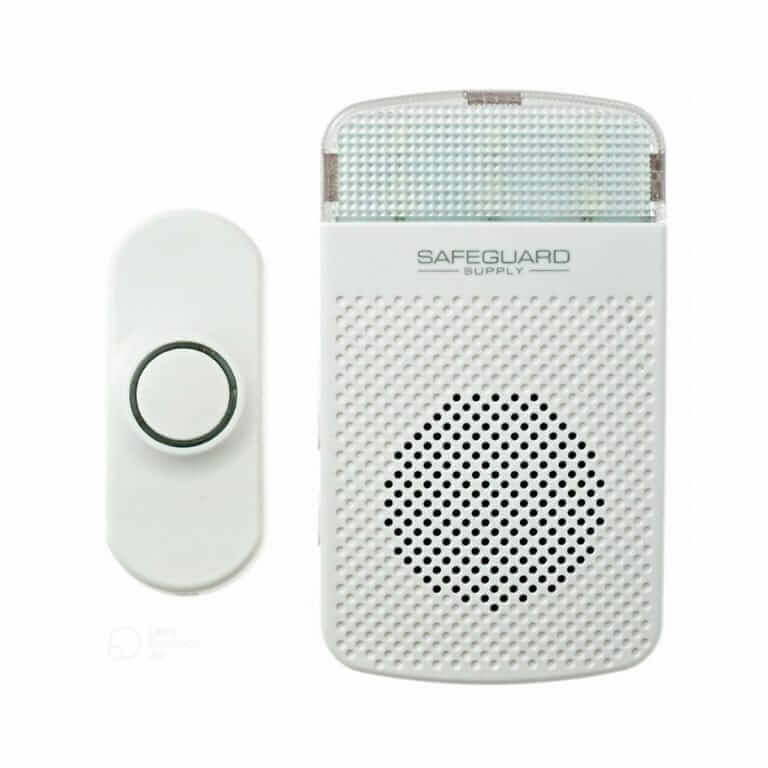
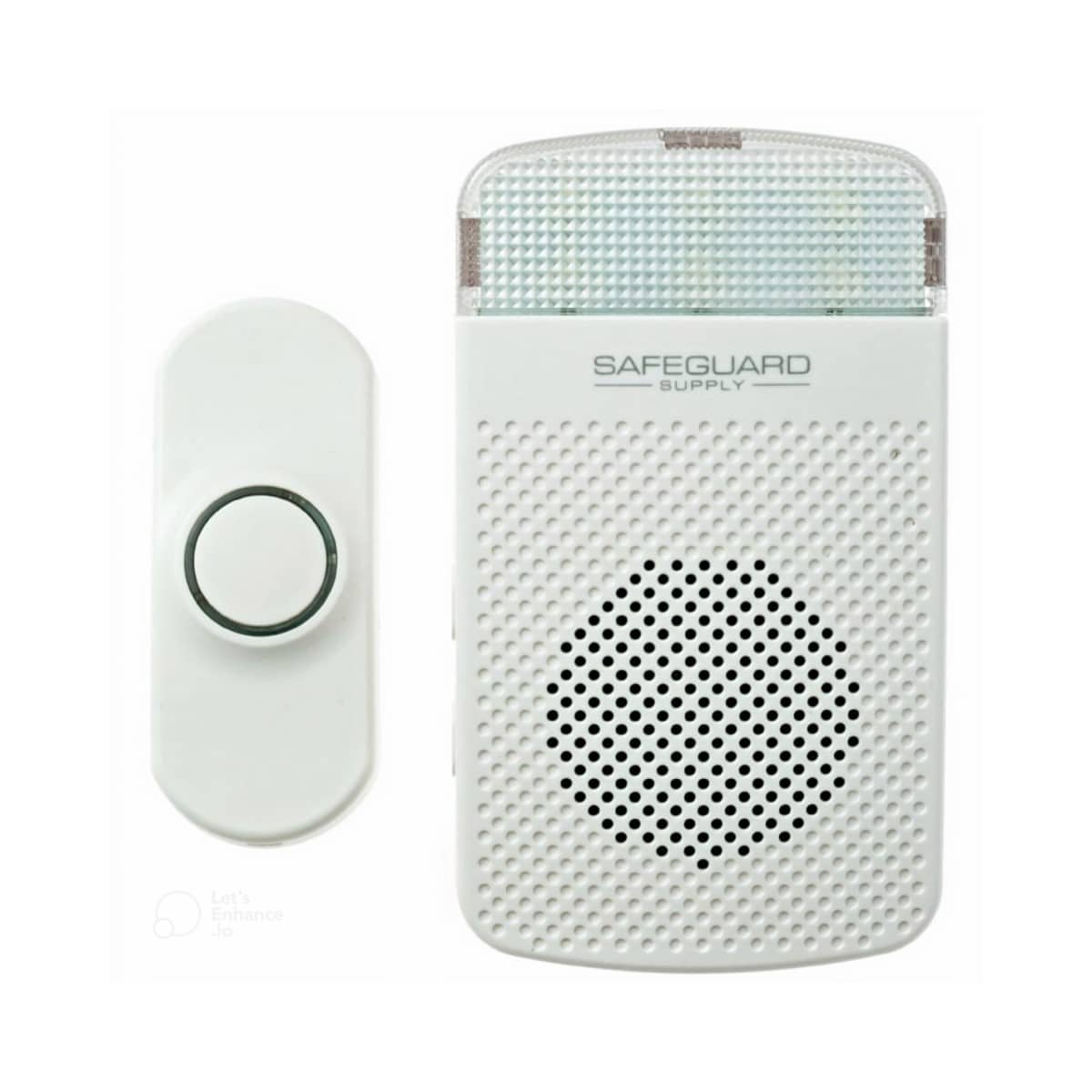
    Basic Features of the ERA-DCKIT Plug-in Doorbell

    • Range of up to 4,000 ft.
    • Add additional push buttons, motion sensors, and driveway alerts
    • Compatible with the ERA-RXPG plugin receiver, ERA-DCRX wall mount desktop receiver, and ERA-VPRX Portable vibrating receiver
    • Plug it into a standard wall outlet
    • 4 – level adjustable volume
    • Add multiple receivers to cover additional areas of your home, office, warehouse, and store
    • 3 Operating modes; sound, strobe, sound + strobe

    Order the ERA-DCKIT

    A Different Sound or Tone Is a Simple Way – The Frequency of the Melody

    Most people who are hard of hearing can hear better at certain frequencies. Newer technologies allow doctors to test for what frequencies people can hear and cannot. You can then wire the doorbell to chime at an audible frequency.

    Typically, people lose their hearing in the high and low ranges, so finding something a bit more middle-of-the-road works best. This also prevents you from having to amp up the total volume of the doorbell to accommodate the hard-of-hearing person.

    A Wireless doorbell for the hearing impaired has multiple uses. The vibration choice might be nice for a place that thrives on being quieter. The flashing light system might be preferable if you have a baby who might be sleeping when someone comes to the door.

    Finding alternative ways to send an alert when someone is at the door is not limited to those who cannot hear very well. All in all, the systems work and will continue to advance as new technology is developed.

    The ERA-DCKIT mentioned above has 12 different sound options for melodies available to choose from. Depending on your exact conditions, you may find one sound easier to perceive than another, even at the same sound level.

    Vibrating Door Chimes for the Hard of Hearing

    ERA-RXPG Product Callouts-800px
    ERA-RXPG Plugin Receiver for ERA Series

    Few options for hearing-impaired devices vibrate, but newer systems have integrated them.

    A wireless doorbell for the hearing impaired systems can come with a key chain that can be carried in your pocket. When the doorbell is pushed, the device vibrates. It has been designed to work much like a cell phone.

    Have Questions? Send a Reply to Us at 1800doorell.com

    If you’re not dealing with hearing loss now, you either will have hearing loss or deal with a loved one with hearing loss in the future.

    Hearing impairment is tough to deal with and there is a variety of hearing impairment devices in the market you may not have given much thought to but can make life much easier.

    Hearing aids only go so far. Many people simply don’t like the way hearing aids feel in their ears and simply don’t want to wear hearing aids the entire time they are in their homes.

    Products, like wireless doorbells that provide visual cues, are a great way to help those with moderate hearing loss or even the deaf. Although extra loud doorbells help, visual cues from things like flashing lights go a long way to help deaf people.

    Flashing lights may be as small as LED visual indicators to bright flashing lights.

    We’ve got you covered when you buy a door chime at 1800Doorbell.com. Have peace of mind with a common wireless chime with features that are designed for the hard of hearing.

  • Reviews & Advice on Choosing the Best Wireless Doorbell

    Reviews & Advice on Choosing the Best Wireless Doorbell

    Miss out on a lot – friends, family, PIZZA! There’s no reason to deal with the inconvenience, missed connections, and safety compromise of being without a doorbell. Don’t hesitate – to check out the specs on some of the best wireless doorbells on the market.  Today’s options offer affordable, easy-to-install, and creative ways to improve your home or business environment – with no hard wiring or transformer required. Just mount the button, plug in the speaker(s), and go. For more installation information, visit our How to Install a Doorbell article.  This article focuses on Advice on Choosing the Best Wireless Doorbell!

    Wireless Doorbells: Simple, Economical Security & Business Boost

    If you’re running a business without a proper doorbell or sensor, you could be losing valuable customers or missing deliveries! No doorbell at home? You could miss a friend or family member who needs to talk with you – when you don’t hear their knock at your door. You could also end up chasing important packages to the Post Office or waiting for re-delivery. Even worse, you could lose a package entirely if the delivery person chooses to leave it at your door. A thief, the wind, or even the neighbor’s dog could carry it off. Let’s face it – you need to know if someone is at your door for safety reasons, too. You can’t afford to be out of the loop. What if the fire department or neighbor needs to warn you of an emergency? Why risk it? Increase your peace of mind at home, and keep your business safe and profitable, with a wireless doorbell that fits your needs.

    Advice on Choosing the Best Wireless Doorbell for Home & Business

    You’ll be pleasantly surprised at the wide variety of affordable options. Use the expert tips below to save time and avoid frustration when searching for just the right wireless doorbell:

    • Mid-price is nice: With a technology purchase, such as a wireless doorbell, you do get what you pay for. You can find chimes priced from $20 to $100 or more. The cheapest models are likely to be completely ineffective and a waste of money. At a moderate price of about $35, you can get a dependable doorbell with some nice safety and convenience features for home use. For a larger home or a business, you might pay a higher price – and get extras like long-range, motion sensing, and custom tones.
    • Quality clues:  Buy from a local merchant or online door chime company with a(n):
      • Expert reputation, specializing in wireless security products, and residential and professional installations. You can profit from the seller’s experience with the real-world performance of different brands and learn more about features that fit your needs.
      • Good return policy. You should be able to test the doorbell device without fear that you’ll be stuck with one you don’t like or cannot use.
      • Manufacturer or brand warranty protecting the product against faulty technology, electronics, or workmanship, including parts and labor. Ideally, the manufacturer warranty will extend to the online store or local retailer’s guarantee. Make sure to check before purchasing.
      • Good reviews. Look for the positive feedback about the product, brand, and seller.
    • Volume indoors: Is the doorbell you’re considering loud enough to reach throughout the house or business? Initially, you can select by comparing manufacturer specs and getting expert advice from a respectable company on specific models. Just be sure to test the doorbell once you receive it. Check that you can hear it from every room in your home. On most models, you can choose from a few different sounds and adjust the volume. If the doorbell isn’t audible from all areas, be sure that you have the option to add extra speakers to carry the sound everywhere within your home or business.
    • Audible outdoors: If the doorbell can’t be heard by the visitor, then they will likely just keep pressing that button.  If your doorbell has at least a 2 1/2″ speaker, it should be able to produce enough sound for an average-sized home – and be heard by the visitor outside. You may need larger speakers, up to 5 inches, and more of them, for a larger home or a business.
    • Good range: A good mid-range transmission distance to look for in a wireless doorbell is about 150 feet. This is the distance from the wireless doorbell’s button (transmitter) to the speaker (wireless receiver). No matter what range is promised on the packaging, check its performance in your environment.
    • Expandable options: Most wireless doorbell systems allow you to add extra doorbell push buttons (transmitters) and/or additional plug-in speakers (receivers). This gives you the option to add doorbell buttons at the back door, for example, and also add speakers/receivers in an office or upstairs bedroom.
    • Battery life: The outdoor button(s) on most wireless doorbells are battery-powered. Power consumption is usually minimal, so batteries should last about a year. Things like cold weather can shorten battery life, so check monthly and replace batteries as needed.
    • Durability: Wireless doorbell buttons are made of plastic, as metal construction may interfere with wireless signals. Make sure the plastic housing seems sturdy enough to stand up to visitor or customer use – and withstand your climate – including hot/cold weather, rain, and snow.
    • Décor: Business owners may prefer a sleek and simple plastic doorbell for a more professional look.  Doorbell buttons (transmitters) are fairly small, so finding one to match and blend with your front door or entrance area décor should be fairly simple. You can choose door chime speaker covers in larger, ornate, and decorative designs to enhance the style of your home or building.

    Useful Extra Features Found on the Best Wireless Doorbell Systems

    • Long-range: If you have a large home or business, you may need a longer-range wireless model, with a longer transmission distance from the door chime button to the indoor speaker(s). The top models feature changeable codes to avoid interference in your home or office and from other neighboring doorbells.
    • Motion sensor: If your doorbell is the primary source of your home or business security, it’s a good idea to spend a bit more to get premium quality and dependability – including a motion sensor. The sensor adds an extra measure of security because you’re alerted even before the person presses the doorbell or if they open/reach through a window.
    • Custom tones: You can add a little style and personality to your home or business by choosing a novelty wireless doorbell. Some models will play a few notes from Beethoven or a pop song when someone rings the bell. Most wireless doorbell models offer a range of tones and volume control, even if they don’t play a tune.

    Wireless Doorbell Installation Tips

    • Basic installation: Wireless, of course, means that you don’t have to be an electrician to install the latest doorbells. Simple battery-powered wireless doorbell models can be owner-installed quickly and easily. The outdoor push-button (transmitter) may come with a stick-on back or maybe screwed into place. Attachment hardware for wireless doorbells is generally included with your purchase. Some types of wireless doorbell systems do require professional installation, however. Some companies selling higher-end wireless door chime systems may offer free or low-cost installation.
    • When installing on or near metal doors: Metal can shorten or interfere with the doorbell’s transmission range. If you’re using the wireless doorbell or window sensor for your business and even some homes, and installing it on metal or partially metal doors or door frames – here’s a hint: Try adding a small wood shim under the button (between it and the wall or door frame) to help get around any signal problems.
    • Be sure to test: After installation, test the loudness and all other features mentioned here before throwing away your doorbell’s packaging. Retain receipts in case you need to use your warranty in the future.

    After-purchase Maintenance

    Maintenance is simple for the typical wireless doorbell system. Just check the batteries about once per month, although they should last much longer. Check the speaker/receivers (plugged into electrical outlets) now and then in case an electrical surge has occurred and damaged it. When going on vacation, unplug your doorbell speakers, to be certain that lightning, for example, won’t cause a surge while you’re away.

    The Bottom Line on Wireless Doorbells

    A commercial or residential wireless door chime is a smart choice for better security and peace of mind, more convenience, and better service. These cost-effective door chime devices pay for themselves over time. A mid-range priced wireless doorbell (about $35) will likely offer all the quality construction and dependability you’ll need for the average home. For larger homes or businesses, you may require a longer range or extra speakers – and may pay a bit more. A motion detector feature is a great safety measure and may add a bit to the overall price of your wireless doorbell. Choose a self-installed model to save money and count on good customer support if you’ve chosen your seller or online store wisely.

    Top Wireless Doorbells

    LRA-D1000S Door Chime for the Hard of Hearing with a Bright Strobe Light Plug-in Receiver

    Wireless Door Chime Kit for Hard of Hearing That Installs in Minutes! Model LRA-D1000S $49.98

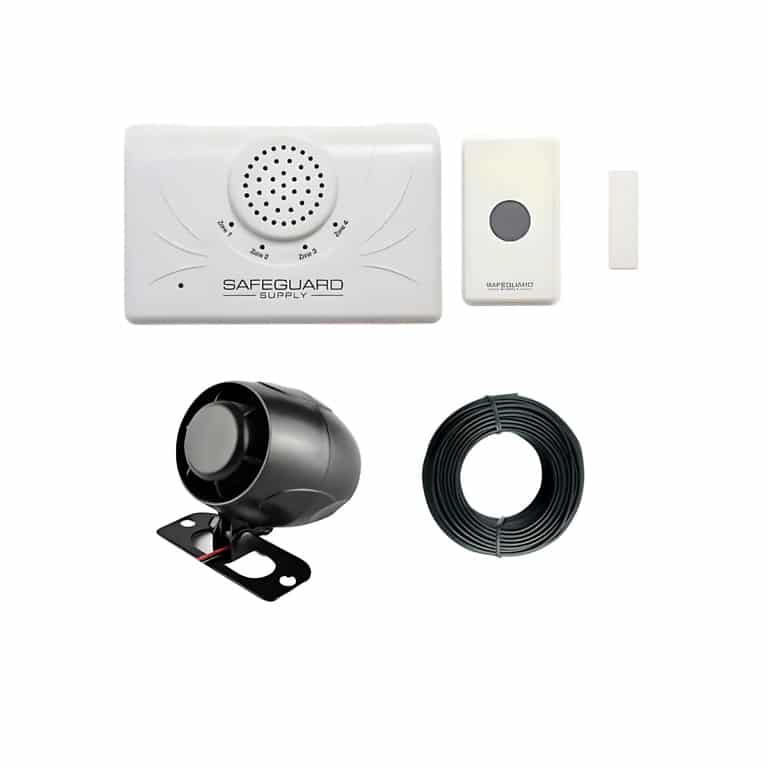
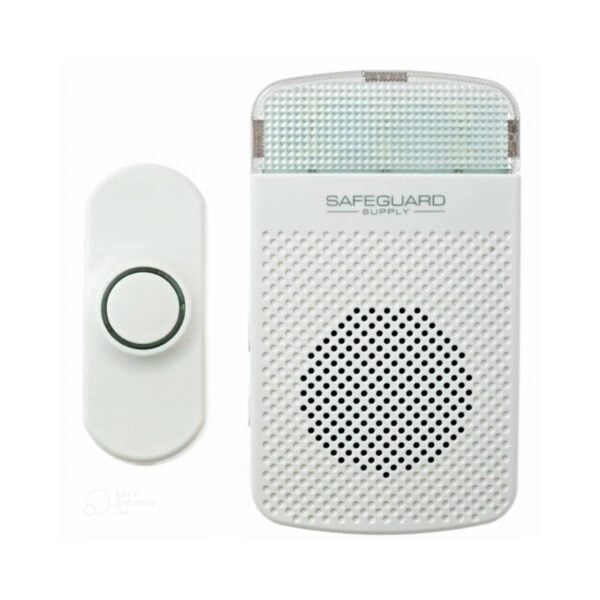
    By Safeguard Supply, this plug-in wireless doorbell kit is easy to install and use. The set features the model LRA-PBTXA wireless doorbell push-button plus the LRA-DCRXS, plug-in receiver/speaker.  The chime receiver has 3-levels of operation (Sound, Strobe, Sound + Strobe) and plays 18 different sounds. There’s no chance of interference from a nearby doorbell – with over 100,000 privacy codes available.

    Lithium batteries are included in the push-button transmitter. Simply mount the doorbell button at your entrance and plug the chime receiver into an indoor outlet.

    • Up to 1,000 ft. range (from doorbell button to plugin door chime speaker/receiver)
    • 18 melodies
    • The speaker/receiver plugs into a standard 120V AC electrical outlet.
    • One-year manufacturer’s warranty
    • Kit ships with 1 push-button.
    • Expandable with all LRA Products?


    Battery (Optional Plug) Wireless Door Chime Kit with Strobe & 1,000 Ft. Range Model LRA-D1000 $49.98

    From Safeguard Supply, this long-range, wireless doorbell transmits up to 1,000 feet. Expand the capacity of the door chime by adding up to 3 more pushbuttons or sensors. When used with the optional door/window sensor contact, you can protect windows from unknown intruders, too. With the sensor in place, the doorbell activates if/when the door or window is opened. The range can be shortened by metal or obstacles between the transmitter (bell button) and the speaker. For troubleshooting assistance to get the most out of your doorbell, contact the knowledgeable customer service team at 1800Doorbell.

    • Up to 1000 ft. range
    • 32 different melodies
    • The speaker/receiver plugs into a standard 120V AC electrical outlet.
    • Bright, flashing LEDs can flash when the bell sounds, or use sound and LED light separately.
    • Works well for the hearing impaired at home and also in commercial or industrial settings where there’s lots of noise.
    • Provides inexpensive added door security and/or window security when used with optional window sensors.
    • Four zones can be used. Assign one push-button (or sensor) per door or window.
    • 12-volt Plugin Adapter available
    • Add-on Wireless Push-Button available
    • Magnetic Door or Window Contact /Sensors available
    WC180-SS Flashing Doorbell Kit with SS155_SS111
    WC180-SS Full Kit Flashing Strobe

    Flashing Doorbell with Strobe Light Flashes with Door Chime Sound Model WC180-SS $44.98

    By Safeguard Supply, this Wireless Door Chime was designed especially for the hearing impaired – or anyone else who wants a visual alarm signal and an audible doorbell. This flashing doorbell works great for a hard-of-hearing relative or any loud environment or workplace. This model flashes a strobe light and rings loudly to alert you that you have a visitor. Over 30 privacy code options help avoid false alarms from a nearby doorbell.

    • Flashing light-and-sound doorbell.
    • The WC-180-SS wireless doorbell kit for the hearing impaired includes one wireless button (transmitter) and one plug-in chime/receiver (speaker).
    • The range reaches up to 600 ft. (For a 1000 ft. range, order the LRA-D1000 wireless door chime kit with flashing LED light.)
    • One-year manufacturer’s warranty
    • Add-on Wireless Push-Button available
    • Magnetic Door or Window Contact Sensors are available

    Wireless doorbells can significantly improve your home or business environment. The best choices offer various pleasant sounds and melodies, visual alerts, added security features, and convenience. They are reasonably priced and simple to install. Some will even add a designer decorative element to your home or office entry. If you’d like expert advice on choosing the best doorbell for your home or business, contact 1800Doorbell today.

  • Give Me the Bottom Line: Long Range Wireless Doorbell Reviews

    Give Me the Bottom Line: Long Range Wireless Doorbell Reviews

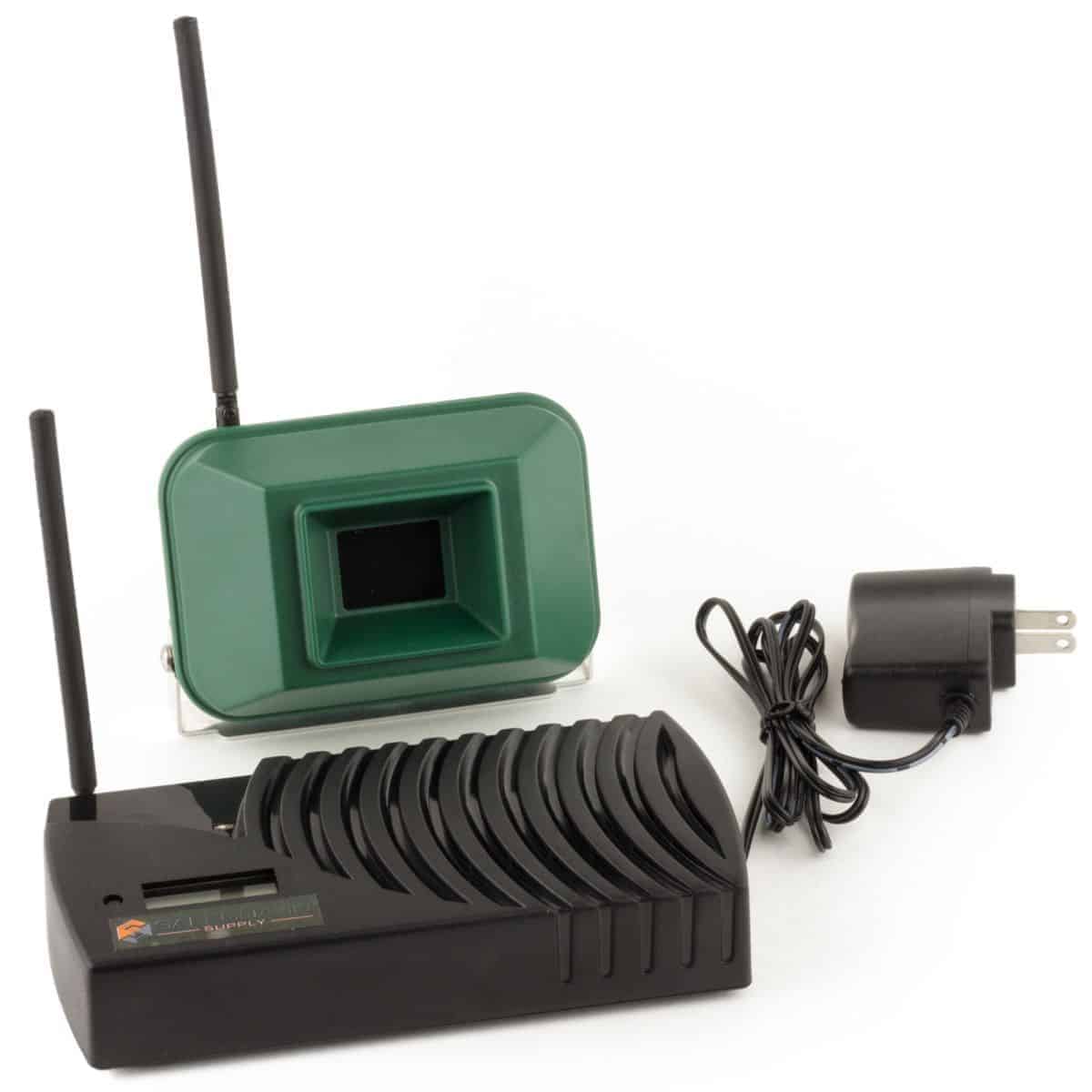
    Take a moment to read our Long Range Doorbell Reviews in this article.  The ERA-UTDCR is our most popular long range wireless doorbell.  It has a range of up to 4,000 feet and plugs into a standard wall outlet.  The kit ships with the long range door chime receiver and one wireless doorbell button that also may function as a magnetic door alarm sensor. 

    The receiver in the kit is the ERA-DCRX which sits on a desktop or may be mounted on the wall. It has four zones, and when triggered by a paired sensor, each zone will play a distinct sound. This allows you to pick a different melody for each transmitter so you’ll know which sensor triggered the door alert. The volume control allows you to adjust the volume level.

    The door chime also features a small flashing LED that shows the zone that corresponds with the push button, or transmitter, that was pushed.   As with most wireless chimes, you can expand this system by adding more push buttons and/or receivers.  In our offices, for example, we have a push-button for the front door and one for the bay door at the back of the warehouse. 

    Another great feature of the ERA-DCRX long-range doorbell receiver is the 12V DC outputs on each zone allowing to connect accessories such as a loud siren, bright flashing strobe lights, and even a fire alarm bell. In addition, the receiver features a C-FORM relay for integration with external devices.

    The sensor in this kit is the ERA-UTX which is a rugged, outdoor-rated wireless push button and/or a magnetic door contact. It is powered by a long-lasting door chime battery that should last 1-2 years depending on usage.

    When the door is opened, an instant alert sound is sent to the various receivers we have in our warehouse and offices. We can also keep our doors locked, and when a visitor pushes the ERA-UTX mounted outside, we also receive alert notices.

    Best Wireless Door Chime Kit for Homes & Houses, and Smaller Businesses

    Shop Now for the ERA-UTDCR Long Range Wireless Doorbell

    ERA-UTDCR Long Range Doorbell Reviews

    The ERA-UTDCR is our most popular wireless door chime kit for large businesses and warehouses.  It is a high-powered doorbell that is our longest-range door chime.  If you have a situation where you need something high-powered and long-range, more than 800 feet, this is the product we would recommend.

    The ERA-UTDCR is a new long range wireless doorbell kit created by 1800doorbell for those who need a powerful wireless doorbell.  With a range of up to 5,000 feet, this kit has unrivaled power in the wireless doorbell world.  The kit was created using two products manufactured by Dakota Alert.

    The main component is the ERA-UTX which is a universal transmitter, push button, and door/window contact rolled into one.  Powered by a 3-Volt Lithium battery (included) the UT-4000 will transmit a wireless signal to the ERA-DCRX plug-in receiver.

    The ERA-UTX is outdoor rated and may be mounted using the included double-sided tape or included mounting screws.  You could also use the product as a door window contact alongside using it as a push-button.  If you wanted to leave your front door locked, you could use the push button.  Leave it unlocked and you could use it as an entrance alert that creates a chime sound when the door is open. An often overlooked feature of this transmitter, the UT-4000 is that it also features N/O and N/C contacts, allowing you to integrate the device with other products.

    The kit belongs to the Safeguard Supply ERA series of products meaning it is expandable by adding more transmitters and receivers and will integrate with their driveway alarm monitors and sensors.

    For example, you could use this as an entrance alert and/or push button and also use the ERA-DSTX as a driveway sensor to alert you when anything enters your driveway or approaches your receiving door. Great features of this Product: -Range of up to 4000 ft. -Use as a push button, window/door contact, or a transmitter when integrated with a product that uses NO or NC terminals -Expandable by adding more sensors and buttons, or adding more receivers -One-year manufacturer’s warranty.

    Great Features of this Product:

    • Powerful at ranges up to 4,000 feet
    • Add to 12 transmitters per receiver and an unlimited number of receivers
    • Each receiver features 4 zones, each with a 12v DC output to connect things like loud sirens, flashing strobes, and more.
    • Expandable may add more pushbuttons and receiver
  • The 17 Most Ridiculous Redneck Doorbells

    The 17 Most Ridiculous Redneck Doorbells

    The creative genius of rednecks never ceases to amaze me. These doorbells are sure to make you chuckle. Check out the top 20 most ridiculous redneck doorbells below. The next time you are driving down a country road, keep your eyes peeled for these creative redneck doorbells. You might just get a good chuckle out of them.

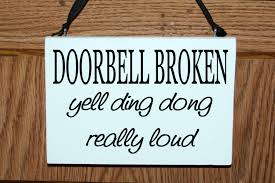
    20 yell ding dong sign

    This one is just a simple sign that reads “Doorbell is broken, yell ding dong really loud.” But it’s creative in its own way, and would definitely work if you had noisy neighbors.

    19 triangle doorbell

    This redneck doorbell should be called a cowboy doorbell. It is a creative use of an old cowboy bell. I can just imagine the look on the UPS guy’s face when he walks up to this house. Dinner? What are you cooking?

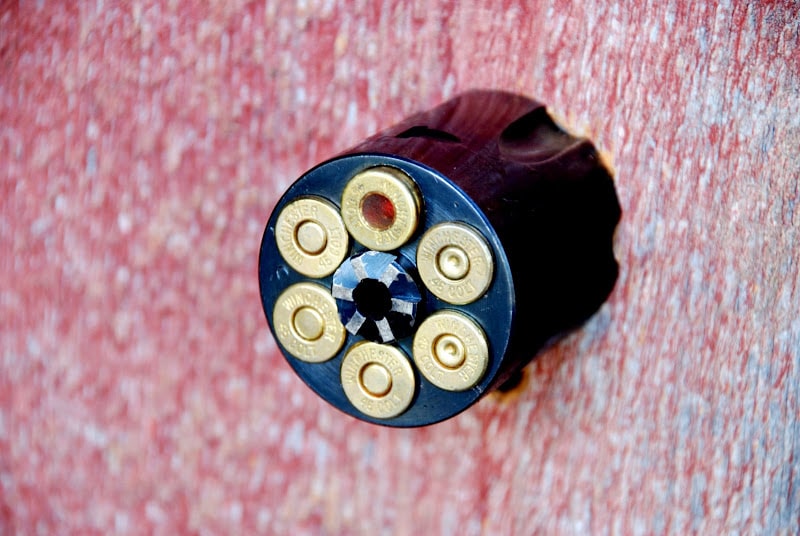
    18 revolver barrel doorbell

    This is an interesting doorbell posted next to the front door of a house. What happened to the rest of the gun? If you notice, one of the bullet cartridges is a light push button. Push at your own risk!

    17 pistol doorbell cover

    Push and Run! That’s what I would be thinking after seeing this pistol-shaped wired doorbell button. Not the most inviting one I’ve seen, but who am I to judge?

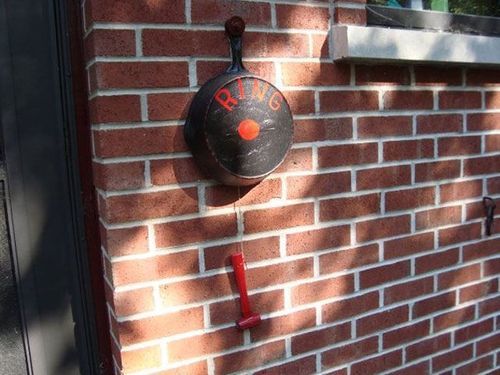
    14 hammer and pan doorbell

    Pick up the hammer and bank the skittle. These homeowners must not have kids. Mine would be banging the pan all day long. With the price of steel these days, this one actually more expensive than a real doorbell button. I wonder if they cook with this skittle door dinner? Is it a seasoned skillet?

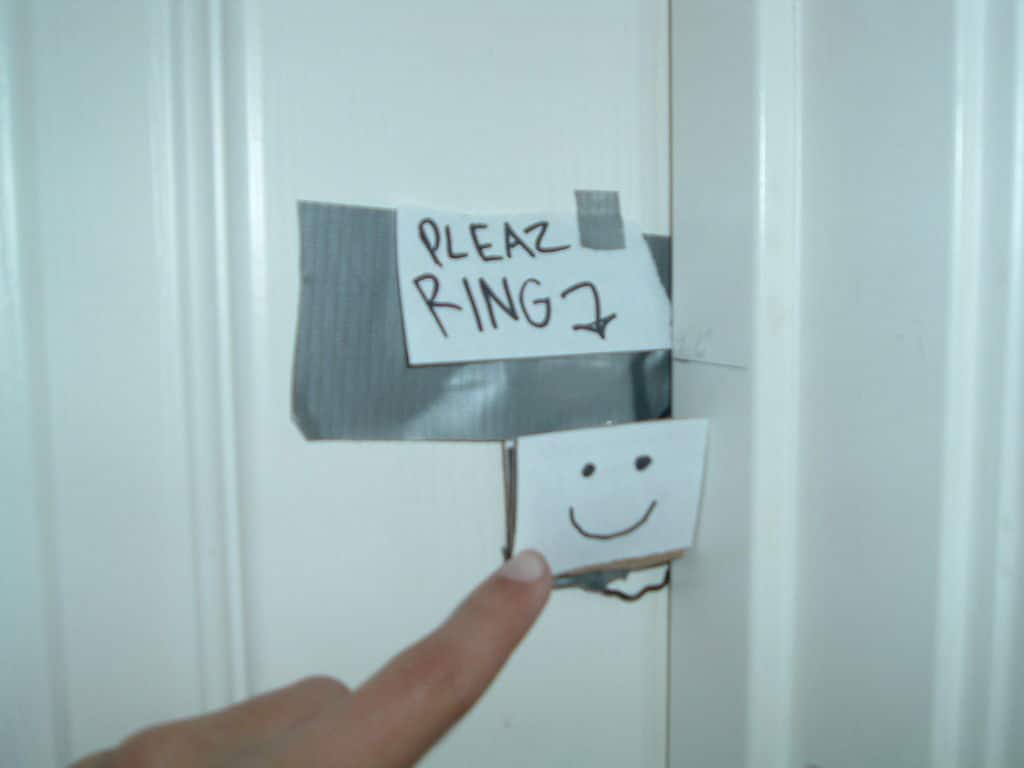
    13 duct taped electronic doorbell

    I’m not really sure what to think of this one. Duct tape is great, but it will only last so long. This looks like a shortcut on the “honey-do” list. “Honey, how did you install the doorbell so fast?”

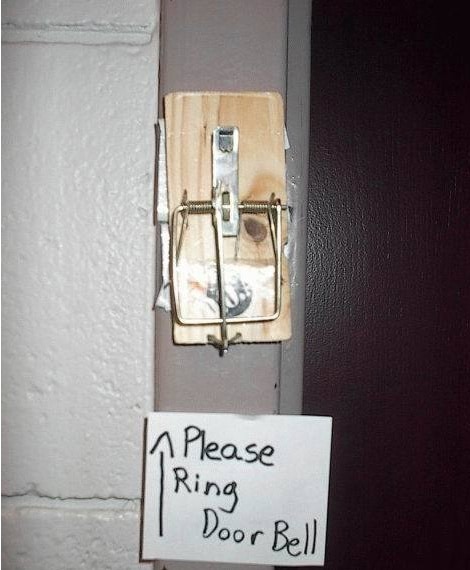
    12 diy mouse trap doorbell

    This doorbell button and the one below fit into a new category “least inviting doorbell buttons.” I’m not sure if there was ever cheese in this mouse trap, but I cannot imagine anyone in their right mind would press it.

    11 bear trap doorbell

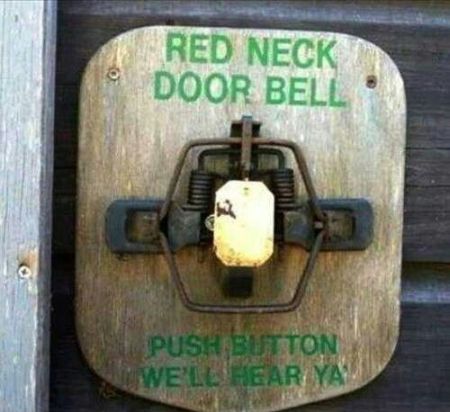
    If I were a bear trapper, this might be my go-to push button. I think there needs to be a “push at your own risk” sign right next to this one. Not sure if you can read the sign, but after reading it, I get it. Press the red circle, let out a scream as you see your crushed finger, and if anyone is home, I’m sure they will come to the door. Have your phone ready to dial 9-1-1 after this one. Does anyone know a good attorney?

    07 bear trap doorbell small
    OLYMPUS DIGITAL CAMERA

    What’s up with the traps? This homeowner has a funny sense of humor or doesn’t like people.

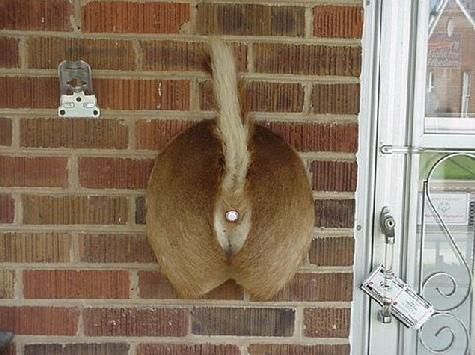
    10 doe butt doorbell

    Not sure what to say about this one. I would be very hesitant to push the “red” button in the center of this one. My next question is, what kind of animal is that? Did they have to drill out a hole for the wired push button center? Is it lighted at night? Creepy at best.

    09 deer butt doorbell

    Similar to the above, this dude is very proud of his hunting prowess. Where’s the rest of the deer? Where is the other end of it? If this homeowner was serious, the would mount the front of the deer on the other side of the wall.

    Is the button anatomically in the correct position? This one is certainly creepy, don’t get me wrong.

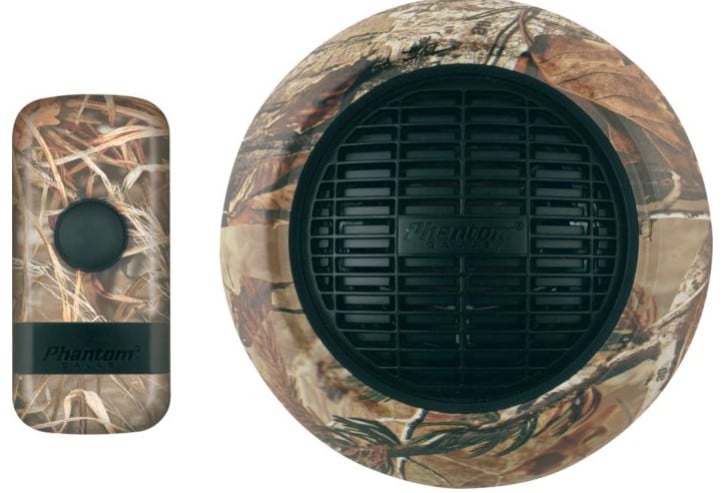
    06 cabela sportsmans doorbell

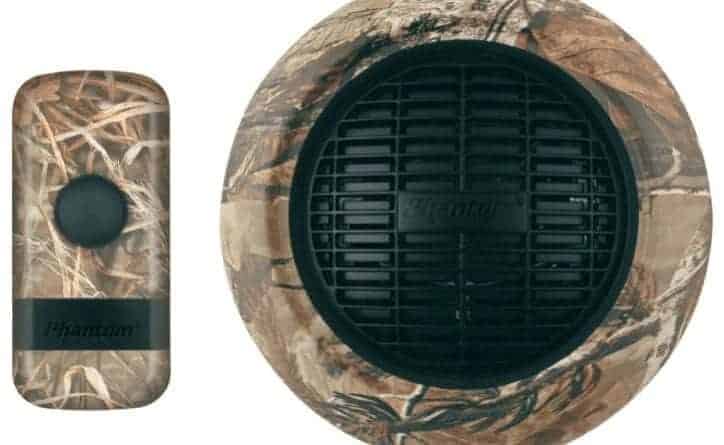
    I have to admit, this one is kind of cool. It does present a little problem though. If your front doorbell wireless push button is camouflaged, wouldn’t it be a little hard to see? I think a good swath of hunter orange might be appropriate here.

    05 bottle of rocks doorbell

    I wonder if that bottle is recycled. This homeowner certainly takes advantage of recycled products. Did they find it on the side of the road? If you look at the bottle, it looks like people have actually shaken it. Can’t be very expensive.

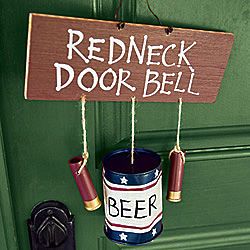
    03 beer can shotgun shells doorbell

    At least use a real beer can dude.

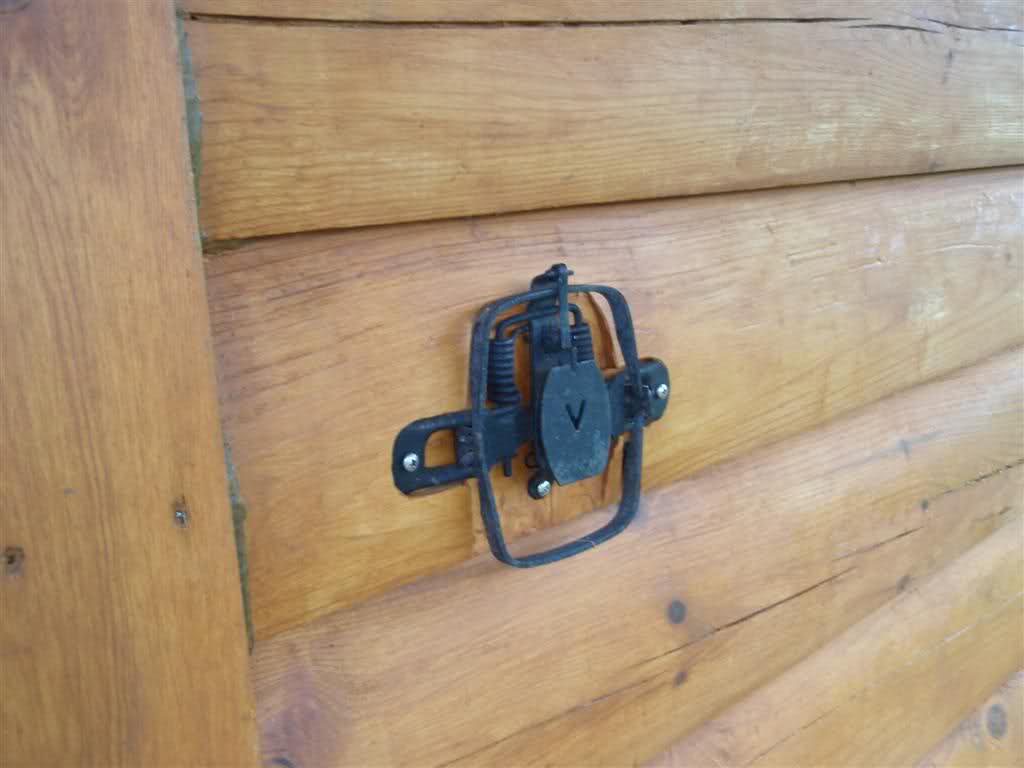
    04 bear trap doorbell redneck

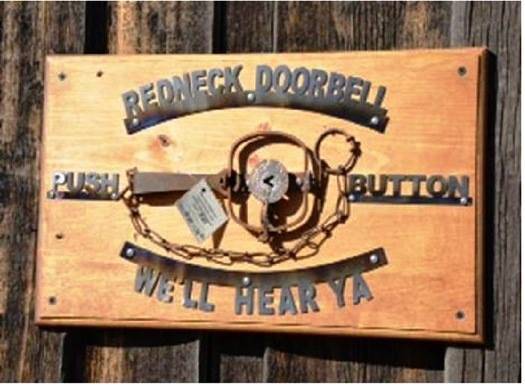
    What’s up with the traps? I can’t see this as a cheap one because they have a nice piece of wood they mounted the trap on and used some cool metalwork to explain what it is. I wonder what the small tag says? Maybe stating they are not liable for missing fingers?

    01 bear trap doorbell on wood
    02 altoids tin doorbell

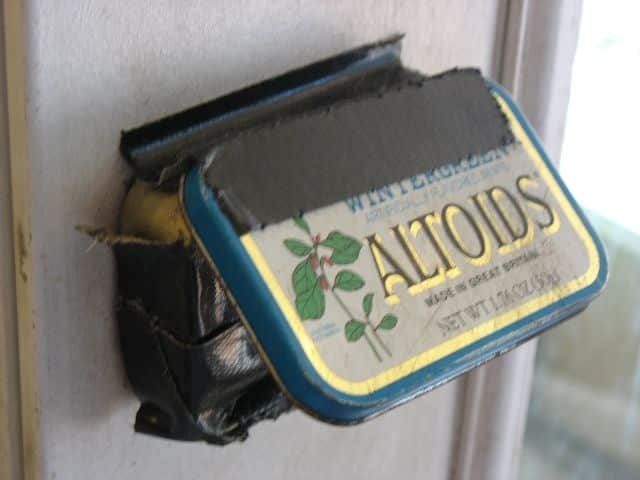
    I definitely like the resourcefulness. You know, I have a good friend who cannot eat a whole Altoid–he says they’re too hot. It would take him quite a while to get through this case of mints. I would really like to know what’s under the cover. There’s an abundance of duct tape in use here. The hinges must have rusted off. This has to be the cheapest one.