1800doorbell

Tag: era products

  • Is it Possible to Make a Doorbell Sound Louder?

    Is it Possible to Make a Doorbell Sound Louder?

    Struggling to Hear Your Doorbell? Here’s How to Fix It

    We’ve all been there—you’re expecting a package delivery or guest, but your wired doorbell is barely audible from the back of the house. Maybe you’ve missed important deliveries or kept visitors waiting simply because you couldn’t hear that faint chime. The good news? You don’t need to replace your entire doorbell system. Doorbell extenders offer a straightforward solution that works with your existing setup.

    Whether you’re dealing with a large home, background noise, or hearing difficulties, a doorbell extender can bridge the gap between your front door and wherever you spend your time. These devices essentially give your current doorbell a voice that carries throughout your entire home.

    In this guide, we’ll walk through the different types of doorbell extenders available, help you choose the right one for your situation, and show you how to set it up. We’ll also tackle the most common questions people have about extending their doorbell’s reach.

    The installation process is simpler than you might think—no need to call an electrician for most setups. Whether you’re tech-savvy or prefer straightforward solutions, there’s likely an option that will work for your home and budget.

    Ready to never miss another doorbell ring? Let’s explore how doorbell extenders can solve your hearing problems once and for all.

    Understanding Doorbell Extenders

    A doorbell extender works like an amplifier for your existing doorbell system. Think of it as adding extra speakers throughout your home that all respond when someone presses your doorbell button. The beauty is that you keep your current doorbell exactly as it is—the extender simply multiplies its reach.

    There are two main approaches to extending your doorbell’s range, and the right choice depends on what type of doorbell you currently have:

    Sound-Triggered Extenders: These clever devices literally “listen” for your doorbell’s chime and then repeat that sound through additional speakers. They work great with traditional mechanical doorbells that produce that classic ding-dong sound.

    Wire-Connected Extenders: These tap directly into your doorbell’s electrical circuit, detecting when current flows through the system. They tend to be more reliable and work well with both traditional and modern doorbell systems.

    Both types can work with multiple receivers, so you can place chimes in your basement workshop, upstairs bedroom, or anywhere else you might not hear the original doorbell.

    The result is a doorbell system that follows you around your home, ensuring you’ll always know when someone’s at the door.
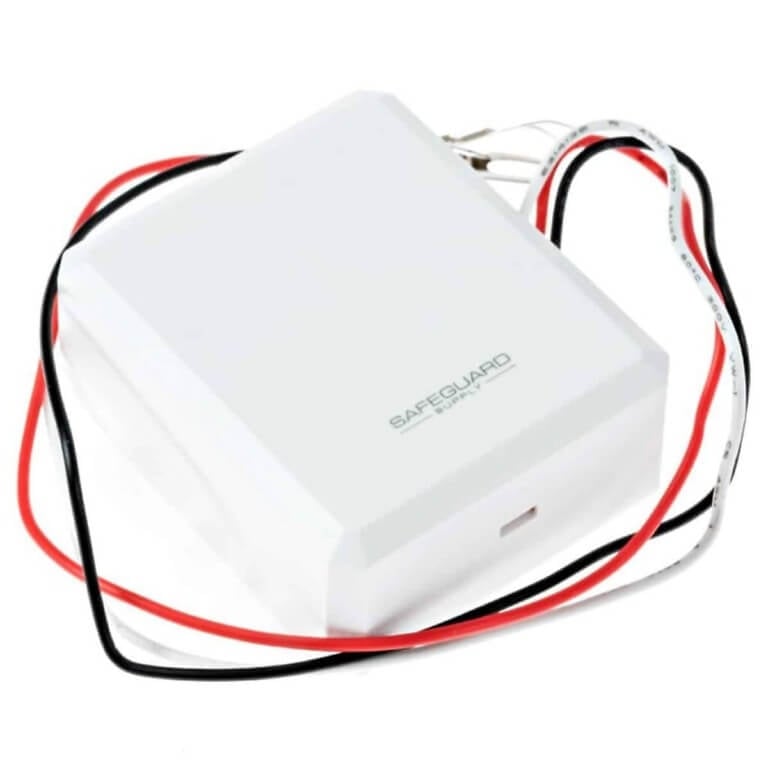
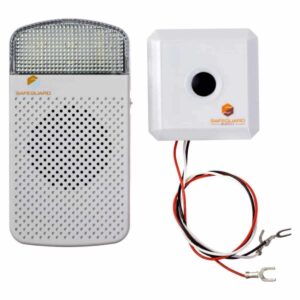
    ERA-EXTX Door Bell Chime Extender
    ERA-EXTX Doorbell Extender
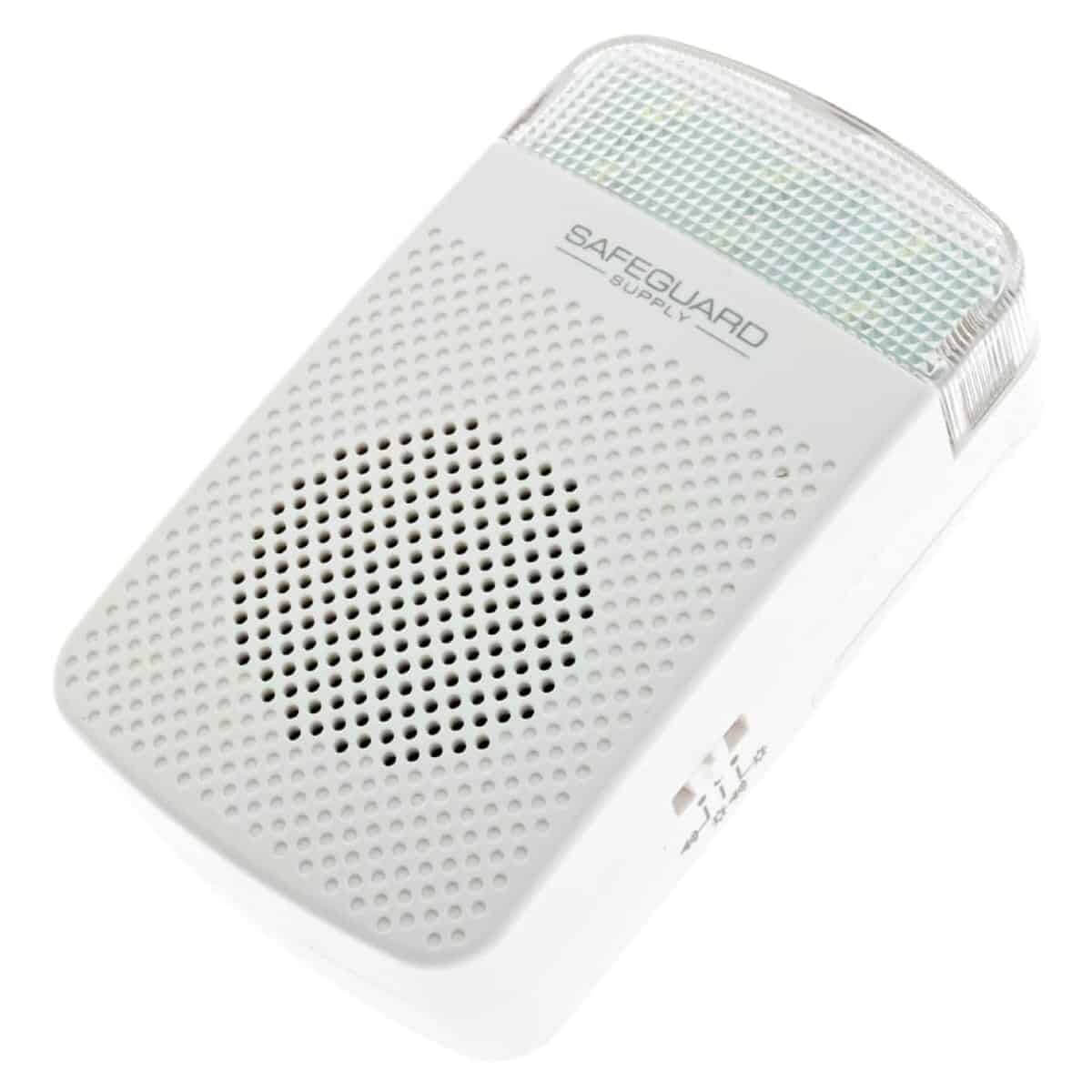
    ERA-RXPG Plugin Receiver for Stores Operation Mode Toggle Switch
    ERA-RXPG Plugin Receiver with Strobe

    Why Doorbell Extenders Make Sense

    The practical benefits of a doorbell extender go beyond just making things louder. In larger homes, even a loud doorbell can get lost in the distance between floors or around corners. If you work from a home office, spend time in a basement, or simply enjoy relaxing in a back bedroom, your current doorbell might as well be silent.

    Modern doorbell extenders also offer features that weren’t available in the past. Many include adjustable volume controls, so you can set different levels for different rooms. Some offer multiple chime options—maybe you want the traditional ding-dong in the living room but prefer a simple beep in your office. Visual alerts like flashing lights can be incredibly helpful for anyone with hearing difficulties or when you’re in a noisy environment.

    How the Technology Works

    Behind the scenes, a doorbell extender creates a simple communication network in your home. The basic setup involves a transmitter that connects to your existing doorbell system and one or more receivers that you place where you need to hear the chime.

    When someone presses your doorbell button, your original chime sounds as usual. Simultaneously, the transmitter detects this activity—either by sensing the electrical current or hearing the sound—and immediately sends a radio signal to all connected receivers. These receivers then produce their own chime, creating a coordinated announcement throughout your home.

    The whole process happens so quickly that the sounds appear to be simultaneous. Most systems use standard radio frequencies that work reliably through walls and floors, typically providing coverage for several thousand square feet.

    Weighing Your Options

    Like any home improvement, doorbell extenders have both advantages and limitations worth considering. On the positive side, they work with virtually any existing wired doorbell, the installation is usually straightforward, and you can expand the system by adding more receivers as needed.

    The main considerations involve placement and power. Plug-in receivers need to be near electrical outlets, which might limit where you can put them. Battery-powered options offer more flexibility but require occasional battery changes. Some systems also require the transmitter to be wired into your doorbell circuit, which might need an electrician if you’re not comfortable with electrical work.

    Range can be another factor in larger homes or those with thick walls, though most quality systems provide adequate coverage for typical residential situations.

    Common Questions Answered

    What’s the simplest way to make my doorbell louder?

    A doorbell extender with plug-in receivers is usually the easiest solution. You can have additional chimes throughout your home without rewiring anything. If you want to keep things even simpler, look for sound-triggered extenders that don’t require any connection to your existing doorbell wiring.

    How far can I extend my doorbell’s reach?

    Most residential doorbell extenders provide reliable coverage up to 1,000-4,000 feet, depending on the system and your home’s construction. This is typically more than enough for even large homes. If you have an unusually large property or outbuildings, look for commercial-grade systems with extended range capabilities.

    Can I add a chime to my second floor?

    Absolutely. This is one of the most common uses for doorbell extenders. Simply place a receiver upstairs wherever you spend time. Wireless receivers make this especially easy since you won’t need to run any cables between floors.

    Is it okay to have multiple chimes going off at once?

    Modern doorbell extenders are designed to handle multiple receivers without timing issues. Unlike trying to wire multiple traditional chimes (which can cause problems), wireless extender systems coordinate all the chimes to sound together properly.

    Can I adjust the volume on my doorbell?

    While most traditional wired doorbells don’t have volume controls, doorbell extenders often do. This means you can set the perfect volume level for each room where you place a receiver.

    What else can I do to improve my doorbell’s effectiveness?

    Beyond extenders, consider the location of your current doorbell chime. Sometimes moving it to a more central location helps. For outdoor doorbells, ensure the button mechanism is working properly—a weak button press might not trigger the chime reliably. Also, if you have a battery-powered doorbell, fresh batteries can make a significant difference in performance.

    Making the Right Choice

    Missing visitors and deliveries because you can’t hear your doorbell is frustrating, but it’s a problem with a straightforward solution. Doorbell extenders offer a practical way to extend your doorbell’s reach without replacing your entire system or running new wires throughout your home.

    The key is choosing the right type for your situation. If you have a traditional mechanical doorbell and want the simplest installation, a sound-triggered extender might be perfect. If you want the most reliable performance and don’t mind a bit of wiring, a hardwired extender could be the better choice.

    Either way, you’ll end up with a doorbell system that works throughout your entire home, ensuring you never miss another important visitor or delivery. For more information about specific extender options, check out our doorbell extender selection.
  • Wireless Door Alerts & Doorbells for Thick Concrete Walls & Steel Doors

    Wireless Door Alerts & Doorbells for Thick Concrete Walls & Steel Doors

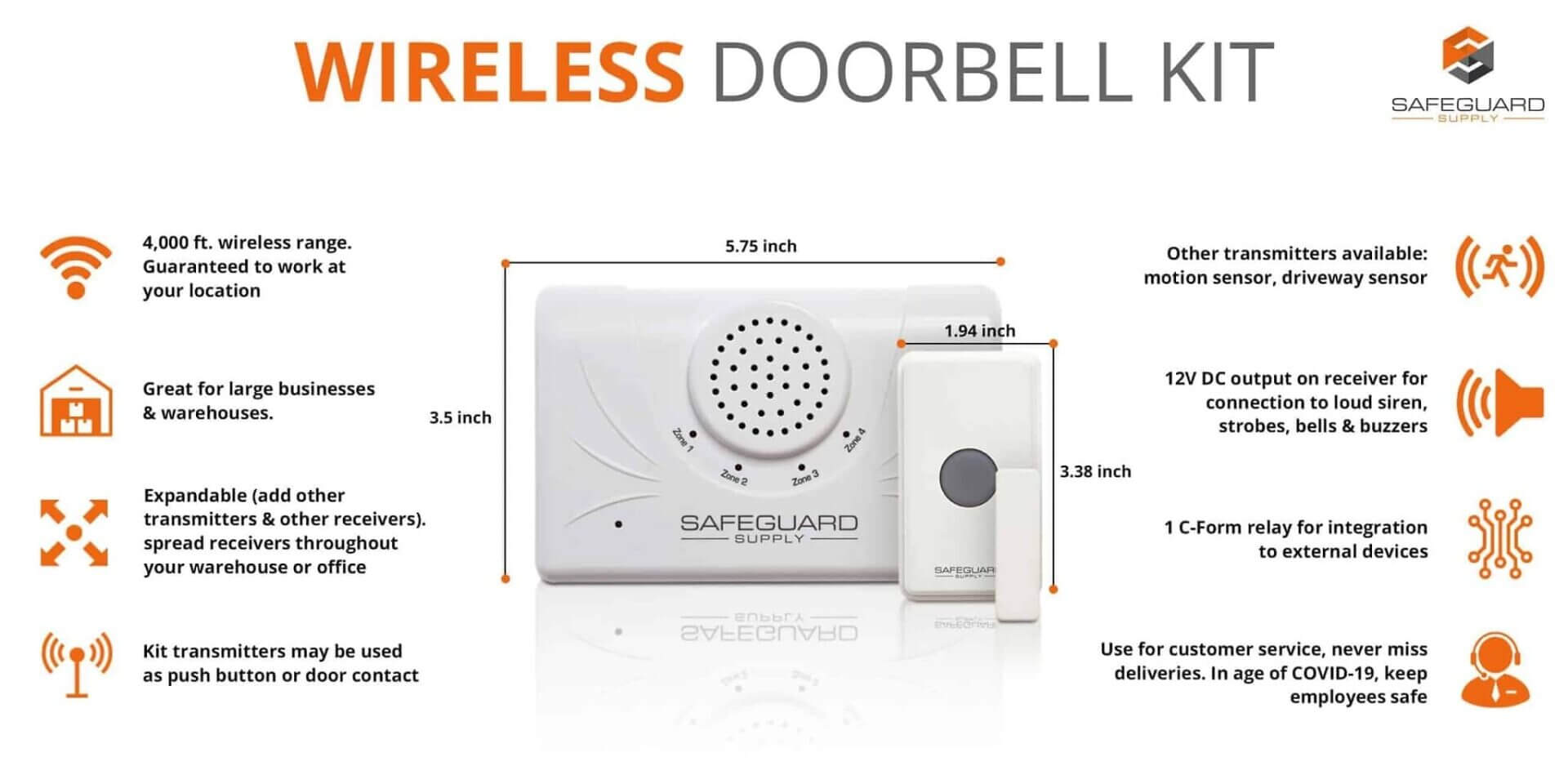
    Safeguard Supply guarantees their ERA-UTDCR Business Door Chime products to work or your money back. This is because of the 4,000 ft. range, from the transmitter or sensor to the receiver. Simply put, you won’t find wireless products with this kind of range on Amazon.com or your local box retail store. When dealing with any wireless products, it’s important to understand that the stated wireless range is always “line of site.”

    Although products are physically tested to ensure they are functioning correctly, the wireless range is an “up to” number & is calculated using mathematical equations based on the electronics of the products. In essence, it’s the “lab tested” range. This makes sense because it’s the only way to standardize the wireless range. There are simply too many variables at play to standardize a wireless range if it were tested in real-world scenarios.

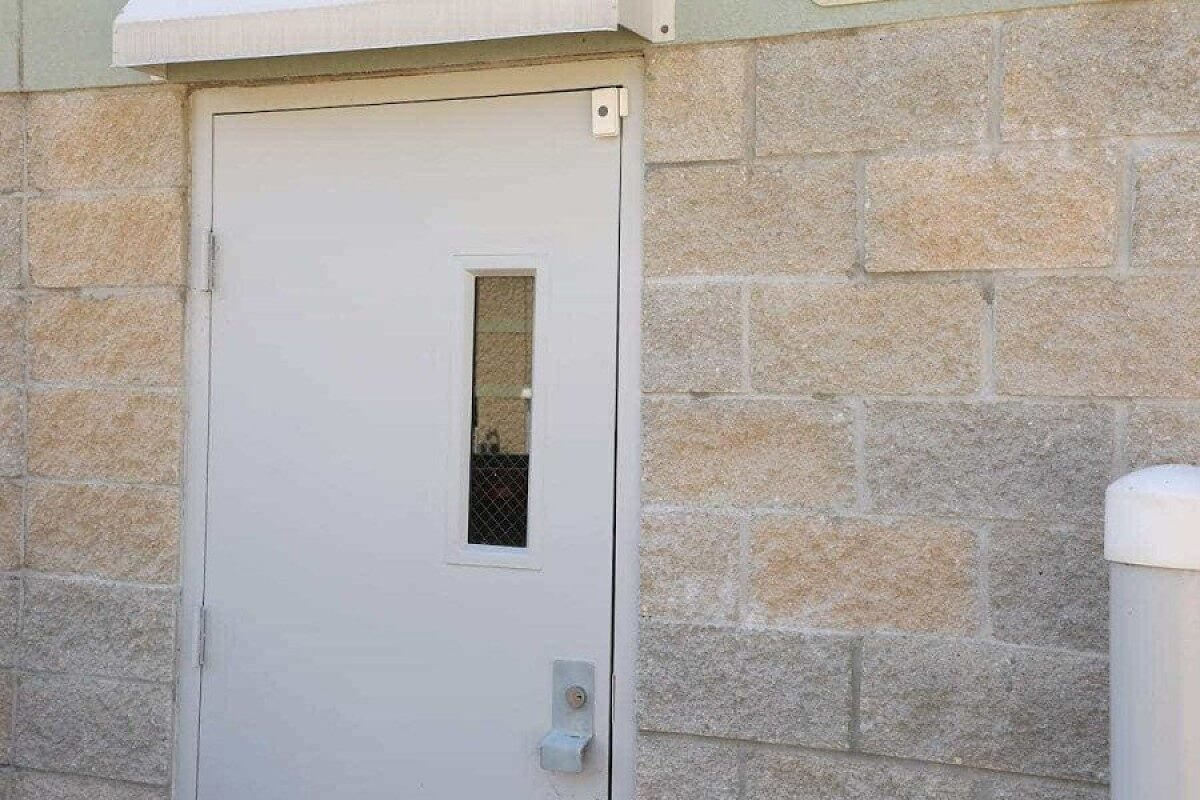
    With that said, a range “up to” 4,000 ft. line of the site should be sufficient in most situations. As stated above, there are physical and environmental factors that will reduce the effectiveness of the wireless signal. If a wireless push button is outside and must penetrate concrete block construction, this will reduce the wireless signal by up to 50% right off the bat. Every interior wall will reduce the signal by another 15%-30%, depending on the materials used, the thickness of the walls, etc. If you are placing a magnetic door contact, like the ERA-UTX, on a solid steel door, think about the fact that this wireless signal will bounce off the door and must also penetrate the steel. That’s why, even with the ERA line of products, you might have a receiver that works fine in the first couple of offices, but as you distribute them throughout your warehouse, you may find receivers that start to drop the signal.

    Is There a Way to Boost the Wireless Line of ERA Products?

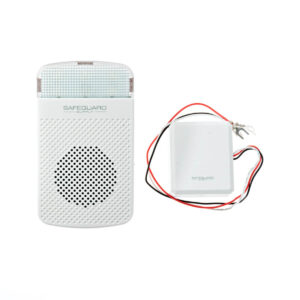
    Although this is rare, there may be situations where you need to increase the wireless range on the ERA line of products by Safeguard Supply. To do that, we use a combination of two products, the ERA-EXTX doorbell extender, and the ERA-DCRX desktop, wall hang receiver.

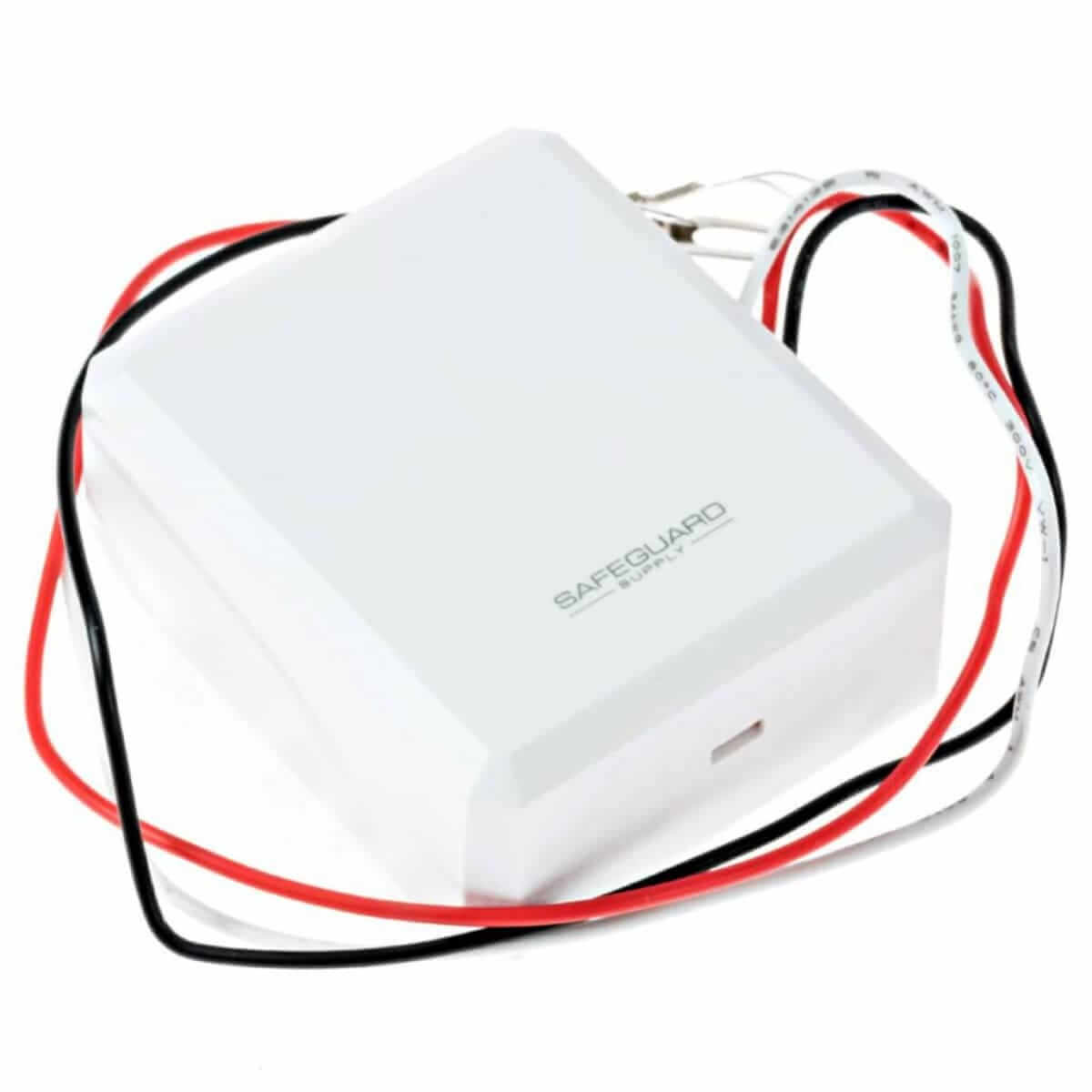
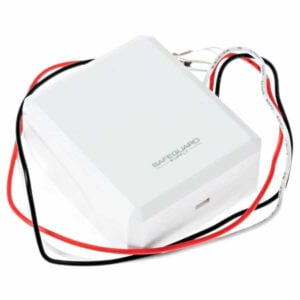
    The ERA-EXTX Wired Doorbell Extender

    The ERA-EXTX is a wired doorbell extender by Safeguard Supply. In most cases, it is used to wire into an existing wired doorbell, and when triggered, sends a radio signal to a compatible ERA receiver. When a visitor outside pushes the wired doorbell button, the existing doorbell rings as normal. At the same time, the wired in ERA-EXTX will transmit a radio signal to the ERA receiver which will play the programmed melody. In addition to this, the ERA-EXTX can be used, along with the 12V DC outputs on the ERA-DCRX receiver to transmit a signal another 4,000 ft. to an additional ERA receiver.

    The ERA-DCRX Desktop Receiver

    There are three receivers in the ERA line of products. All ERA receivers are compatible with one another. Each works with up to 12 different ERA sensors/transmitters and an unlimited number of receivers may be programmed to a sensor. Each receiver has a wireless range of up to 4,000 ft. from an ERA transmitter or sensor.

    ERA-RXPG Plugin Receiver

    The ERA-RXPG is a plugin receiver with a built-in strobe light. Simply plug it into a standard wall outlet, program it to the receiver, and set the operation mode to sound, strobe, or sound + strobe and you have a great wireless door chime alert.

    ERA-VPRX Portable Vibrating Receiver with Rechargeable Batteries

    The ERA-VPRX is a portable receiver with built-in rechargeable batteries. It also has a 4,000 ft. range and may be set to chime only, vibrate only, or sound + vibration mode. It may be clipped on a belt loop, is small enough to place in your pocket, or can stand upright on a desktop. With a six (6) day standby time between charges, it’s a great portable receiver.

    ERA-DCRX Desktop Receiver with 12V DC Outputs

    Finally, the workhorse in the ERA line of receivers is the ERA-DCRX warehouse doorbell receiver. This is a desktop receiver that sits on a desktop or is hung on a wall. A feature that makes the ERA-DCRX stand out from the other receivers is the live 12V DC outputs and the C-Form relay. The 12V DC outputs will send 12V of DC current to an accessory when the receiver is triggered by an ERA transmitter. In this article, we will use the 12V DC outputs to relay the receiver using an ERA-EXTX.

    Overview of Warehouse Doorbell Extender System Will Work

    In a typical scenario, a customer has an ERA-PBTX push button or the ERA-UTX on an exterior steel door of their warehouse. Most of the receivers inside the warehouse will work properly, but some, because of interference, may be outside the range. If you have an ERA-DCRX desktop or wall-hanging receiver within range, you can hook up an ERA-EXTX to a 12V DC output on the receiver. When that receiver is triggered, it will trigger the ERA-EXTX (just as a wired doorbell would) to send a radio signal another 4,000 ft. to another programmed receiver.

    What You Need to Extend the Wireless Range of Your ERA System

    *In order for this setup to work, you must have an ERA-DCRX that is within range and working correctly from an ERA transmitter or receiver. We will call this “receiver 1” in the steps below. The “out-of-range” ERA-DCRX will be referred to as “receiver 2.”

    1. Program the ERA-EXTX to “receiver 2” (the receiver that is out of range from the transmitter/sensor). IMPORTANT! Remember, there is an ERA-DCRX (“receiver 1”) that is already functioning correctly. This IS NOT the receiver we are programming to the ERA-EXTX. In the steps below we will program it to another ERA-DCRX receiver, “receiver 2”. NOTE: If you are using the ERA-RXPG or ERA-VPRX, for “receiver 2,” the steps are similar but consult that receiver’s manual to put it in programming mode.
      • Hold down the “mode” button on “receiver 2.” After approximately 3 seconds, you’ll hear a short tone sound, and the RED LED for zone 1 will blink.
      • Task off the cover of the ERA-EXTX. Push the “front” button.
      • You will then hear a short musical chime sound. This denotes the transmitter (ERA-EXTX) is programmed to that zone.
      • Hold down the “zone” button again and after 3 seconds, you will hear another short tone sound. This takes the receiver out of programming mode.
    2. Next, make sure “receiver 1,” (the one that is within range) is unplugged. This is IMPORTANT.
    3. Remove the cover from the ERA-DCRX (consult the manual for details).
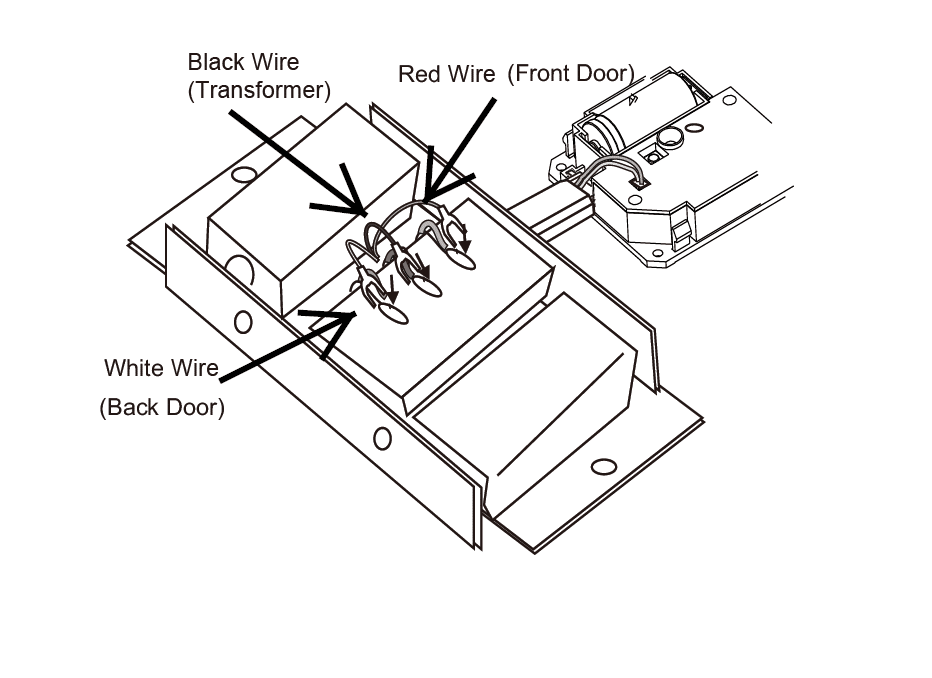
    4. Take the RED wire from the ERA-EXTX and wire it into the positive screw on the 12V DC output for Zone 1. Please see the diagram below. You will need to cut the c-clamp off the red and black wire and stripe them a bit. The RED wire corresponds to the “front” button on the ERA-EXTX.
    5. Take the BLACK wire from the ERA-EXTX and wire it into the negative screw on the 12V DC output for Zone 1. Please see the diagram below.
    6. You can ignore the WHITE WIRE.
    7. Set the duration of the 12V DC output to 5 seconds. Please consult the user manual for the ERA-DCRX to find the location of these dip switches.
    8. Plug “receiver 1” back in.
    9. Trigger the transmitter/Sensor already programmed to the ERA-DCRX “receiver 1.” “Receiver 1” should chime. Simultaneously, the RED LED on the ERA-EXTX will light, and “receiver 2” should chime.

    Diagram of Wiring ERA-EXTX to ERA-DCRX

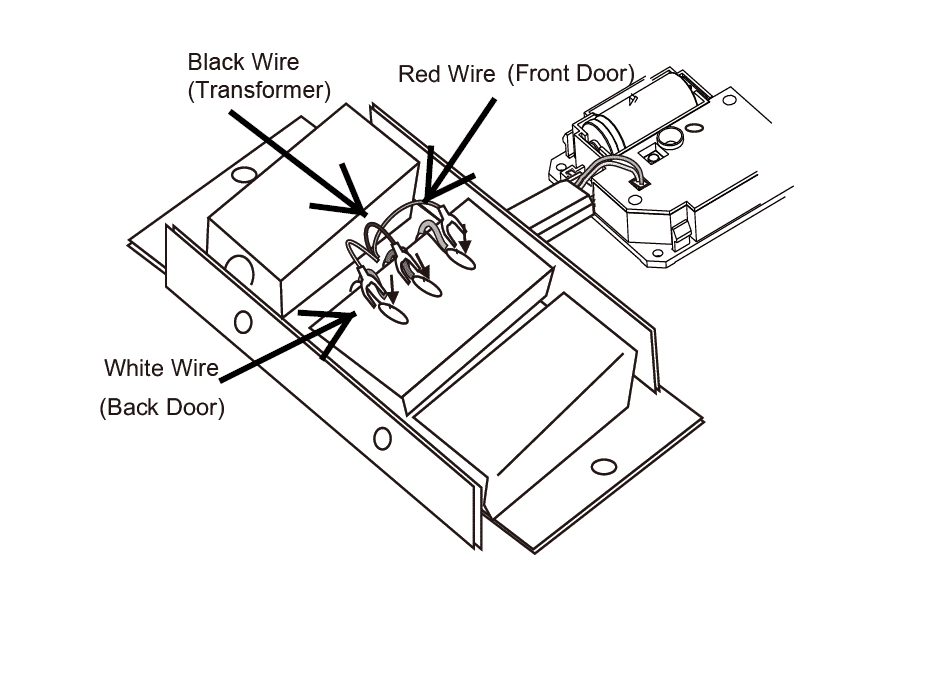
    ERA-EXTX Wireless Transmitter Mounting Diagram to Wired Doorbell
  • How to Make an Old Doorbell Louder

    How to Make an Old Doorbell Louder

    Since secure.1800doorbell.com started back in 1998, we continue to get a common question, “How Can I Make my Old Doorbell Louder?” This is a great question

    How Wired Doorbells Work

    Most wired doorbells create sound when an internal hammer strikes a small metal plate inside the wired doorbell chime mechanics. When the outside wired push button is pressed, it caused the hammer to strike the metal plate. Most wired doorbells have two hammers and two metal plates. When the doorbell is triggered, the first hammer strikes a plate creating the “ding” sound and a second hammer strikes a second plate to create the “dong” sound. Together, this creates the standard “ding-dong” sound when a typically wired doorbell is activated. If you have a second push button connected (usually on a back or side door), only one of the hammers strikes a plate to create the one-tone, “ding” sound.

    Wired Doorbells Aren’t Very Loud

    Noting the paragraph above (make an old doorbell louder), the sound is created from a very simple process; a small hammer striking a metal plate inside the doorbell mechanism. It’s not hard to understand why the common wired doorbell isn’t very loud. Most wired doorbells will create a sound in the range of 75-85 dBA. It’s usually loud enough to hear in the basic areas of your home, but if you’re down in the basement or your bedroom watching television, they just aren’t loud enough to hear.

    Because of the way wired doorbells are made, there’s not a lot you can do to increase the sound from the wired doorbell itself. Some manufacturers can play with the style of the doorbell in an attempt to create resonance chambers that “echo” the sound a little more, but that might only increase the sound by a few decibels. We go back to the original question posed in this article, how to make a wired doorbell in my home louder?

    There is an easy solution and that’s called a “doorbell extender.” These are easy-to-install wireless products that allow you to hear your wired doorbell throughout your home or office. These products offer the benefit of getting to keep the pretty push-button outside to greet visitors and the attractive doorbell in your foyer while making the system easier to hear throughout your home.

    What is a Wired Doorbell Extender

    Wired doorbell extenders” work alongside your traditional wired doorbell. When the wired doorbell in your home is triggered, the doorbell extender will transmit a radio signal to a compatible receiver. This compatible receiver is either a plugin or battery-operated wireless door chime receiver that will play a melody or tune when triggered by the transmitter. Virtually all wired doorbell extenders consist of two components, the transmitter, and the receiver.

    There are two different flavors of transmitters. One version of the transmitter features a small microphone that essentially listens for a doorbell sound. When this sound is detected, it triggers the unit to send the radio signal to the receiver, which then plays the chime sound. The transmitter is typically mounted near the wired doorbell (usually in the foyer of your home) with the small microphone being close enough to hear the doorbell sound.

    The major drawback of this type of system is the occasional false alarm produced when the unit “thinks” it hears a doorbell sound. A doorbell sound on the television, music, or even a random noise it interprets as a doorbell sound could trigger the unit to send the radio signal.

    The second type, and the type we carry here at secure.1800doorbell.com, wires into the existing wired doorbell in your home. The same electrical signal that triggers the wired doorbell hammer to strike the metal plate also triggers the transmitter to send a radio signal. This system tends to be much more reliable as it only triggers when the doorbell itself is triggered.

    How Basic Wired Doorbells Are Wired In Your Home

    To understand the wiring on these products, let’s break down a few wired doorbell terms. First is the wired doorbell push button. This is the button people will see mounted next to the front door of your home. They may be lighted or non-lighted, and all the doorbell extenders we feature on secure.1800doorbell.com work with 2-wired doorbell push buttons (one for the front door and one for the second door, for example.)

    Next is the wired doorbell. This is the unit that produces the actual chime sound and is typically hanging in the foyer of your home or in a hallway. A standard wired doorbell that plays the ding-dong sound work well with the doorbell extenders we feature on this site. Intercom-based doorbell systems and most video doorbells tend not to work well with a wired doorbell extender.

    The third, and final major piece, is the wired doorbell transformer. This is a small device that wires into the 120 voltage of your home and converts the power into a lower voltage the wired doorbell can handle, usually between 12V-16V. The electrician who installed the doorbell system in your home may have installed the doorbell transformer in the garage, in the attic, or even in the wall behind the wired doorbell.

    Wired doorbell systems in your homework in a loop and when the power supply is interrupted, the disruption causes the hammer in the doorbell to trigger. When lifting the cover off your wired doorbell you will see three terminal screws. These screws are typically labeled something like “front,” “second” and “terminal” (they may be labeled differently.) One of the screws is for the front doorbell push button wire, another is for a second door push button wire, and the third is for the wired doorbell transformer. The front doorbell push button will have two wires; one wire into the “front” screw on the wired doorbell, and the other connects to a wire from the wired doorbell transformer. On the doorbell transformer, one wire will connect to the “terminal” screw on the wired doorbell and the other wire will connect to the “font” wire coming off the second wired doorbell push button.

    How to Wire a Doorbell Extender

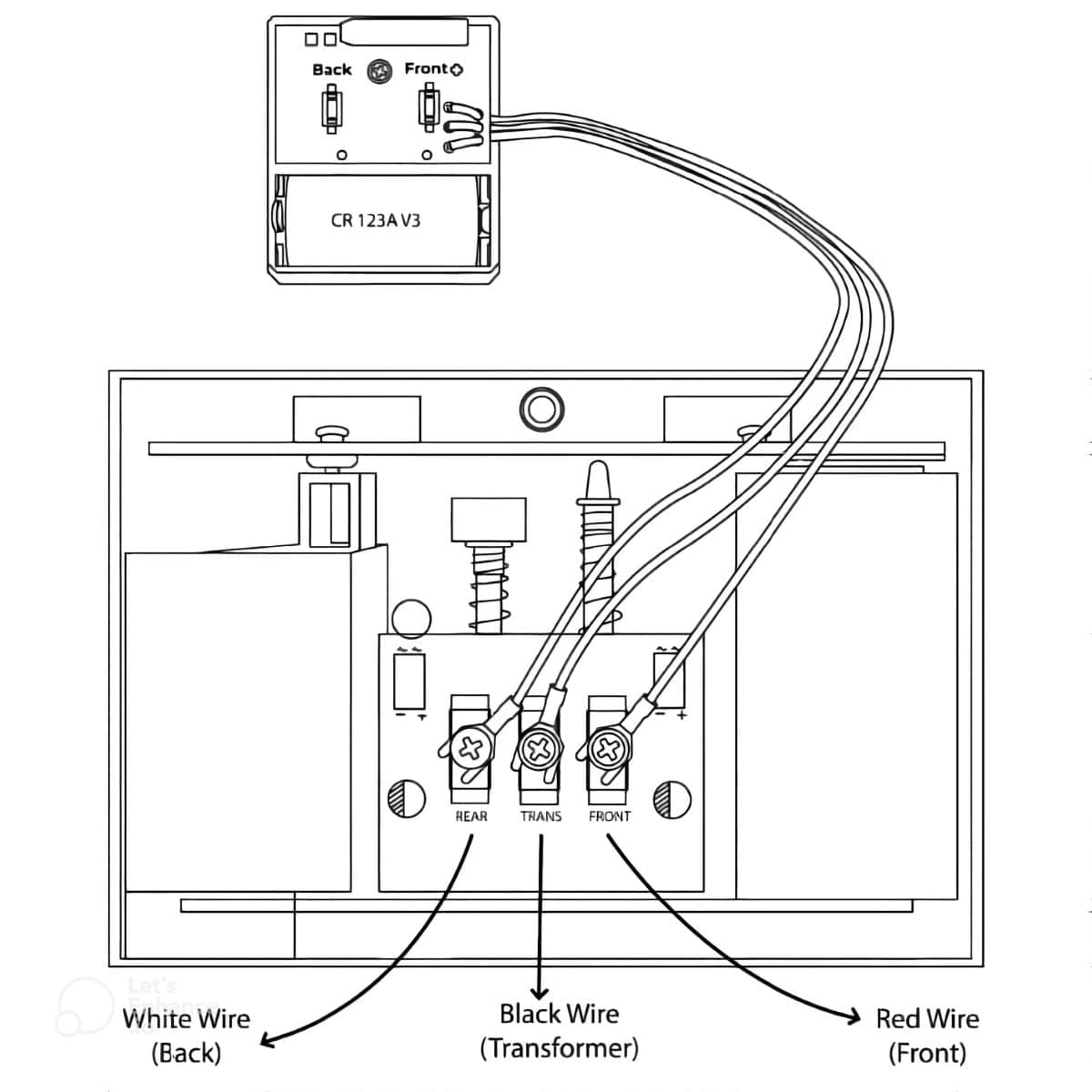
    As mentioned earlier in this article, a doorbell extender kit consists of two main components; a transmitter and a receiver. The transmitter is a small device with three wires coming out of it. One of the wires connects to the “font” screw on the wired doorbell, another connects to the “back,” or “second” screw on the wired doorbell, and the third connects to the “terminal” screw on the wired doorbell.

    The transmitter comes with a high-powered lithium battery that should last 2-4 years before replacement. This battery is used to power the transmitter to send a radio signal to the compatible receiver when triggered. Once wired into the wired doorbell, the transmitter is may be mounted on top of the doorbell cabinet, beside it, or if there’s enough room, hidden inside the cabinet.

    How to Wire A Doorbell Extender to a Wired Doorbell

    When a visitor pushes the doorbell button outside, the increase in amperage running through the circuit will cause your wired doorbell to chime as usual, and at the same time, trigger the transmitter to send a wireless signal to the receiver.

    Ways to Increase the Sound of a Doorbell Extender

    The benefit of using wireless systems in your home is that the receivers tend to have more features than the old doorbell that might be installed in your home. For example, models on 1800doorbell feature volume control, strobe light, and the choice of different sound options. In addition to this, the two models we carry have a range of 1,000 ft. (LRA-EXTX) and 4,000 ft. (ERA-EXTX) to guarantee the product has the power needed to traverse long distances and through the building materials found in your home. Another benefit is that you can add additional receivers throughout your home.

    For example, you could place a plugin receiver in the kitchen, the garage, the basement, and the upstairs bedroom to ensure you don’t miss a visitor to your home. As long as the receiver is within range, the unit will trigger when a visitor pushes the push button outside your home.

    Another important aspect is the fact that you can mix and match receiver types, along with different transmitters and sensors to augment your system as long as they are in the same model line. For example, if you were to purchase the ERA-EXKIT, you can add desktop receivers, motion sensors, wireless push buttons, driveway monitors, as well as more plugin receivers to grow your system.

    Choosing the Right Doorbell Extender System

    There are two different model lines or series of doorbell extenders featured on 1800doorbell. For the most part, the systems are very similar and come down to the wireless range of the system.

    ERA-EXKIT Wireless Door Chime Extender

    If you have a larger home or office or want to put a receiver in a basement or detached garage, you may want to use the ERA series of products.

    The ERA series of products by Safeguard Supply was created to cater to the commercial industry. Commercial locations tend to have larger distances to traverse and thicker building materials such as brick, concrete, and even steel rebar, and the 4,000 ft. wireless range of this series makes it ideal. If you are ever thinking of adding additional sensor types, like an outdoor driveway monitor, and you have a larger yard, you may also want to go with this product line.

    LRA-EX1000S and LRA-EX1000 Wireless Doorbell Extenders

    The wireless range of both of these kits (from the transmitter to the receiver) is up to 1,000 ft. Keep in mind, that whenever we mention a wireless range, this is always the distance measured in a laboratory. This line of sight is measured with zero interference and although all real-world usage of the product will have interference, this product is ideal for smaller and mid-sized homes. Since the extender is located inside the home, the 1,000 ft. range should work for most homes of this size. The difference between the ERA-EX1000S and the ERA-EX1000 is the receiver type, plugin, and desktop respectively.

  • 6 Reasons to Install Business Doorbells

    6 Reasons to Install Business Doorbells

    Business doorbells are becoming more popular, one doorbell company even sold for 1billion dollars. The question is, do you need one for your business?

    Many business owners believe they may not need business doorbells. However, this couldn’t be further from the truth. 

    Having a doorbell installed in your building is important, and there are several reasons why you should get one. If you haven’t already got one for your business then this is something you should consider. 

    Particularly if you have a business that has a lot of customers coming and going. 

    Not only does it give you and your staff more time to be aware of someone coming, but it also adds a professional element. This can go a long way when it comes to making sure that your business looks top-notch. 

    We have had a wide range of businesses from all kinds of industries who have had a doorbell fitted. The reality is, you may need one too.

    So if you would like to learn 6 reasons why you should have a doorbell in your business and a few useful insights along the way, keep reading. 

    1. They Add a Professional Touch

    There are many great things about having a wired doorbell in your business. Perhaps one of them is the fact that it makes both you and your business look more professional. 

    Let’s face it, when we enter a shop or business, we naturally judge how their facilities look, and what kind of standards they have. An easy and inexpensive way to add an extra professional touch is by having a door chime fitted. 

    This way when a client, business associate or anyone else comes to visit, they can get your attention without needing to bang on the door.

    Not only that, but it also helps to make your business look like you are prepared to have guests coming and going all the time. 

    2. You Avoid Missing Important Appointments

    Businesses can get very hectic, particularly with all the work that needs to be done. It’s easy to lose track of every small thing on a checklist. 

    However, that isn’t to say that you should miss important calls or appointments. One of the easiest ways to miss someone who has stopped by is by not having wireless door chimes.

    Without one, you may not know someone has tried to visit.

    Aside from this, a wired doorbell saves you from having to wait around and listen out for a knock on the door. 

    Instead, someone can simply ring the doorbell and it makes you or one of your colleagues aware of their arrival. 

    3. You Avoid Missing Important Deliveries 

    A bit like missing appointments, it’s also easy to miss deliveries that may come your way. Again this can be for several reasons. 

    For many entrepreneurs, deliveries are far down the list of their priorities. However, this doesn’t mean that you have to miss any important deliveries, especially if you have a warehouse doorbell. 

    The signal from a doorbell or driveway alarm allows either you or your reception staff to receive an alert upon the arrival of any deliveries. Therefore, you don’t have to miss a delivery again. 

    4. It Helps You Prepare

    One of the biggest ways wired doorbell buttons can help you is by letting you know that you may be expecting company. A mistake many business owners make is feeling the pressure of being unprepared for important visitors. 

    We’ve mentioned not missing appointments, but also you should give yourself time to prepare for an important guest. If you have a window or door that allows you to get a glimpse of who’s there, this can be beneficial too. 

    After all, first impressions are important. So if you are already prepared for whoever comes through your door, that’s half the battle.

    5. They Are Great for Customer Service 

    Perhaps one of the best feelings about visiting a business is when you feel welcomed. It’s not hard to make customers feel welcome, yet not every business does it. 

    A great way to add a more welcoming touch to entering your business is by adding a doorbell. With the business door chimes that are available, you can add a welcoming sound to your business. 

    This doesn’t just add a nice touch for customers either, but also business associates and even workers. It makes people feel as though your business is more professional. 

    This is because a doorbell helps to signal a person’s arrival without them having to say a word. Customers don’t want to shout and bang on a door to be heard, so a doorbell is a perfect solution. 

    6. They Provide Safety and Security  

    Probably the most important reason you should have a doorbell fitted is for safety and security. Unfortunately, not everyone that wants to enter a business is there with good intentions. 

    In these situations, it’s always better to be safe than sorry, particularly if the person who is trying to enter your working location is dangerous. We also appreciate that not every business is equipped with security. 

    Some businesses are run by more vulnerable members of the community, and in these cases, protection is important. So having a doorbell allows you to know if there is an unexpected visitor. 

    Again, if there is a window or other visible area where workers can see who is trying to get into the premises, this also adds another extra layer of security.  

    Get Your Business Doorbells Now

    Now that you have read about the six reasons to get business doorbells installed, you can see the importance of getting one. If you don’t already have one in your business, then you should consider getting one fitted. 

    There are a lot of advantages to having one and it also adds a nice professional touch to any business location. 

    So if you would look to get a doorbell fitted in your business or if you would just like some friendly advice, then get in touch.

  • How to Choose a Doorbell for Business: A Guide

    How to Choose a Doorbell for Business: A Guide

    Businesses face different kinds of burglaries. In the United States, at least 2.5 million burglaries happen every year.  We often get asked at secure.1800doorbell.com, “How to Choose a Doorbell for Business.”

    Lack of a good business chime may expose your business to theft/burglary. Despite the challenges, choosing a good doorbell for business shouldn’t be an option.

    A business doorbell will enhance security and safety in your workplace. It also helps keep track of the customers that come to your business.

    Maybe you’re wondering, “What should I look for when choosing a doorbell for business?” Here is a simple guide for choosing the best doorbell for your business.

    Business Doorbells Ease of Installation

    How a door chime is installed will determine its performance. You want your business doorbell to function immediately after installation.

    Don’t buy door chimes that are not easy to install. Door chimes that are easy to install are also easy to operate.

    Some may prefer door chimes that come with double-sided tapes. However, thieves can easily remove the tape and get into your workplace.

    Consider screwing your business doorbell in the wall. A good doorbell should also provide flexibility. You should be able to fix it in any position you want.

    DIY doorbell installation may not be perfect. Hire an expert for a safe and excellent installation of your business door chime.

    Finding the Right Doorbell for Business: Technology

    The world is advancing day by day. Modern doorbells have technologies that enhance their efficiency.

    It would help if you considered smart video doorbells for your business. They allow for remote access.

    You only need to connect smart doorbells to your WIFI. By this, you’ll easily track the customers right from your smartphone or laptop.

    You can also choose doorbells that use telephone signals or radio frequencies.

    There are reasons to consider a smart doorbell for your business. They record every detail – good for video evidence.

    Many theft cases happen at night. Smart doorbell cameras have great technology to record high-quality videos in darkness.

    Types of Doorbells for Business Use

    There are several best wireless doorbells you can choose from this year. Don’t rush to buy a doorbell for business without knowing the available options.

    Choosing the best doorbell for your business will meet your needs. Do thorough homework to differentiate various doorbells in the market.

    There are ways of getting information about various business doorbells in the market. One of them is getting recommendations from other people with business doorbells. You can also read the reviews/testimonials from the website of the doorbell seller.

    Whether wired or wireless doorbells, choose what suits your personal preferences. This is the only secrete to your satisfaction.

    At secure.1800doorbell.com, we sell a range of wired and wireless business chimes. Reach us and get the best doorbell for your business.

    Consider the Cost for Your Warehouse Doorbell.

    Door chimes have varying costs. Here, you must choose quality over price.

    Quality door chimes may be expensive but are worth your money. They are strong, functional, and long-lasting.

    Several things may determine the cost of a business doorbell. Examples are the doorbell’s features, design, and manufacturer.

    Ensure you know the prices of different door chimes before purchasing. You can compare prices from several doorbell providers.

    Have a good budget. Your budget should include the door chime prices and the installation costs.

    Ask the door chime seller to give you the details of the product. This is to ensure that what you spend matches the quality you get.

    Don’t buy a business doorbell that is costly to maintain. The door chime material determines the level of maintenance the equipment requires.

    Integration with Business Security Systems

    One of the major reasons for installing a business doorbell is to enhance security. A good business chime should easily integrate with your security alarm systems.

    There are reasons to consider this. One of them is to protect your business entry points. This will work best when you beef your business doorbell with a wireless driveway alarm.

    By this, you’ll easily detect intruders before they break into your office.

    This is also a way of saving money on your business’ security. Integration with other security system accessories is more cost-efficient.

    Check Sound Options for Your Commercial Doorbell

    Modern doorbells come with different business doorbell sounds. Here, you have to choose a business doorbell with a sound you like.

    An unpleasant door chime sound will be noise to you and other workers. It may also interfere with your concentration and work performance.

    Don’t buy a doorbell without testing it first. By this, you can ask the seller to replace it with the one producing nice sounds.

    Flexibility also matters when choosing a doorbell sound. A good door chime should allow you to change the tone.

    Consider Warranty for Your Warehouse Buzzer

    Like many other products, doorbells can also be defective. They can also get damaged immediately after installation.

    Warranty will protect you when any of these uncertainties happen. First, consider the manufacturer’s warranty.

    Manufacturer’s warranty cover costs of poor-quality door chimes. You’ll not have to spend extra money buying new door chimes.

    Door chimes should also come with extended warranties. These cover the costs resulting from poor installations.

    Besides saving money, warranted door chimes give the owners peace of mind.

    However, doorbell warranties come with conditions. Warranties don’t cover damages resulting from recklessness – take proper care of your business doorbell.

    Designs and Styles

    The look of your business property can either attract customers or turn them off. Always be mindful of your business branding when choosing a doorbell.

    The doorbell’s style and design should match your property’s décor. An ugly doorbell will decline your commercial building’s aesthetic appeal.

    Choose a modern business doorbell. It indicates that your company is at pace with the trends.

    Your business doorbell doesn’t have to be noticed by the customers. Consider a doorbell with a camouflaged look.

    Choose the Best Doorbell for Business

    A good doorbell for business comes with many benefits. It improves security, customer service, and the business building’s curb appeal.

    Finding a good doorbell for business doesn’t have to be challenging. With this guide, you’ll easily find the best door chime for your business.

    Are you looking for a business doorbell? At secure.1800doorbell.com, we have extensive types and brands of doorbells to meet our customers’ needs.

    Contact us today for your needs.

    Top Business Doorbells

  • Find the Right Doorbell System for Your Warehouse

    Find the Right Doorbell System for Your Warehouse

    Having a doorbell for your large warehouse or business is one of those things you probably haven’t given much thought to unless you worked in a larger facility and missed delivery or someone knocking on the door.  This is something I never really thought too much about until I started working at secure.1800doorbell.com.  Door bells are an important part of any business’s infrastructure.

    For example, if you work in a warehouse or office building without one people might not get their product delivered to them on time and missed opportunities for communication with customers can be lost! 1800Doorbells helps companies find out what type is best suited for them through our customer service representatives who will talk things over so don’t hesitate to contact us today

    With a traditional retail store, we would have been required to keep our doors open. The security considerations for this made it clear that wireless doorbells and entrance alerts were going to be necessary in order to ensure adequate safety of both employees as well as customers coming into contact with the business while they’re still on-site or delivering goods directly outside your front doorstep! 

    When working in a warehouse, one of my favorite things was sitting at my desk and watching people come to work. The feeling you get when someone rings your doorbell or delivers something right outside is amazing! But it always struck me as odd that builders never put wired doorbells inside their commercial spaces- especially since they’re so close together (and can easily hear each other).

    The doorbell is one of those things that every property owner needs to have. It’s not just for warehouse tenants but also so people can come to check out your facility without ringing or knocking on any doors, they’ll know if someone was here!

    Office Buildings and Warehouse Spaces Require Longer Range Wireless Door Chimes

    If a wired doorbell is not installed at your location and you want one, running the bell wire and installing the wired doorbell isn’t as feasible as you may think. Almost all commercial warehouses are constructed with brick, cinder blocks, or poured concrete. How do you run wire through these materials? On top of that, it’s not YOUR building, and the owner may not appreciate or approve of you drilling holes through walls.

    Wireless doorbells are here to solve all of your tenant’s problems! Wireless chime products have been around for years, but you have to be careful and make the right choice.

    Quality, reliable door chimes for business are perfect for landlords who don’t want their tenants trying to install their own wired doorbell system. In just seconds you can install these units- no electrician required.

    Commercial Property Will Interfere with Wireless Door Chime Signals

    In the past, the thing holding wireless chimes back was trying to use low-powered, residential-grade wireless doorbells in a commercial environment. This problem is solved thanks to new technology long-range radio technology at a low cost.

    Specifically, wireless doorbells did not have the range, or power, needed for commercial applications.  The products used in commercial applications, such as re-barb, concrete, steel, etc., will have a negative impact on the wireless range of a product.

    The rule of thumb we tell customers is that for every wall in a commercial application the wireless signal has to penetrate, the signal will degrade by 30% each time it passes through the wall.  In this example, we will use the standard wireless door chime or doorbell you would get from a box store retailer.

    A standard 150 ft. wireless chime would actually have a range more like this in a facility with two walls between the front door and an office:

    • 300 ft. x .70= 210 ft. range after penetrating the first wall.  
    • If there is a second wall, take the 210 ft. and degrade that signal by 30%.  210 ft. x .70= 145 ft.

    This is a pure line of sight as well.  You also need to factor in other environmental factors that could be interfering with the wireless signal.

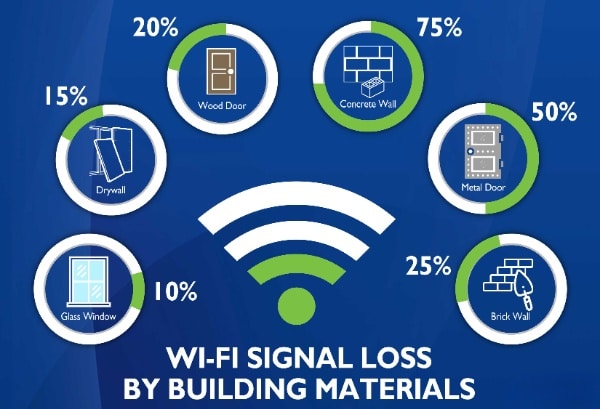
    Image showing Wireless doorbell radio signal degreased by wall materials.

    The image below is an example of how a wi-fi signal is degraded by building materials.

    Although we are dealing with a lower frequency signal it gives a general idea of signal degradation and why you need a much stronger signal for a doorbell for business use than you would for residential doorbell use.

    Our products tend to penetrate a little better due to their lower frequency, but you get the idea.

    A wireless system with a range of 150 ft. may work fine in most residential environments but we find it simply isn’t enough in a commercial application. 

    Compare those numbers with a business wireless doorbell like the ERA-UTDCR which has a range of up to 4,000 ft.  Remember in our scenario above where the wireless signal will need to penetrate two walls.

    • 4,000 ft. x .70=2,800.  Next take another 30% off that number and you get a wireless chime with a range of 1,960 ft. which is typically more than enough for warehouses.
    • The ERA-UTDCR is a long range wireless doorbell system with a range of up to 4,000 feet.  
    • The system is expandable, meaning you can add more receivers and more push buttons, extending the listening area and the doors covered.  
    • Another great feature about the ERA-UTDCR is that it’s compatible with a wide range of products such as a PIR sensor, a doorbell push button, outdoor PIR sensors you can use to monitor the driveway, and much more.

    secure.1800doorbell.com offers a variety of wireless chime products for your home’s front porch doorbells, including long range systems that work well in large buildings and residential applications where coverage is needed throughout the building; we also carry short-range models perfect if you only want an alert on one specific room (or floor). To find out more about our different options visit us today.

  • 4 Ways Business Doorbells Can Keep Your Business Safe

    4 Ways Business Doorbells Can Keep Your Business Safe

    There are many kinds of business doorbells, each with its own advantages. Some businesses get them for safety or to improve customer service.

    So, what can a business doorbell do for your business? Read on to learn all about the advantages of business doorbells and where you can find them!

    1. A Business Doorbell Chime Provides Greater Safety  

    Some ways that a wired doorbell camera can improve your safety may be evident. However, there are also more subtle ways these doorbells can keep you safe that not everybody thinks about.

    Some business doorbells come with the ability to have conversations remotely. You can speak with people before you decide what to do with them. You can even access this function while at a distance. A business doorbell is a great way to keep track of your business when you go on vacation or have closed it for the day.

    Many people who intend to commit crimes will simply avoid businesses with such technology at their doors. While there may be ways to work around these security devices, many people find it easier to look somewhere else instead.

    With a wired doorbell, you don’t have to be near the door when people enter. Even if you let somebody in, you can do so from any point in the building. That means if somebody comes in with negative intentions, you will not be right next to them when you let them in the door.

    2.  A Wired Doorbell Chime Can Improve Your Customer Service 

    Many businesses look for complicated ways of improving quality service in small amounts. They appreciate how important it is to obtain even minor improvements to customer service.

    A business doorbell is an easy way to improve customer service, but most people overlook it. If people are at the back of the store, then they will still be able to know when customers come in. That means that customers will not be sitting around waiting for someone to wander to the front of the store.

    This is also better for people who work in your business. Instead of randomly checking the front of the store every so often, they can simply go about their work and trust the doorbell to tell them when somebody comes in. This is much more relaxing and wastes less time.

    The doorbell can also help you keep track of customers who come in when you are busy with other customers. Instead of keeping an eye on the door, you can simply give your full attention to the customer you are working with. If the doorbell chimes, then you will know somebody has come in, and you can tell them that you will be with them shortly while you continue to help your current customer.

    3. You Can Use Wired Doorbells for Other Purposes as Well

    You can also put a business doorbell in the back of your business for employees. This will help you keep track of who is always coming and going. It also lets you keep track of delivery carriers.

    Some business owners spend a lot of time and effort developing systems that encourage employees to show up on time. Others just resign themselves to manually monitoring everybody. Both strategies can waste much time that could be better spent on innovation or relaxation.

    If your employees know that you have an automatic system that can track when they arrive or not, they will naturally tend to arrive on time. If they don’t think they can sneak in or out without anybody noticing, they are more likely to follow any rules they have agreed to follow simply. 

    Occasionally, people try to steal packages. In fact, this has become increasingly common as more people receive packages. 

    The pandemic caused a huge surge in this kind of crime. So many people were relying on getting packages that they started taking advantage of. Having a business doorbell can deter some such people.

    4. Wired Doorbell Chimes Can Provide a Strong Welcome

    Many customers just like doorbells that chime when they come in. It helps them feel that they have been noticed. Little changes like that can affect the atmosphere of your store and make people feel better. 

    It can take some time to figure out what kind of doorbell is best for you. But once you have done so, you will be able to benefit from that investment of time and energy for years to come. As a result, the process of finding the right business doorbell for you is worth the small amount of time and energy that it will cost you.

    Enjoy All of the Benefits of Business Doorbells

    We hope that you were able to take away something helpful from this brief article on a few of the most significant advantages that come with great business doorbells. A simple investment in a business doorbell can pay for itself many times over as you enjoy its use for many years.

    To learn more about what business doorbells can do for your business and

  • Keeping Your Business Safe During This Difficult Time

    Keeping Your Business Safe During This Difficult Time

    For Businesses All Over America, Staying Open & Keeping Your Business Safe is of Vital Importance

    As business owners, store managers, or supervisors, we are responsible for keeping our employees, colleagues, and customers as safe as possible. The onset of the Coronavirus has exponentially made this responsibility more challenging.

    Keeping Our Business Safe

    Our products, such as the ERA-UTDCR, WDK-ERA-STROBE, and others in the ERA or LRA series, are easy to set up and run and require zero maintenance. Most of all, they are reliable products that NOTIFY YOU when a visitor arrives.

    Our Product Recommendations to Protect Your Employees and Customers:

    We recommend two product lines to our customers, the ERA and LRA.  Both sets are long-range wireless products that feature push buttons, motion sensors, & magnetic door contacts with receivers.  Both product lines are expandable, meaning you can add multiple sensors and multiple receivers.

    The significant difference between ERA and LRA product lines:

    • ERA has a wireless range of up to 4,000.  Receivers are plug-in only.
    • LRA has a wireless range of up to 1,000 ft. Battery-operated and plugin receivers are available.
    • Both product lines offer various features with subtle differences. Both offer strobe lights built into the receiver or the ability to add accessories such as strobe lights, sirens, etc.

    The ERA line of products by Safeguard Supply is our longest-range set of products specifically designed for large areas.  The line-of-sight distance (wireless range) from the transmitter (push button, motion sensor, etc.) to the receiver (where sound is emitted) is 4,000 ft.

    The receiver plugs into a standard wall outlet with up to 12 transmitters.  Use as many receivers as you need.  When a push button, for example, is pressed, all the receivers in the system will play the programmed melody.

    Receivers may be equipped with accessories such as a strobe light, strobe light + siren, siren, or fire alarm bell. Strobe lights, for example, are great for very loud areas and for areas where you need to turn the sound off but would like a visual notification. The siren accessory is extremely loud and can add an alarm sound when a button is pressed or a door is opened.

    ERA – Features that Make ERA Products the Number 1 Choice for Business Door Chimes

    • Each receiver, ERA-DCRX, can pair with up to 12 different receivers, allowing you to cover all entrances into your facility.
    • Each transmitter (ERA-UTX or ERA-PIR) can pair with unlimited receivers, allowing you to add receivers throughout your facility.
    • Each ERA-DCRX Warehouse Doorbell receiver has four zones. Transmitters are grouped into zones, and a distinct melody (13 available) is assigned to each zone, allowing you to determine which transmitter triggered the receiver.
    • The volume control button turns the volume to four sound levels, in addition to mute and power off.
    • Plugs into a standard wall outlet.
    • Each zone features a 12V DC output. These outputs may power external devices such as a strobe light, strobe+siren, siren, etc. You can turn the receiver down and only see a visual indicator, or for loud areas, see a bright strobe and hear a siren alarm sound.
    • The duration of the 12V DC output may be set to 5 sec, 10 sec, 1 min, or 2 min.
    • Each receiver features a 1 x C-form relay for integration with external devices. For example, some magnetic door locks allow integration through Normally Open or Normally Closed connections. The receiver’s C-form relay can be integrated into that device.
    • Transmitters include the ERA-UTX (door contact or push button) and ERA-PIR motion-activated sensor.

    LRA Long Range Alerts by Safeguard Supply

    The LRA line of products offers a wireless range of up to 1,000 ft. from the transmitter to the receiver. Three different receivers are available: the LRA-DCRX, a battery-operated receiver with an add-on plug, a portable receiver, and a plugin receiver.

    Similar to the ERA series of products, a variety of transmitters/sensors are available, such as a push button, motion sensor, magnetic door contact, and driveway alarm sensor.

    The LRA-DCRX battery-powered receiver and LRA-DCRXS plugin receiver both have three modes of operation: strobe only, strobe & sound, and sound only. Additionally, the LRA-VPRX is a portable receiver with vibration mode.

    LRA Features and Benefits as Door Alerts and Door Chimes:

    • LRA-DCRX and LRA-DCRXS Feature built-in strobe lights (turn it on or off) and sound options.
    • Battery-operated receiver (LRA-DCRX) has an optional add-on plug, and LRA-DCRXS plugs into a standard wall outlet.
    • Multiple transmitter types – push buttons, door contacts, motion sensor, and driveway alarm available.
    • There is no limit to the number of receivers you can use. You can mix and match different receivers with different transmitters; they are all compatible.
    • LRA-DCRX works with up to 4 different transmitters – LRA-DCRXS works with two transmitters.
    • The LRA-DCRX receiver features volume control up to 90 dBA and a variety of sound options.
  • How to Choose Right Entrance Alert Chime

    How to Choose Right Entrance Alert Chime

    With over 100 different entrance and exit alert products available on secure.1800doorbell.com, it may seem a little overwhelming when you are trying to decide on the best entrance alert chime for your home, office, warehouse, or retail location.

    So What Are Entrance Alerts Anyway?

    Entrance alerts may be known by a variety of names like entry alarms, entry chimes, and even exit alerts. Loosely speaking, an entrance alarm is anything that alerts you when someone, or something, enters or exits through a monitored zone. A quick example of one that’s been around for hundreds of years is the shop keepers bell that hangs over a shop’s entrance door. When someone opens the door, a gentle bell sound is generated.

    You could think that a entry doorbell might be an entry alarm, but a doorbell works when a visitor pushes the push button, while an entry alarm happens without the user having to push anything.

    Common Uses of Entry Alarms & How to Choose the Right Entrance Alert Chime

    Customer Service Benefits

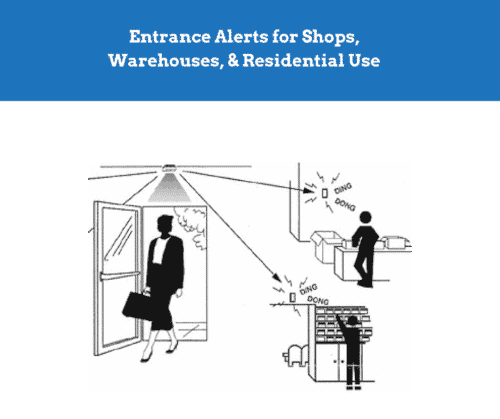
    Entrance-Alerts Illustration for Office

    Most convenience stores, for example, have some sort of product that alerts the clerk when someone enters their store. A good alert allows them to work in the store and not have to sit and watch the door. When someone enters, they can stop what they are doing and serve the customers.

    We have a large number of convenience store owners who have an entrance alert chime on the front of their store with a speaker in the beer cooler. This allows them to stock and organize the cooler and still receive a notification when someone comes in.

    We also have several large retailers who use our products in a mall. Since there’s no real door, many of these shops use passive infrared beams that span the entire entrance. When a new customer enters the store, a gentle chime sound signals the clerks of the new entry.

    At our company, we need to be notified when a delivery truck approaches the backloading door. Before installing a notification system, drivers would pull up, beat on the back door, then immediately leave when no one came to the loading dock door. Now, we use an ERA-PRDCR by Safeguard Supply to let us know when a delivery truck approaches.

    Security Reason to Use Alerts

    The examples above tend to gravitate toward using these products for customer service. Most would agree, that there’s a reason more important than customer service—security. With the rise of workplace violence and terrorism, ensuring you and your employees are safe is of utmost importance.

    The other day, I took my truck to a service station for an oil change. It was around lunchtime and there was a clerk at the front desk and two mechanics in the shop servicing cars. The thing that struck me was the fact there were four bay doors open and no one watching them. A simple passive infrared sensor over each of the bay doors would alert the mechanics when someone was entering the work area.

    You might also have areas you don’t want unauthorized visitors entering. A simple store entrance alert chime would send an instant alert to store clerks if a customer walks into unauthorized areas.

    Safety Applications of Entrance Chimes

    Most states require some sort of alarming device for doors that lead out to a pool. Although requirements may be different in your state, many of the products on 1800doorbell fit these requirements.

    An easy-to-install door/window contact sensor will alert parents or babysitters when a child opens an exterior door that leads to a pool or spa. You can also install these same sensors (depending on the model) on fence gates to alert you when a child opens a gate door. Some of the products have gentle chime sounds while others have blaring alarm sounds that are ear piercing. Additionally, it is possible to easily change the sound of an entrance alert. Whichever you choose, anything you can use to increase your child’s safety is recommended.

    As our parents and other loved ones age, diseases like dementia and Alzheimer’s become real issues we need to deal with. Do-it-yourself alerting products are cost-effective ways for us to know where our loved ones are. Whether it’s a nursing station or a chime receiver in our home, receiving a notification that a door or window has opened may be the difference between life and death.

    Types of Entry Alarm Sensors

    There are two basic types of sensors to think about:

    • Contact-based sensors
    • Motion-based sensors

    Contact-based sensors work when a door or window is opened. These sensors usually consist of two pieces; a magnetic part and a metallic part. One piece is usually mounted on the door frame while the other piece is mounted on the door itself. When the door (or window) is opened and the two pieces separate, the sensor is activated. Depending on the specific model, this will trigger an alarm on the sensor itself or the sensor will transmit a wireless signal to a receiver.

    These types of sensors work best on doors or windows that normally stay closed. If you have a hallway, open space, or door that typically stays open, we recommend a motion sensor.

    Pros and Cons of Contact-Based Sensors:

    • Less prone to false alarms – only trigger when door or window is opened.
    • A smaller profile allows you to specify the monitored area.
    • Sensors are also transmitting a signal and a metal door or window frame may interfere.
    • Doesn’t work on doors or windows that typically stay open.

    Motion-based sensors work when movement or a combination of heat and movement is detected. When a combination of these variations occurs, the sensor is triggered. Some models, like the ERA-PIR-SPK, will sound an alarm or chime sound at the sensor itself, while models like the ERA-UTDCR by Safeguard Supply will transmit a signal to a receiver.

    Pros and Cons of Motions-Based Sensors:

    • Can be used on doors and windows that normally stay open.
    • Can be used for hallways and large, open areas.
    • Reliable in commercial applications and at long distances.
    • Occasional false alarms.

    Entry Alert Kits or Stand Alone Models

    Virtually all of the products we sell in this category are true do-it-yourself products. This means you do not have to hire a licensed contractor to install the products for you. Don’t let this ease of installation or low cost mislead you. These products are highly effective and do the job.
    We mentioned above that the sensor will trigger based on the contact separation or detected movement, but how is the alarm sounded? Some models are stand-alone units, meaning the alarm/speaker is co-located with the sensor itself. When movement is detected, the sensor itself will generate and emit a chime or alarm sound.

    Choose the Right Entry Alert Door Chime for Your Business

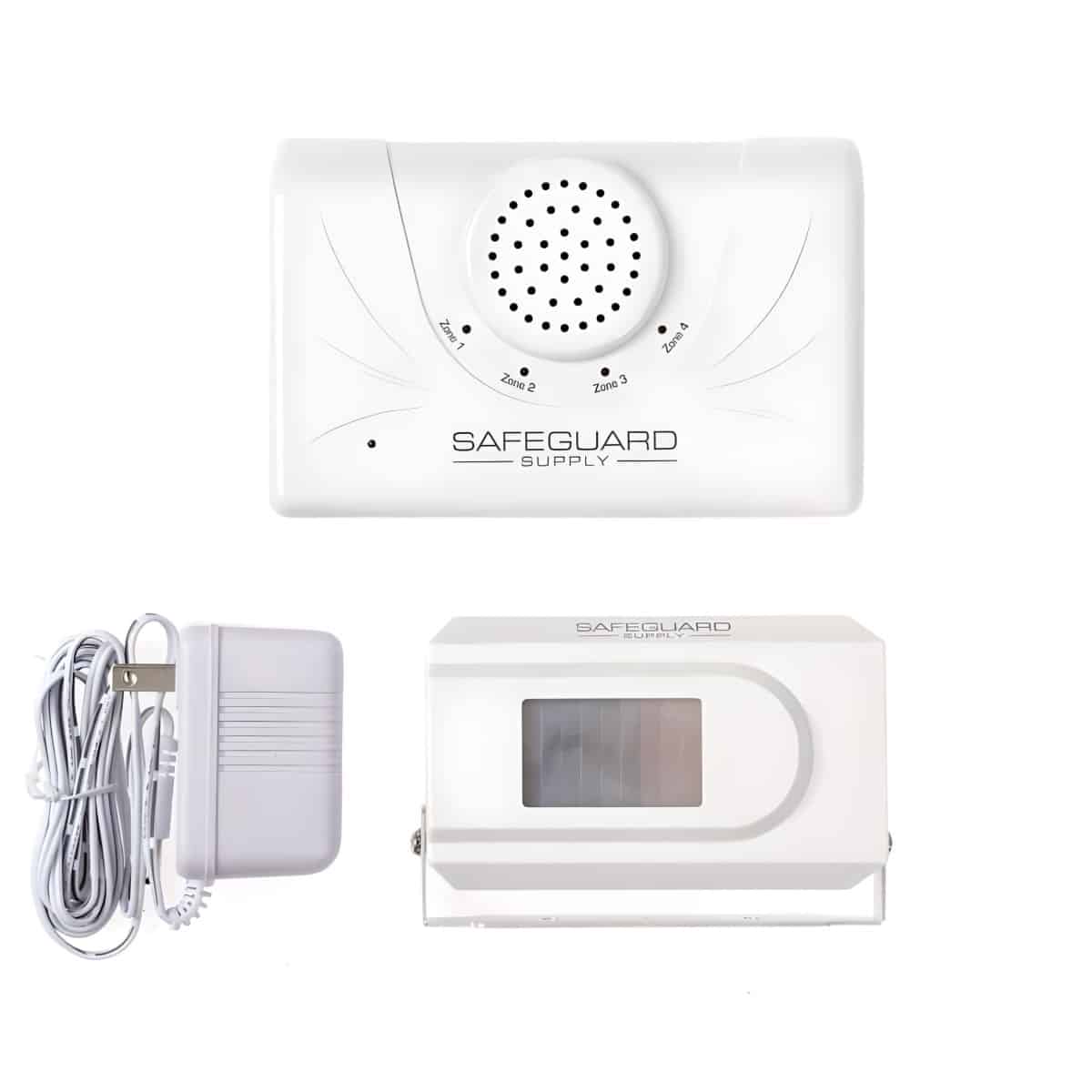
    A great example of this is the ERA-PIR-SPK. This particular product uses the same PIR sensor as the ERA-PRDCR. Unlike the ERA-PRDCR, the actual chime sound emits from the actual sensor at the door. Most users would mount this small, lightweight sensor over a doorway and when movement is detected, it emits a ding-dong chime sound. The ERA-PRDCR uses a very similar type of sensor, however, unlike the ERA-PIR-SPK, sound is not generated from this unit.  It does, however, send a wireless signal to a plug-in receiver, up to 4,000 ft. away. This allows users to be a distance away from the monitored zone and also receive a notification when triggered.

    Most kits that feature a sensor/transmitter and a receiver are expandable, meaning you may add more transmitters/sensors and receivers. Some feature plug-in receivers while others have battery-operated receivers, but the concept is the same.

    Users also need to consider distance. How far will users be from the actual sensors? If they will be at the sensor, or maybe up to a hundred feet away, a self-contained sensor/alarm may be perfect. However, if users are going to roam around a warehouse, or if an office isn’t very close to the monitored zone, a user may need to think about kits with a separate transmitter and receiver.

    Some kits have a range of up to 150 ft., while others like the ERA-UTDCR have a range of up to 4,000 ft. The maximum range of these systems isn’t just about the total foot distance of range—other environmental factors will also play a role.

    Most commercial buildings have concrete, steel, and other building materials residential buildings may not have. These factors will play a role in the transmission distance, so even if the range from the front door to your office is only 100 ft., (well within the range of the SS130, for example), the metal in the walls would cut down on the actual transmitted range. Therefore, we would recommend something with a range like the ERA-PRDCR, with a range of 4,000 ft.

    Top Three Entry Alarms:

    EZ Chime Mechanical Entry Alert No Batteries or Wires Needed

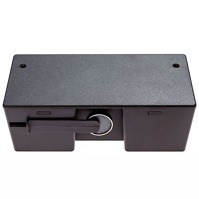
    EZ CHIME: As one of the few worldwide distributors of this product, 1800Doorbell is proud to offer it to our customers. For smaller areas (1,000-1,500 sq.ft.), the EZCHIME has been a customer favorite for decades. It is purely mechanical, requires no batteries, and is installed directly on the door frame. This is a contact-based alert that emits a gentle tone. When a visitor enters the store or office, the small plunger strikes a metal plate inside the box and generates a tone. It’s not very loud, but it’s perfect for many retail locations. It retails for $26.98.

    ERA-PRDCR: This is a long-range wireless entrance alert. As seen in the image above, this kit ships with one PIR-based sensor that transmits a wireless signal up to 1,000 ft. to the plug-in receiver. Users may expand this product by adding sensors and receivers based on their needs. This is our best-selling product and is recommended for most commercial applications due to its reliability and transmission range. The retail cost for this product is $119.98.

    ERA-PRDCR-STROBE Warehouse & Business Motion Entry Sensor Alert Strobe Chime Kit
    ERA-PRDCR-STROBE Warehouse & Business Motion Entry Sensor Alert Strobe Chime Kit 1

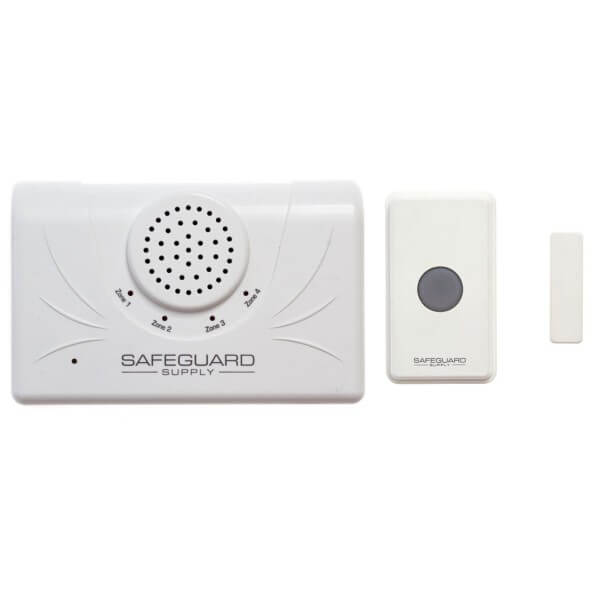
    ERA-UTDCR: This is a contact-based, wireless entry alarm. With a range of up to 5,000+ ft., this product works great in warehouses and larger commercial applications. The sensor in this kit is a universal transmitter that may be used as a door/window contact or as a wireless push button. Similar to the DA50L-A, users may expand this product by adding more receivers and transmitters. This product retails for $89.98

    ERA-UTDCR-door-contact-sensor
  • ERA-UTDCR Long Range Wireless Entrance Alert Video Review

    ERA-UTDCR Long Range Wireless Entrance Alert Video Review

    Need an entrance alert with enough power to penetrate metal doors and travel a long distance?

    The ERA-UTDCR is a wireless entrance alert product created by Safeguard Supply and featured on secure.1800doorbell.com specifically designed for business doorbell use. Most contact-based door/window entrance alerts have trouble when attached to metallic door frames. The wireless signal bounces off the metal and due to limited power doesn’t seem to have the power to reach the receiver.

    The extra power of the ERA-UTDCR will reach a receiver up to 4,000 ft. away. For more information on this product, please visit our website at secure.1800doorbell.com.

    The ERA-UTDCR is a long-range wireless door chime kit specifically designed for warehouse and business use.   Most wireless products do not have the range needed to work effectively in a warehouse or business environment.  The ERA product line has a wireless range of up to 4,000 ft. from transmitter to receiver.


    This range ensures reliability and that your kit will offer the functionality of wireless products with the reliability of wired products.
    The kit may also be expanded by adding more receivers and transmitters, as well as connecting devices like strobes, sirens, and buzzers to the live 12V DC outputs on the receivers.

    Find An Extended Range Wireless Doorbell or Entry Alert For Your Business

    Interested in learning more about the ERA-UTDCR warehouse doorbell kit by Safeguard Supply?

    In addition to this kit, there are long range driveway sensor alerts and motion sensors available, as well as portable handheld receivers with rechargeable batteries available.