1800doorbell

Category: Driveway Alert Systems

  • The Ultimate Guide to Driveway Alarms: Protecting Your Home’s First Line of Defense

    The Ultimate Guide to Driveway Alarms: Protecting Your Home’s First Line of Defense

    Your driveway serves as more than just parking space—it’s your property’s first checkpoint. Installing a driveway alarm system gives you advance notice of anyone approaching your home, whether that’s a welcome visitor, delivery driver, or potential security concern. With so many options available, choosing the right system can feel overwhelming, but the investment in early detection pays dividends in security and peace of mind.

    The Value of Early Detection

    A driveway alarm functions as your property’s advance warning system. Rather than discovering someone at your door after they’ve already approached, you receive notification the moment they enter your driveway perimeter. This early detection provides valuable time to assess the situation, prepare for expected guests, or respond appropriately to unexpected visitors.

    Understanding Detection Technologies

    Modern wireless driveway alarms use different detection methods, each with distinct advantages depending on your specific needs and environment:

    Wireless Installation Benefits

    • Straightforward DIY installation without professional wiring
    • Flexible sensor placement options
    • Battery or solar power eliminates electrical connections
    • Easy relocation when needed
    • Expandable systems accommodate additional sensors and receivers

    Detection Method Comparison

    The right sensor technology depends on your monitoring preferences and environmental factors:

    1. Infrared Motion Detection: These sensors respond to heat signatures from people, vehicles, and large animals. They’re effective for comprehensive monitoring but may trigger false alarms from wildlife in rural areas. Best for residential properties where you want notification of any movement.
    2. Magnetic Vehicle Detection: Specifically designed to detect metallic objects like cars and trucks while ignoring pedestrians and animals. Ideal for properties where vehicle-only notification is preferred, such as commercial facilities or homes with frequent foot traffic you don’t need to monitor.
    3. Pneumatic Pressure Sensors: Based on the proven technology used at gas stations and traffic counters, these rubber hose sensors trigger only when vehicles drive over them. They offer the most reliable vehicle detection with virtually zero false alarms, making them perfect for paved driveways with clear entry points.

    Understanding Wireless Range Limitations

    When evaluating wireless driveway alarm systems, remember that advertised ranges reflect optimal conditions with clear line-of-sight between sensor and receiver. Manufacturers like Dakota Alert often cite impressive distances like 5,000 feet, but real-world performance varies significantly based on obstacles.

    Physical barriers reduce signal strength substantially. Brick walls can cut transmission range by 20% or more, while each interior wall may reduce it by another 10%. Dense forests, hills, and large buildings also interfere with wireless signals. For a 1,000-foot driveway, purchasing a system rated for only 1,000 feet could leave you with inadequate coverage once you account for signal obstacles.

    A practical approach involves selecting systems with at least double your measured distance requirement. This provides essential buffer against real-world signal interference. Quality manufacturers with established reputations for long-range performance offer better reliability than budget alternatives that may promise similar ranges but fail to deliver consistent performance.

    Key Features to Consider

    Essential Capabilities

    • Detection range suited to your property layout
    • Adjustable sensitivity to minimize false alarms
    • Weather-resistant construction for outdoor exposure
    • Dependable power source with reasonable battery life
    • Clear, distinctive alert sounds

    Advanced Options

    • Smart home system compatibility
    • Multiple receiver capability for whole-house coverage
    • Selectable alert tones for different zones
    • Solar charging for remote installations
    • Smartphone integration and remote notifications

    Professional-Grade Systems Worth Considering

    Dakota Alert DCMA-4K-PLUS: Extended Range Motion Detection

    Best suited for: Large residential properties, commercial facilities, and estates requiring long-range monitoring
    DCMA-4K-PLUS Dakota Alert One Mile Distance Driveway Alarm With 12V DC Outputs
    DCMA-4K PLUS Dakota Alert

    Technical Specifications:

    • Transmission Range: Up to 5,000 feet (one mile) under optimal conditions
    • Detection Coverage: 50-foot infrared beam with adjustable sensitivity
    • Power Requirements: 9V battery sensor with AC-powered receiver
    • Additional Outputs: 12V DC connection for auxiliary security devices

    System Expansion Options:

    • Supports up to 16 different transmitters per receiver
    • Multiple receivers can monitor same sensor network
    • Cross-compatible with other Dakota 4000 series products
    • 16 different alert melodies with adjustable volume

    Installation Considerations:

    • Mount sensor perpendicular to monitored pathway
    • Choose concealed locations to prevent tampering
    • Works effectively for driveways, walkways, and property perimeters

    Installation Tip: The one-mile range rating provides substantial buffer against signal interference from buildings and terrain. This extra capacity ensures reliable performance even when obstacles reduce effective range.

    Key Advantages:

    • Exceptional range capability for the price point
    • Proven long-term reliability
    • All-weather performance rating
    • Multiple mounting configurations available

    Dakota Alert DCPA-4K-PLUS: Vehicle-Specific Magnetic Detection
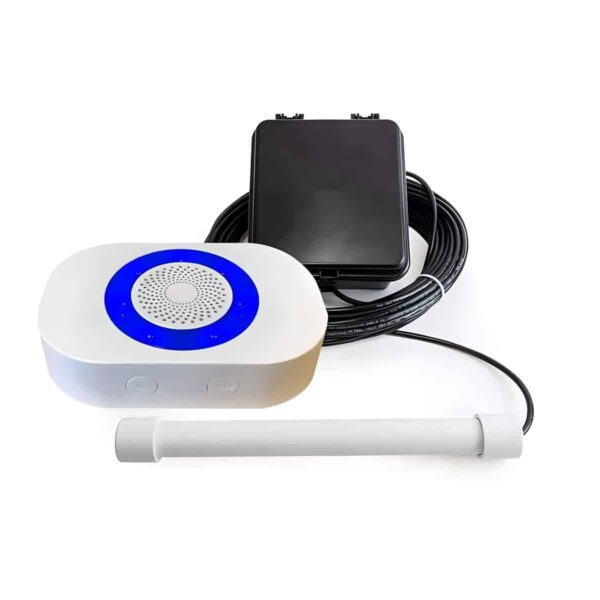
    DCPA-4K-PLUS Dakota Alert Driveway Alert System With Magnetic Driveway Sensor
    DCPA-4K-PLUS Dakota Alert Driveway Alert System

    Best suited for: Properties requiring concealed installation and vehicle-only detection

    Detection Technology:

    • Sensor Type: Buried magnetic probe with 12-13 foot detection radius
    • Operating Range: Functions reliably from -30°F to 120°F
    • Transmission Distance: Up to 5,000 feet line-of-sight
    • Power Source: Three CR123A lithium batteries for transmitter unit

    Installation Features:

    • Probe installs 3-12 inches underground for complete concealment
    • Includes 50 feet of burial cable (extensions available)
    • No visible components after installation
    • Works with all driveway surface types

    Alert System Capabilities:

    • Up to 16 unique transmitter identifications
    • Unlimited number of receivers supported
    • Adjustable volume and melody selection
    • 2 relay outputs plus 12V DC connection for system integration

    Application Note: Magnetic detection eliminates false triggers from pets, wildlife, and pedestrians, making this system ideal for rural properties and commercial facilities where vehicle monitoring is the primary concern.

    Common Applications:

    • Farm and ranch entrance monitoring
    • Gated community access points
    • Multi-driveway residential properties
    • Commercial facility vehicle tracking

    The magnetic detection technology provides highly selective monitoring, responding only to vehicles while maintaining complete invisibility after installation.

    ERA-DSRXPG Driveway Alarm: Commercial-Grade Detection System
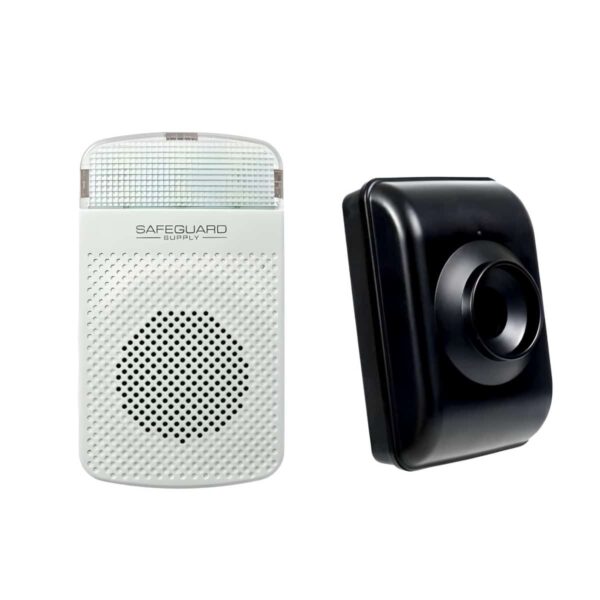
    ERA-DSRXPG long range driveway alarm monitoring kit With a plugin receiver image
    ERA-DSRXPG Long Range Driveway Alarm

    Best suited for: Commercial properties, warehouses, and residential installations requiring flexible alert options

    Performance Specifications:

    • Transmission Range: Up to 4,000 feet maximum distance
    • Detection Coverage: Selectable zones of 25, 50, or 100 feet
    • Alert Modes: Audio chime, visual strobe, or combination
    • Reset Timing: Adjustable from 10 to 120 seconds

    System Expansion:

    • Supports up to 12 sensors per receiver unit
    • Unlimited receiver installation capability
    • Compatible with other ERA product line components
    • Independent control of sound and strobe features

    Environmental Performance:

    • Weatherproof outdoor sensor rated for -30°F to 120°F
    • Environmental sensitivity filters reduce false alarms
    • LED transmission indicator for troubleshooting
    • 9V battery operation with 12-month typical life

    Commercial Application: Warehouses use this system to monitor multiple access points simultaneously—loading docks, employee entrances, and visitor areas—with distinct alert types identifying each zone.

    Distinguishing Features:

    • Advanced environmental filtering capabilities
    • Dual-function receiver with audio and visual alerts
    • Commercial-grade durability and construction
    • Professional mounting hardware included

    Dakota Alert DCRH-4000: Pneumatic Vehicle Detection System
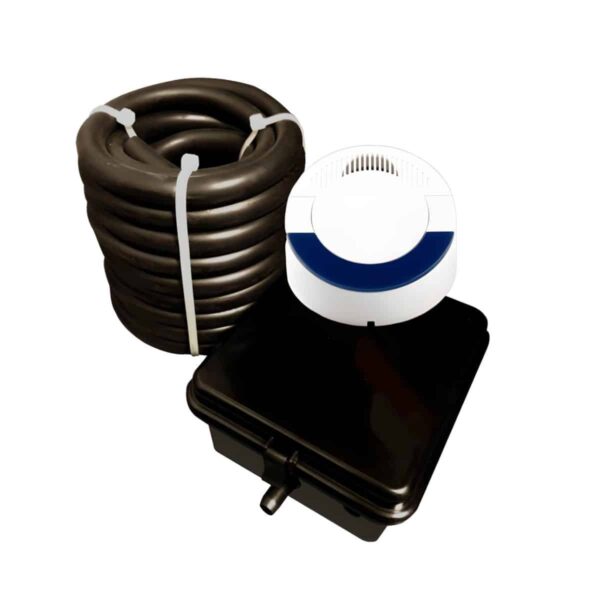
    DCRH000 Dakota Alert Rubber Hose Driveway Alarm With Wireless Receiver
    DCRH 4000 Dakota Alert Rubber Hose Driveway Alarm

    Best suited for: Paved driveways requiring zero false alarms and proven vehicle detection technology

    Proven Technology:

    • Detection Method: Pneumatic pressure sensing via rubber hose
    • Wireless Range: Up to 5,000 feet transmission distance
    • Included Hose: 25 feet of 3/8-inch diameter pressure tubing
    • Power Requirements: 9V battery transmitter with plug-in receiver

    Reliability Advantages:

    • Complete immunity to false alarms from wildlife or weather
    • Vehicle-specific activation eliminates pedestrian triggers
    • All-weather performance from -30°F to 120°F
    • Hose extensions available for wider coverage areas

    System Integration:

    • Supports up to 16 different transmitters per receiver
    • Unlimited receiver installation capability
    • 12 distinct melody options for zone identification
    • Cross-compatible with Dakota 4000 series components

    Expansion Tip: For driveways wider than 25 feet, additional hose sections connect using standard 3/8-inch barb fittings, allowing coverage of multiple lanes or entry points with a single transmitter.

    Key Benefits:

    • Time-tested pneumatic detection technology
    • Virtually elimination of false positive alerts
    • Simple installation on any solid surface
    • Dependable long-term operation

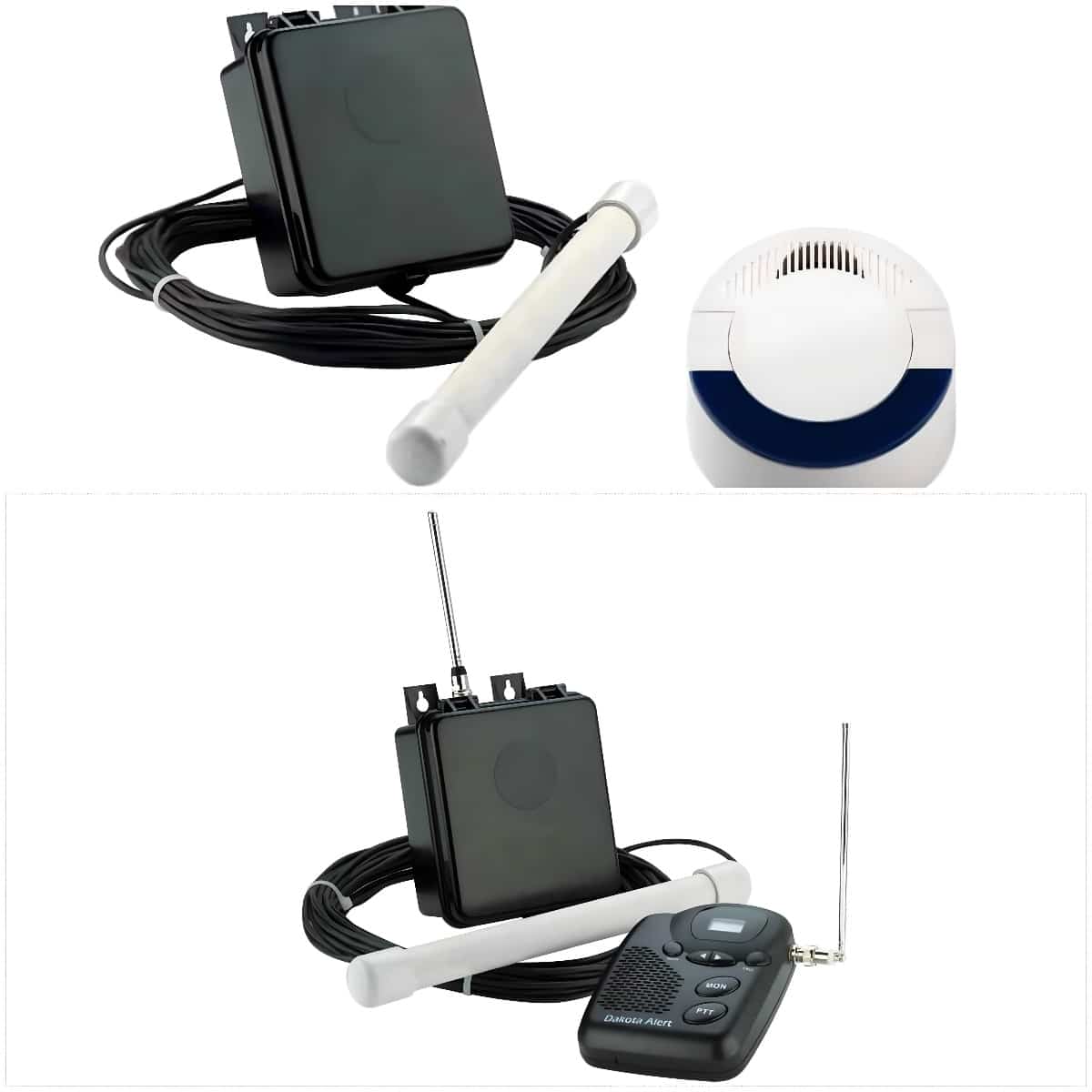
    Dakota Alert MURS-BS: Ultra Long-Range Communication System
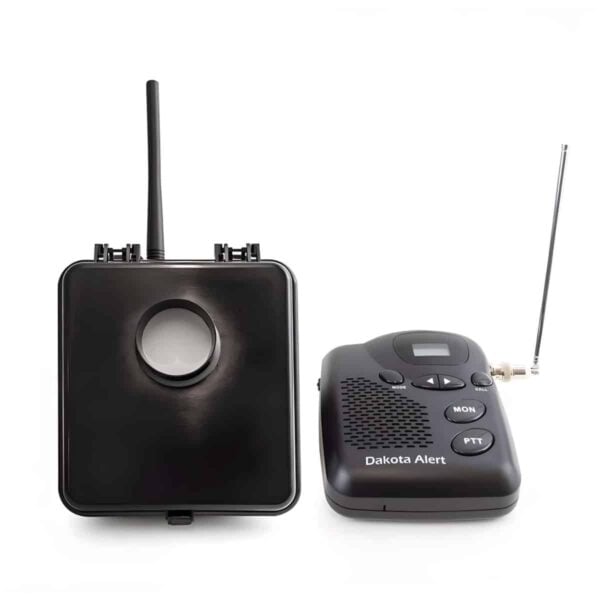
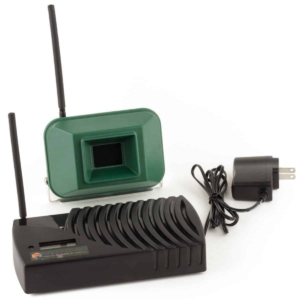
    MURS-BS Dakota Alert Driveway Motion Sensor
    MURS-BS Dakota Alert Motion Sensor

    Best suited for: Farms, ranches, and large commercial properties requiring multi-mile detection range

    Extended Range Capabilities:

    • Communication Range: Several miles depending on terrain
    • Technology: MURS (Multi-Use Radio Service) frequency
    • Alert Type: Voice announcements with zone identification
    • Zone Capacity: Monitors up to 4 different areas

    Professional Features:

    • License-free MURS frequency operation (US only)
    • BNC antenna connector for external range-extending antennas
    • Choice between desktop base station or portable handheld receiver
    • PIR motion detection with optional magnetic probe variant available

    Power and Performance:

    • Transmitter operates on 6 AA batteries with one-year typical life
    • Base station requires AC power connection
    • Handheld receiver offers 10-day rechargeable battery operation
    • All-weather construction for harsh environments

    Alternative Options: For vehicle-only detection over extended ranges, consider the MAPS-BS-KIT with magnetometer sensor (3-mile range) or the DCPA-4K-PLUS with magnetic probe (5,000-foot range).

    System Advantages:

    • Maximum available range for civilian applications
    • Professional voice alert system
    • Expandable multi-transmitter capability
    • Available only in the United States due to frequency regulations

    Professional Installation Guidelines

    1. Strategic Sensor Placement
    • Test signal strength before permanent installation
    • Maintain clear sight lines between sensor and monitored area
    • Account for seasonal vegetation growth
    • Position solar panels for optimal sun exposure
    • Mount sensors at appropriate height for target detection
    1. Ongoing System Maintenance
    • Regular sensor cleaning to remove dust and debris
    • Scheduled battery replacement based on manufacturer recommendations
    • Sensitivity adjustments for changing environmental conditions
    • Monthly system functionality testing

    Investment Considerations

    Quality driveway alarm systems typically range from $100 to $500, depending on features and coverage requirements. This investment provides several valuable returns:

    • Crime deterrence through early detection capability
    • Advance notification of expected and unexpected visitors
    • Potential property value enhancement
    • Possible homeowner insurance premium reductions

    Legal and Privacy Considerations

    Before installation, verify compliance with local regulations:

    • Review local ordinances regarding surveillance equipment
    • Communicate with neighbors about sensor placement near property lines
    • Post appropriate signage if required by local regulations
    • Ensure sensor positioning respects neighboring privacy boundaries

    Selecting the Right System

    Base your decision on these practical factors:

    1. Property dimensions and layout requirements
    2. Local climate and weather exposure
    3. Primary monitoring objectives (vehicles versus general movement)
    4. Available budget for initial purchase and ongoing maintenance
    5. Installation preference between DIY and professional setup

    The most effective driveway alarm system matches your specific property needs while providing reliable operation. Focus on essential functionality rather than unnecessary features, but ensure the system can handle your property’s unique requirements.

    Future-Proofing Your Security Investment

    Consider systems offering these expansion capabilities:

    • Additional sensor compatibility for property changes
    • Smart home integration for centralized monitoring
    • Firmware update capability for enhanced features
    • Cross-compatibility with other security system components

    Effective driveway monitoring provides significant security enhancement for residential and commercial properties. The key lies in selecting appropriate technology for your specific situation and ensuring reliable installation. Quality systems offer years of dependable service, providing both security benefits and peace of mind for property owners.
  • The Importance of Driveway Alarm Systems for Home Security

    The Importance of Driveway Alarm Systems for Home Security

    Home security is of utmost importance for every homeowner, and driveway alarm systems, play a crucial role in ensuring the safety of your property. These alarm systems are designed to alert homeowners of any motion or entry detected on their driveways, providing an extra layer of security. In this blog, we will explore the different types of driveway alarms, their functioning, the best driveway alarm systems, selecting the right alarm for your home, additional accessories, installation, and maintenance tips. Let’s dive in and discover the importance of driveway alarm systems for home security.

    Understanding Driveway Alarms

    Driveway alarms, such as the Dakota Alert DCMA-4000 wireless driveway alarm, are security systems specifically designed to detect motion or entry on driveways, alerting homeowners of any activity. They act as a reliable early warning system, alerting residents of potential intruders, visitors, or vehicles approaching their property. By installing driveway alarm systems, homeowners can enhance overall home security and protect their loved ones and belongings. These alarm systems typically consist of two main components: a sensor/transmitter and a receiver. The sensor, which is battery-powered, or powered by solar panel, is installed on the outside of your home and aimed at the area you want to cover. Once the sensor detects the automobile, the sensor type sends a signal to the receiver, which is connected to power inside your home. The receiver then sounds an audible alert to let you know that someone is outside.

    Why Driveway Alarms are Essential for Home Security

    a. Driveway alarms enhance home security by alerting residents of incoming vehicles or visitors. This allows homeowners to take appropriate action, whether it’s welcoming expected guests or being alert for suspicious activity.

    b. They deter potential intruders by serving as a visible security measure, letting them know that the property is protected and monitored.

    c. Driveway alarms provide advance notice of activity around the property, giving homeowners time to prepare for any potential threats or surprises.

    d. These alarm systems complement existing security measures, such as security cameras, motion sensor lights, and door/window sensors, for comprehensive protection.

    e. With reliable alerts, driveway alarms help prevent unauthorized entry onto the property, giving homeowners peace of mind and ensuring their safety.

    f. Driveway alarms are particularly effective for long driveways, where security cameras may not be able to cover the entire area, ensuring security across larger spaces.

    Functioning of Driveway Alarms

    Driveway alarms function through sensors, which detect motion, entry, or vehicle movement, and transmit signals to alert homeowners. Let’s explore the functioning of driveway alarms in more detail:

    a. Driveway alarms use sensors, such as passive infrared (PIR) sensors, magnetometer probes, or rubber hoses, to detect movement or entry.

    b. Passive infrared sensors (PIR) detect infrared radiation emitted by moving objects, such as humans or animals. These sensors are effective for monitoring human activity and vehicle movement in driveways, minimizing false alarms by accurately discerning heat signatures.

    c. Magnetometer probes, on the other hand, detect changes in the magnetic field caused by nearby metal objects, such as vehicles. These probes offer precise detection of vehicles and metallic intrusions, ensuring reliable notification of approaching vehicles.

    d. Rubber hose sensors work by being activated when vehicles drive over them, compressing the rubber tube. These sensors are suitable for driveways where traditional motion sensors may not be practical, providing reliable detection of vehicle entry and exit from the property.

    Different Types of Driveway Alarms

    Driveway alarms come in various types, each offering its unique features and functionalities. Let’s explore some of the different types of driveway alarms available in the market:

    Passive Infrared Sensor (PIR) Motion Detectors

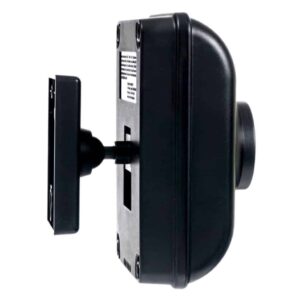
    DCMT-4000 Dakota Alert PIR Motion Driveway Sensor W Bracket

    a. Passive infrared sensors (PIR) are commonly used in driveway alarm systems. They detect infrared radiation emitted by moving objects, such as humans or animals, and trigger the alarm system when motion is detected.

    b. These sensors are particularly effective for monitoring driveways, alerting homeowners of any human or vehicle activity.

    c. PIR sensors minimize false alarms by accurately discerning heat signatures, ensuring reliable detection of intruders or visitors approaching the property.

    d. They are an integral component of modern driveway alarm systems, providing reliable alerts and enhancing home security.

    Magnetometer Probe

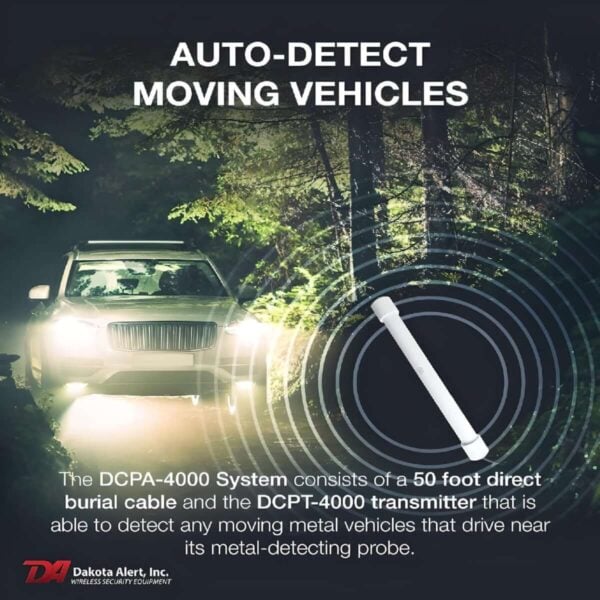
    DCPA-4000 Detects Cars Only 5000 ft Wireless Range
    DCPA-4000 Detects Cars Only 5000 ft Wireless Range

    a. Magnetometer probes are another type of sensor used in driveway alarm systems. These probes detect changes in the magnetic field caused by nearby metal objects, such as vehicles.

    b. By detecting these changes, magnetometer probe alarms ensure reliable notification of approaching vehicles, alerting homeowners of any entry or activity on the driveway.

    c. The technology of magnetometer probes enhances the security of residential driveways, providing accurate detection of potential threats or intrusions.

    d. They are a popular choice for comprehensive driveway security solutions, offering reliable alerts and peace of mind for homeowners.

    Rubber Hose

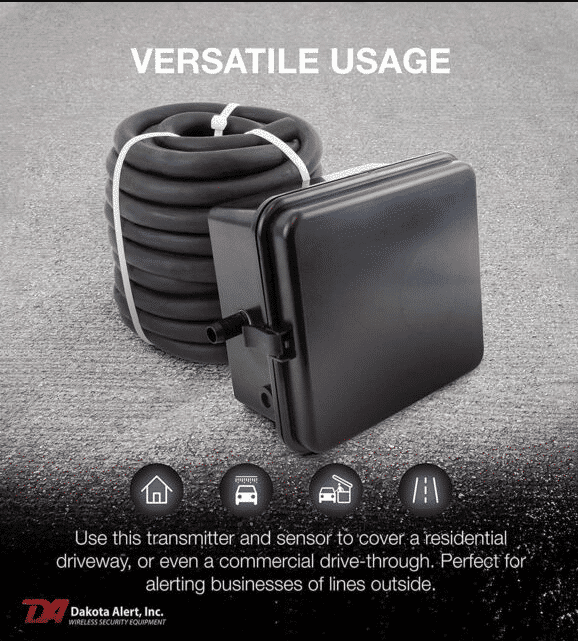
    DCHT-4000 KIt Versatile Usage
    DCHT-4000 KIt Versatile Usage

    a. Rubber hose sensors are activated when vehicles drive over them, compressing the rubber tube. This triggers the transmitter to send a radio signal to a remove receiver or trigger a traditional bell.

    b. Rubber hose alarms provide reliable detection of vehicle entry and exit from the property, alerting homeowners or retail stores such as a dry cleaner’s business, of any activity on their driveways.

    c. They are a cost-effective option for smaller driveways, offering effective security monitoring without the need for advanced motion sensors.

    d. The simplicity and effectiveness of rubber hose sensors make them a valuable driveway security solution, ensuring reliable alerts for homeowners.

    Best Long Range Driveway Alarm Systems

    When it comes to selecting the best driveway alarm system for your home, it’s essential to consider various factors, including range, detection capabilities, battery life, and customer reviews. Here are two top picks for driveway alarm systems:

    Dakota Alert DCPA-4000 Driveway Alert System

    a. Dakota Alert driveway alarm systems are known for their long-range wireless detection, providing reliable security monitoring for driveways of all sizes.

    b. These alarm systems offer customizable alert options, including chime, notification, and alarm sounds, allowing homeowners to choose their preferred alert type.

    c. Dakota driveway alarms are designed for outdoor use, with durable construction for all-weather performance, ensuring reliable alerts even in harsh conditions.

    d. With easy setup and maintenance, Dakota Alert systems provide effective driveway security solutions for homeowners, delivering reliable alerts and peace of mind.

    The DCPA-4000 Probe Driveway Monitor is a device that utilizes a magnetometer probe to detect large metallic objects that pass through the monitored zone. This technology is highly effective in identifying potential security threats as it can quickly and accurately detect any large metal objects as they pass through the monitored zone created by the probe.

    ERA-DSDCR Driveway Alarm Kit

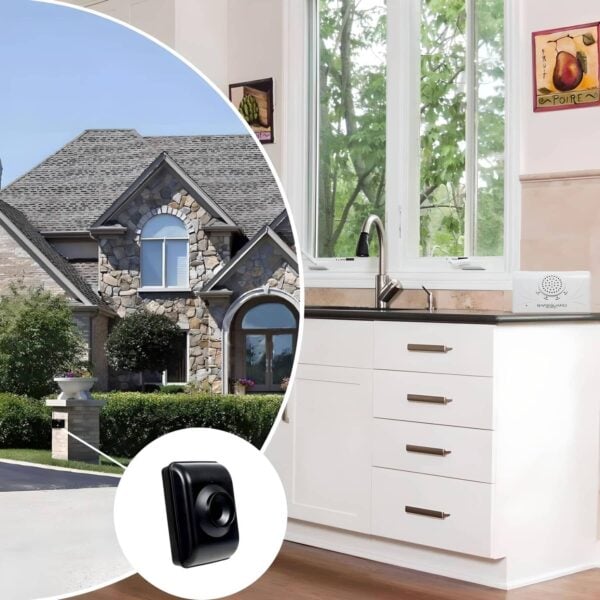
    ERA-DSDCR Driveway Alarm in Home
    ERA-DSDCR Driveway Alarm in Home

    a. The ERA-DSDCR driveway alarm kit includes a wireless detector and a indoor receiver, offering a seamless installation process for homeowners.

    b. This kit offers adjustable detection range and sensitivity, allowing homeowners to customize their security settings based on their driveway’s specific requirements.

    c. With battery-powered operation, ERA-DSDCR driveway alarms ensure reliable detection without the need for electrical outlets, providing flexibility in alarm system placement.

    d. Customers appreciate the user-friendly design and long battery life of ERA-DSDCR driveway alarm systems, ensuring reliable alerts for driveway activity.

    Selecting the Best Driveway Alarms

    When selecting a driveway alarm system for your home, there are several features to consider. Firstly, the range of the alarm is a crucial factor as it determines how far away you can be from the sensor and still receive alerts. Secondly, consider the type of alert you want to receive – whether it is a sound or an automated message sent to your phone. Another factor to consider is the power source – battery-operated or hardwired. Lastly, look for additional features such as weather resistance, motion detection sensitivity, and easy installation options. By considering these factors, you can choose the best driveway alarm system that meets your specific needs and budget.

    Features to Consider when Selecting a Driveway Alarm

    a. Adjustable detection range: Look for driveway alarms that offer adjustable detection range, allowing you to customize the security coverage of your driveway. Sensor like the ERA-DSTX by Safeguard Supply and DCMT-4000 by Dakota Alert provide flexible mounting brackets that allow you to create the monitored zone you need.

    b. Power for Sensors: Consider driveway alarms with long lasting batteries or even solar power. The ERA-DSTX driveway sensor, for example, uses AA batteries. Using “Duty-Cycle” technology, long range transmission is possible while using minimal power. Some systems use high powered lithium batteries, and systems like the SBB-4000 by Dakota Alert Break Beam Sensors use solar panels to keep the rechargeable batteries charged.

    c. Outdoor motion sensor capabilities: Opt for driveway security alert systems that feature sensor that suite your needs. If you live in an area with a lot of wild life, you may not want a motion based alert and may opt for a probe based one. If

    e. Driveway security alert system compatibility: Consider driveway alarms that are compatible with driveway security alert systems, allowing for comprehensive coverage of your home security.

    f. Wireless Range: When you see the wireless range of a system, this is the line of sight range. Environmental factors such as trees, hills, and even the construction materials of your home or office will reduce the wireless signal. A goods choice for longer driveways may be something like the DCMA-4000 by Dakota Alert or even the Dakota Alert MURS system, which transmits up to several miles.

    Price and Affordability of Driveway Alarms

    a. When comparing driveway alarms for sale, it’s essential to find an affordable yet reliable option for your home security needs.

    b. Look for driveway alarm kits that offer value for money, providing reliable security without compromising on quality.

    c. Customer reviews of driveway alarms can help you assess cost-effective solutions, gaining insights from other homeowners’ experiences.

    d. Explore driveway alarms & home depot for competitive pricing and a variety of options, allowing you to find the best driveway alarm system for your home security needs. One important note. Most of the driveway monitoring systems you will find at a Lowe’s or Home Depot will max out at a range of up to 500 or 1,000 feet. These may not be a good choice, depeding on the needed range you have. If you find a system on Amazon, for example, make sure to double check the range and remember this is just a line of sight range.

    Additional Accessories for Driveway Alarms

    Enhance the functionality of your driveway alarm system by considering additional accessories. Here are some accessory options for driveway alarms:

    Use of Strobe Lights, Speakers, and Sirens in Driveway Alarms

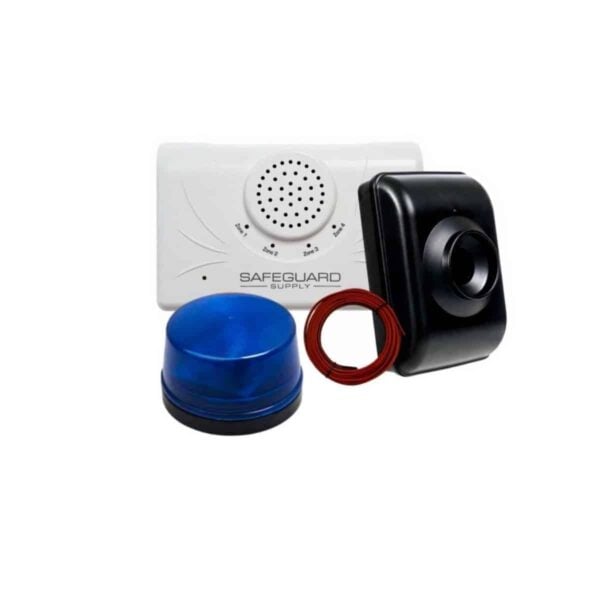
    ERA-DSDCR Strobe B Driveway Alarm Kit Blue Strobe
    ERA-DSDCR Strobe B Driveway Alarm Kit Blue Strobe

    a. Consider the use of strobe lights, speakers, and sirens in driveway alarms for audible security alerts, alerting homeowners of driveway activity even if they are away from the receiver.

    b. Explore driveway alarm & home depot for a range of strobe light and siren accessories, allowing you to customize your alarm system based on your preferences.

    c. Look for driveway alarms with driveway security alert system compatibility, ensuring seamless integration of audible alerts within your existing alarm system.

    d. Consider wireless driveway alarms with driveway warning device options, enhancing security by combining audible alerts with visual notification, providing a comprehensive security solution for driveways.

    e. Choose driveway alarms with driveway entry alarm capabilities, alerting homeowners of driveway activity through multiple alert methods, enhancing security measures for your home.

    Compatibility of Accessories with Driveway Alarms

    a. When selecting driveway alarm system accessories, ensure it does not conflict with your chosen driveway alarm system.

    b. Find wireless driveway detectors that are expandable through the addition of more sensors and receivers to the system.

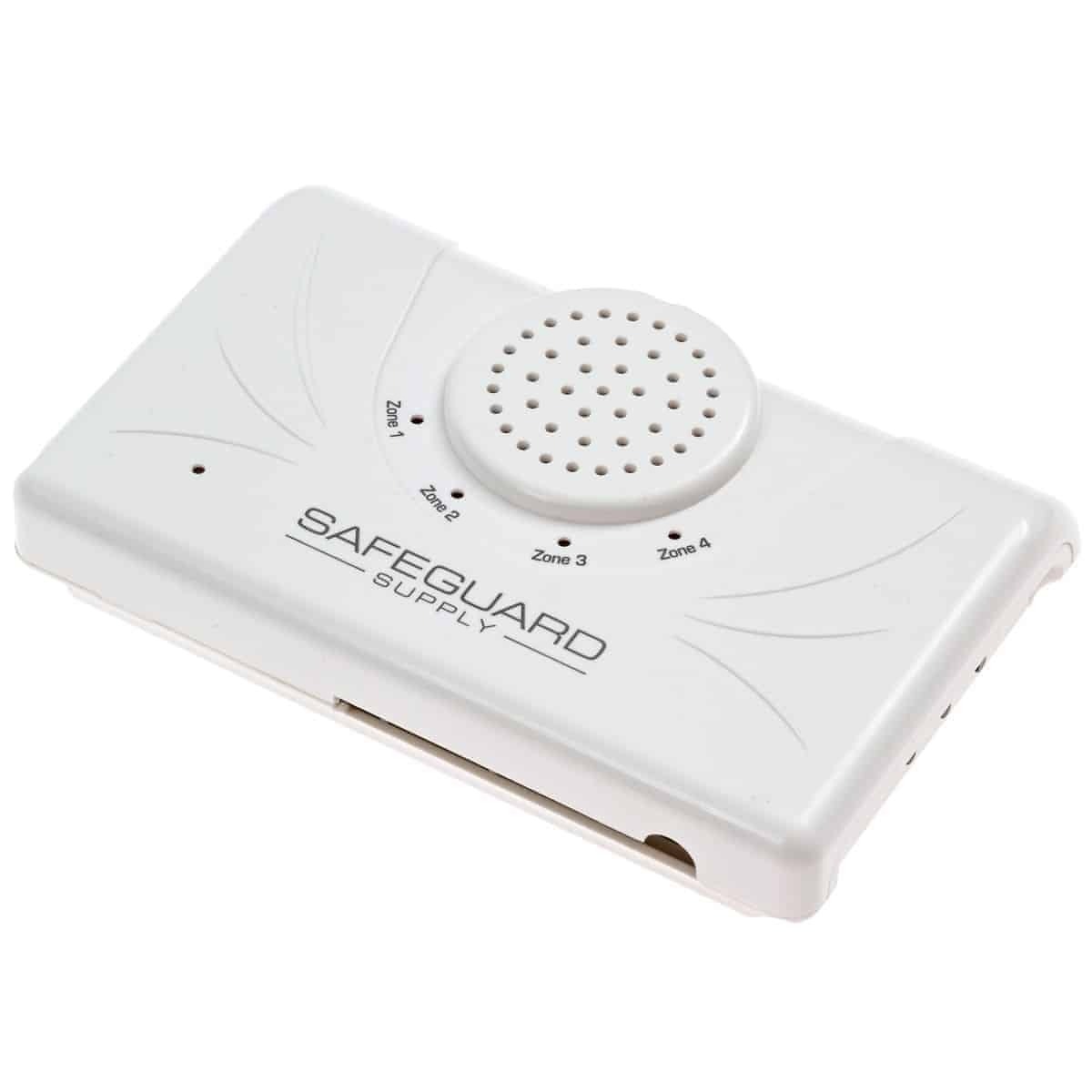
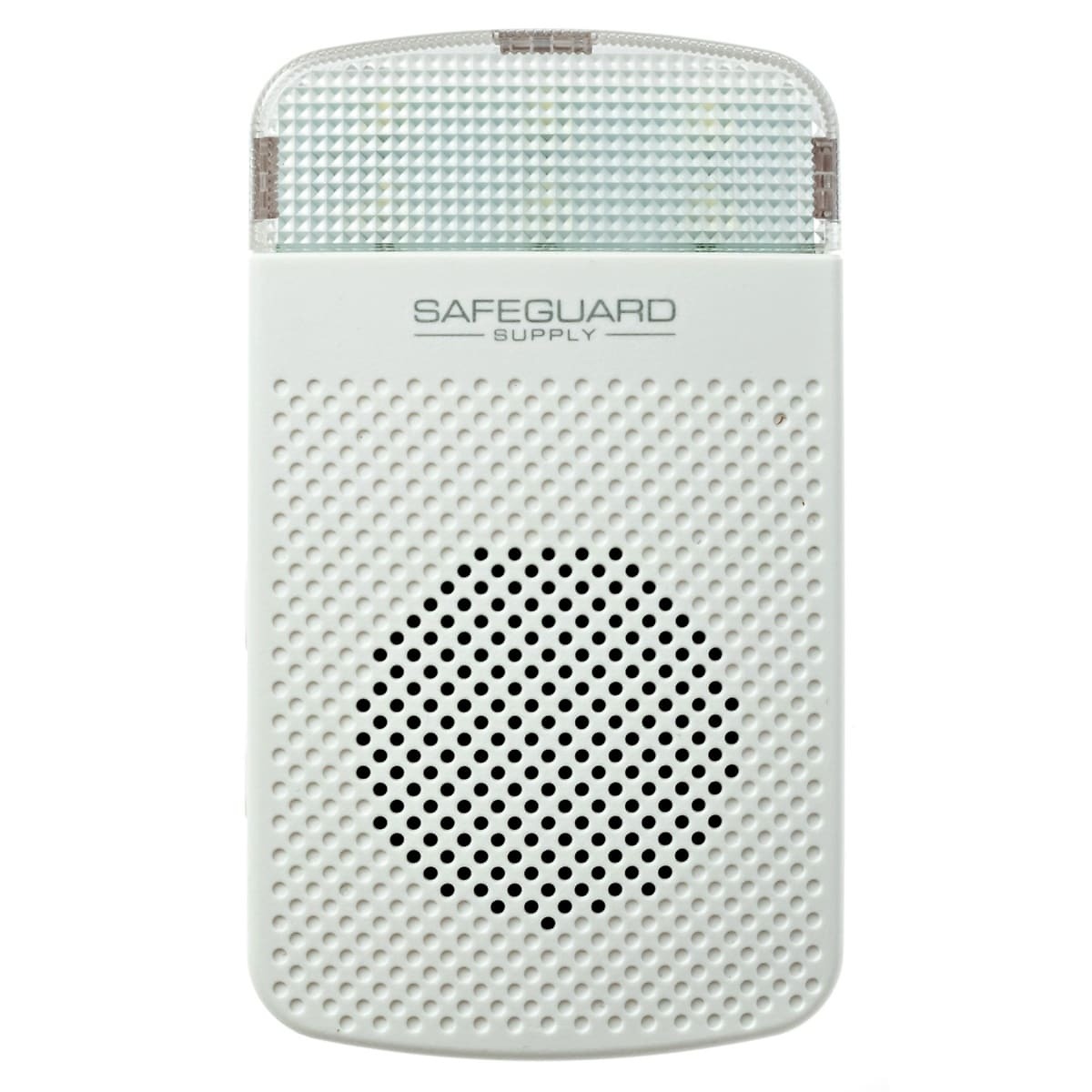
    c. Look for driveway alarms that allow for accessories. For example, the ERA-DCRX receiver features 12V DC outputs allowing you to add a driveway siren, strobe light, and even fire alarm bells to sound or flash when triggered.

    e. Consider driveway alarms with driveway alarm kit options, simplifying the installation process of both the alarm system and accessories, ensuring hassle-free security enhancement for your driveway.

    Installation and Maintenance of Driveway Alarms

    Proper installation and regular maintenance of driveway alarms are essential for reliable security alerts and long-term performance. Here are some tips for installing and maintaining driveway alarm systems:

    Steps for Installing a Driveway Alarm

    a. Consider driveway alarms with driveway security alert system for easy DIY installation, simplifying the installation process for homeowners.

    b. Properly position driveway alarm sensors for effective coverage of the driveway perimeter, ensuring reliable detection of driveway activity. Make sure the sensor is position to monitor the area you need while trying to eliminate false alarms.

    c. Follow the manufacturer’s instructions to program the sensor/transmitter to the receiver.

    d. Position the receiver to ensure it is getting the right signal from the sensor/transmitter.

    e. Choose a ringtone or sound for your driveway warning device, with the right volume level, to ensure you hear it. WIth most systems you can add more receivers to make sure you hear it throughout your home or office.

    Tips for Maintaining Driveway Alarms

    a. Regularly test driveway alarm components, including sensors, batteries, and receivers, to ensure reliable security operation and alert functionality.

    b. Consider driveway alarms with long battery life, minimizing maintenance requirements and the need for frequent battery replacements.

    c. Try to eliminate as many obstacles between the sensor and the receiver. Looks for branches or bushes that might be hanging in front of the sensor.

    d. Occassionally check the sensor to make sure that dirt or dust is not hampering the sensor. This is especially important with PIR motion sensors.

    e. For probe based sensors, make sure the burial wire that connects the probe to the transmitter is not damaged.

    Do Driveway Security Alert Systems Enhance Security Measures?

    a. Yes, driveway alarms enhance security measures for your home, providing an additional layer of security for enhanced home protection.

    b. Consider driveway alarms as part of a comprehensive home security system, combining alarm systems, security cameras, motion sensor lights, and entry sensors for complete coverage of your home security needs.

    c. Driveway alarms offer early detection of potential security threats, allowing for proactive measures to ensure the safety of your home and loved ones.

    d. Explore driveway security alarm system options, including smart driveway alarms that can be integrated with home security hubs or smart home systems, providing efficient security enhancement options for homeowners.

    e. Choose driveway alarms for sale, considering cost-effective security upgrades for your home, ensuring reliable alerts and peace of mind for homeowners.

    Can a Wireless Driveway Alarm be Integrated with Other Security Systems?

    It depends. Check the receiver or sensor and see if it has available relays. Receivers such as the ERA-DCRX by Safeguard Supply and the RE-4K PLUS by Dakota Alert feature a C-FORM relay designed for this specific use. Driveway alarm systems can be integrated with other security systems such as CCTV cameras, motion sensors, and home automation systems. This allows for a comprehensive and interconnected home security system that provides enhanced protection and peace of mind. Also, ensure the security system and home video equipment can accept a relay input for them to trigger.

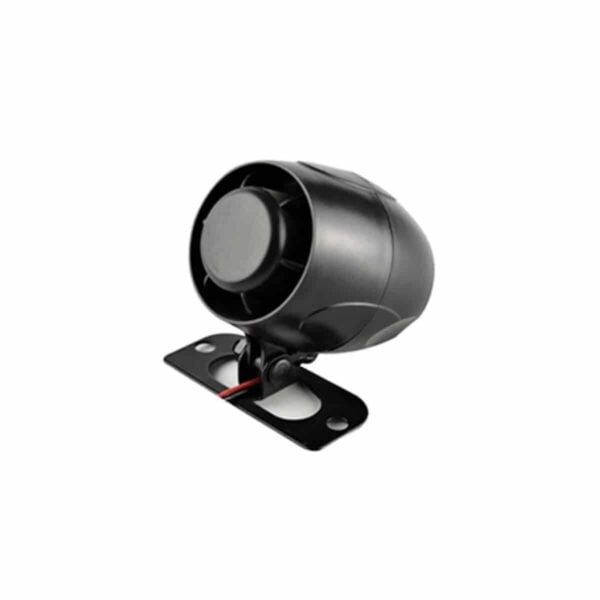
    SS-SIREN Small 12V DC 5 Watt external Speaker

    In addition, Dakota Alert and Safeguard Supply will soon introduce receivers that connect to Wi-Fi, allowing integration with Alexa, Google Home, and more. Once activated, these systems can send a SMS and/or email when triggered.

    A Final Thought on Driveway Wireless Alerts

    Driveway alarm systems play a crucial role in enhancing home security. By detecting and alerting you to any movement or activity in your driveway, these alarms act as an effective deterrent against potential intruders. With different types of driveway alarms available, such as passive infrared sensors (PIR), magnetometer probes, and rubber hose, you have a range of options to choose from based on your specific needs. It is important to consider features like range, sensitivity, and compatibility with additional accessories when selecting the best driveway alarm system for your home. Proper installation and regular maintenance are also essential for optimal performance. Overall, investing in a driveway alarm system can provide you with peace of mind and an added layer of security for your home.

    If you want to learn more about the product features at secure.1800doorbell.com, please visit our Driveway Security Products Page.

  • Driveway Security Showdown: MAPS-BS-KIT vs. DCPA-4000

    Driveway Security Showdown: MAPS-BS-KIT vs. DCPA-4000

    Maximizing Home Security with Advanced Driveway Alarms:

    In the realm of home and business security, the importance of a reliable driveway alarm system cannot be overstated. Two standout options in this category are the MAPS-BS-KIT and the DCPA-4000. This detailed comparison aims to guide you through their features and functionalities, helping you choose the best fit for your security needs.

    The Importance of Range in Driveway Alert Systems:

    A key factor in selecting a driveway alert system is the range of the device. The MAPS-BS-KIT boasts an impressive coverage of several miles, making it ideal for sprawling properties or rural settings. On the other hand, the DCPA-4000 offers a practical range of up to 5,000 feet, sufficient for most residential and small business environments. Understanding the layout of your property is crucial in determining which system’s range best suits your needs.

    Customization and Flexibility: Melodies and Sensors:

    Customization can greatly enhance the user experience of a driveway alarm. The DCPA-4000 shines in this aspect with its 15 different melodies and compatibility with up to 15 transmitters. This feature not only adds a personal touch but also aids in distinguishing between different types of alerts. Conversely, the MAPS-BS-KIT, while supporting numerous sensors, is limited to four basic alert sounds, which might be restrictive for users seeking more auditory variety.

    Sensor Compatibility and Versatility:

    The adaptability of a driveway alarm is often determined by its sensor compatibility. The DCPA-4000 is a versatile choice, supporting a range of transmitters such as PIR sensors, push buttons, and magnetic door contacts. This makes it a comprehensive security solution adaptable to various scenarios. The MAPS-BS-KIT, though effective, offers less flexibility, primarily designed to work with the MAT PIR sensor.

    Ease of Programming and User Experience:

    Ease of setup and use is a significant consideration for many. The DCPA-4000 is user-friendly, with straightforward programming and a variety of chimes to choose from. The MAPS-BS-KIT, while not overly complex, lacks the same level of simplicity and customization options in its programming interface.

    Evaluating Cost-Effectiveness in Driveway Alarms:

    When assessing the value, the DCPA-4000 stands out as a cost-effective option. It balances functionality, range, and user-friendliness, making it an excellent choice for a broad range of users. The MAPS-BS-KIT, while offering specific advantages for certain scenarios, may not provide the same level of value for all users.

    MAPS-BS-KIT and DCPA-4000 Comparative Feature Table

    FeatureMAPS-BS-KITDCPA-4000
    Wireless RangeSeveral MilesUp to 5,000 ft
    Melodies/Ringtones4 Alert Zones15 Different Melodies
    ExpandabilityUnlimited Sensors, 4 SoundsUp to 15 Transmitters
    CompatibilityLimited to MAT PIR SensorMultiple Transmitter Types
    ProgrammingStandardUser-Friendly
    Cost-EffectivenessHigher for Specific NeedsMore Affordable

    Final Verdict: Which Driveway Alarm Reigns Supreme?

    Our comprehensive analysis leads us to recommend the DCPA-4000 for most driveway security needs. Its optimal range, expandability, ease of use, and affordability make it a superior choice for enhancing your property’s security.

  • How to Choose the Right Driveway Alert Kit

    How to Choose the Right Driveway Alert Kit

    Let’s face it: crime is on the rise. According to the website Policy Advice, there are almost three burglaries every minute in the USA, equating to approximately 2.5 million per year. Most of these are opportunity-based thefts, meaning they are not planned ahead of time. While many of us do various things to protect our home or office, we often neglect the need or use of a driveway alert kit to provide an extra layer of protection. By monitoring traffic and movement in and out of our driveway, we may get a few extra seconds of advance warning that someone unwanted has entered our property.

    In addition to physical security, driveway sensors may also benefit businesses. At our offices, we have placed driveway sensors, such as the ERA-DSTX, that shoot across entrances to our parking lot. This gives us advanced warning when customers arrive and alerts us to deliver trucks so we never miss anything important.

    This is an in-depth series of articles to help consumers choose the top driveway alarm system offered at secure.1800doorbell.com. In the first article, we will review the basics of driveway alarms, what they are, how they work, and the significant components of each. The series culminates with recommendations and an overall top choice based on the type of sensor.

    Choosing a Driveway Alert Kit

    When it comes to choosing a driveway alert kit, there are a few things you’ll want to keep in mind. First, consider the size of your driveway and the range you’ll need the sensor to cover. While the length of your driveway is necessary, the terrain and obstacles are also critical. For example, If you have many trees or bushes, you’ll need a sensor with a longer range to detect still people or animals walking by.

    You’ll also want to consider how you want to be alerted when someone or something is near your driveway, such as a chime sound, flashing light, siren, etc. Choose the method that works best for you and your lifestyle.

    Think about what kind of alerts you’d like to receive – visual, auditory, or both. Finally, decide whether you’d prefer a wired or wireless system.

    Finally, consider the price of the driveway alert kit. While you may be tempted to choose the cheapest option, remember that more affordable options may not always be the best in quality and performance. Finding a balance between price and quality is essential to get the best product for you. So, take some time to consider all of your options before making a decision. The suitable driveway alert kit will give you peace of mind and help keep your home safe.

    What is a driveway alarm?

    How Do Wireless Driveway Alarms Work - what is a driveway alarm

    A driveway alarm is a system that alerts you when someone or something enters your driveway. It can be used as a security measure to deter burglars or intruders or simply to let you know when someone has arrived. Many types of driveway alarms are available on the market, so choosing one that best suits your needs is essential.

    In years past, wireless alerts have gotten a bad rap. This is primarily because of the wireless range we will discuss below. Things have changed over the last 5-10 years, and the systems have improved dramatically, as the wireless transmission range has been enhanced while power consumption has remained low.

    Wireless products also provide much more versatility. Many of the models on secure.1800doorbell.com are robust enough to allow you to add different sensor and transmitter types, such as push buttons, door alert contacts, motion alert sensors, and more, to your kit and additional receivers.

    We always recommend wireless kits to our customers because of the flexibility, expandability, and increased reliability as technology has improved. We stand by these recommendations by offering a 30-day money-back guarantee on top of the manufacturer’s warranty.

    What are the Components of a Driveway Monitoring Kit?

    Di2000S AG Driveway Informer Wireless Dirveway Alarm Kit

    In most cases, a driveway monitoring system consists of two major components. First is the sensor, which detects an object entering the driveway. Since we are talking about wireless alert kits in this article, we will also refer to these sensors as transmitters, as they transmit a radio signal from the sensor to the receiving chime unit.

    The second component is the chime or receiver. This unit will be placed in your home, office, or shop. It will “listen” for the driveway motion sensor/transmitter to signal that someone has arrived and then emit a sound letting you know someone is there. When triggered, it will play some sort of alerting signal, a chime sound in most cases.

    What are the different types of driveway alarm Sensors?

    When we discuss driveway alarms, we will also discuss the type of sensor or transmitter the driveway alarm kit will use. Much of this will depend on what you want to monitor. This article discusses four main types of driveway alarm sensors.

    Passive Infrared Driveway Motion Alert Sensors (PIR):

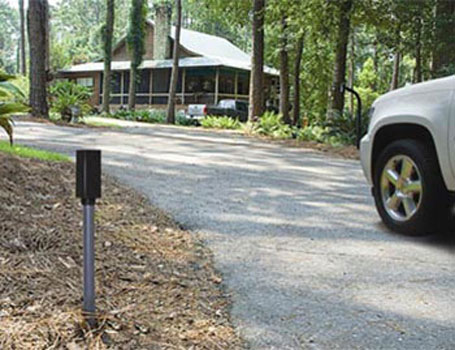
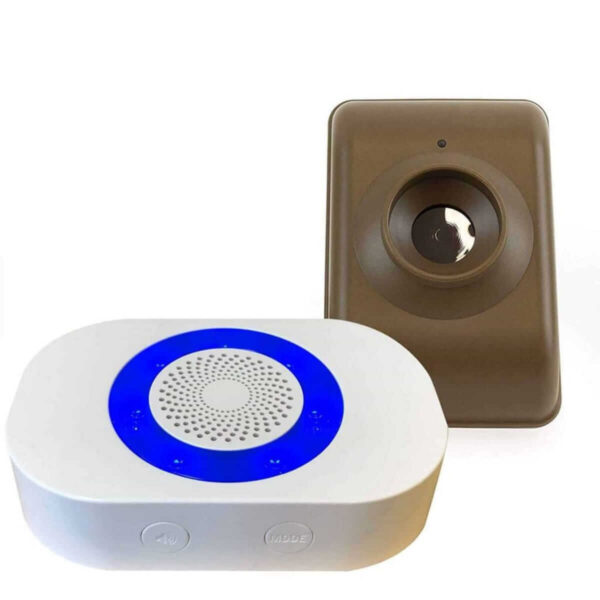
    ERA-DSTX Safeguard Supply Driveway Way Sensor Sideview

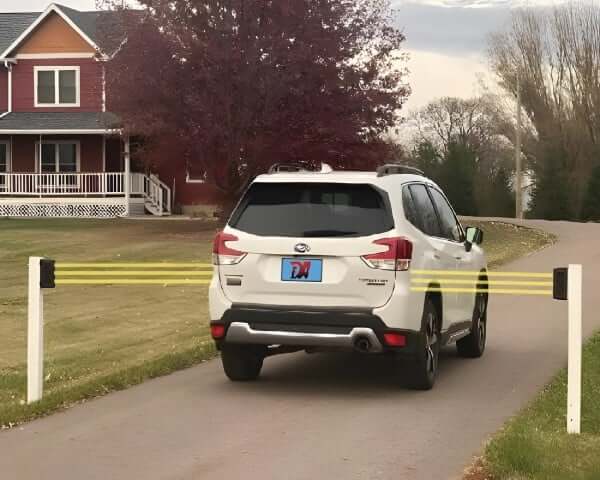
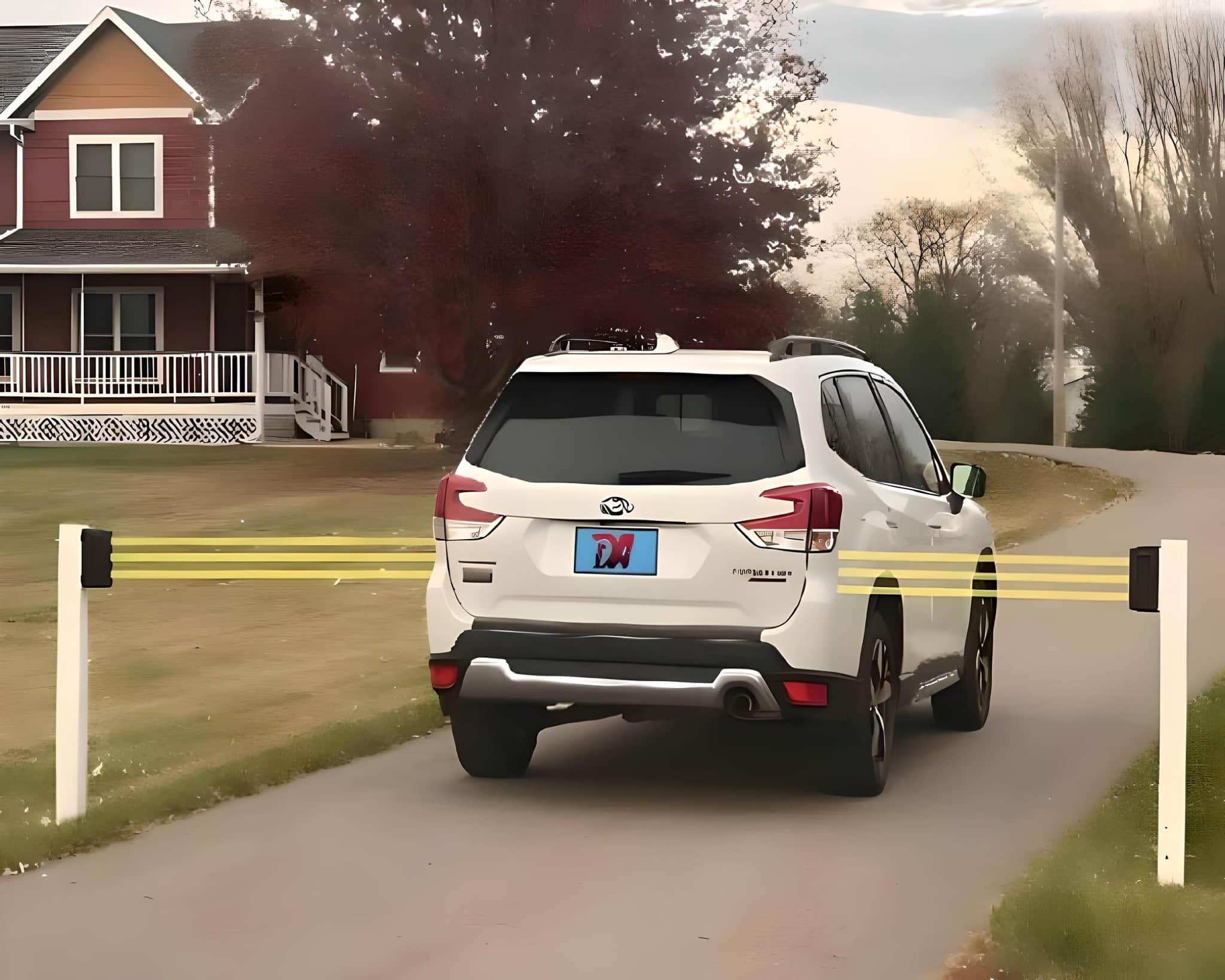
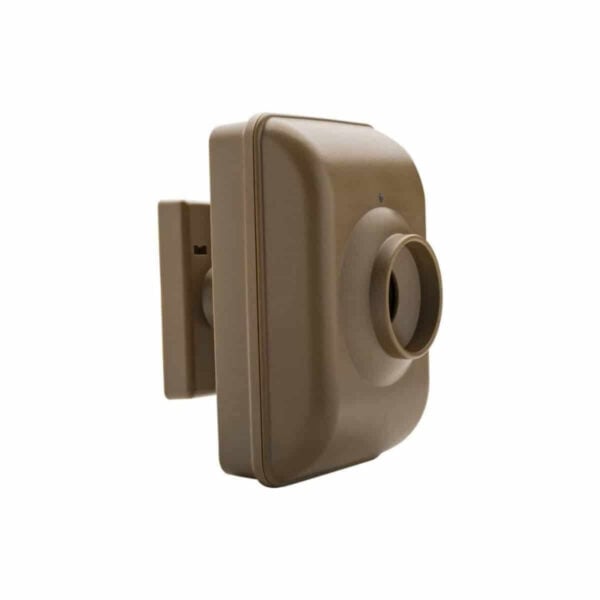
    These are the most common types of driveway alarm sensors (we often refer to them as driveway motion alerts). They work by detecting a change in infrared radiation. Infrared driveway sensors use infrared technology to detect heat emitted by vehicles (and animals, too). These sensors are mounted on a post or wall along the driveway and point across the driveway to shoot a narrow, invisible beam.

    They are similar to door motion sensors in your home alarm system, except that a driveway motion sensor has to be outdoor rated and will typically shoot a more narrow beam across the monitored zone. You don’t want a far-reaching beam, as it tends to pick up more false positives than a narrow beam.

    These types of sensors can detect both people and animals, which can be a pro or a con depending on your use, terrain, and monitoring objective. However, they tend to be the most cost-effective form of driveway alarm sensors.

    Magnetometer Probe Driveway Alert Sensors:

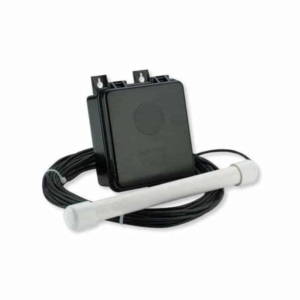
    DCPT-4000 Driveway Alarm Probe Sensor
    DCPT-4000 Driveway Alarm Probe Sensor

    A magnetometer probe driveway sensor uses a magnetic field to detect vehicles. These sensors have a sensing probe buried in the ground along or under the driveway.

    This probe emits a magnetic field. As a car drives over it, the magnetic field is disturbed, sending a signal to the transmitter, which then sends an alert.

    Magnet probe driveway sensors are less likely to generate false positives than other driveway alerts since it takes a physical object like a car to disturb the magnetic field and trigger an alert. For some, a downside to this type of sensor is that it won’t detect people, animals, etc. These types of sensors tend to be more costly than PIR sensors.

    Hose-Style, Pneumatic “Rubber Hose” Driveway Alarm Sensors:

    8DSBS1 Driveway Signal Bell Kit With Tractor Trailer Near Hose
    driveway signal bell hose ground

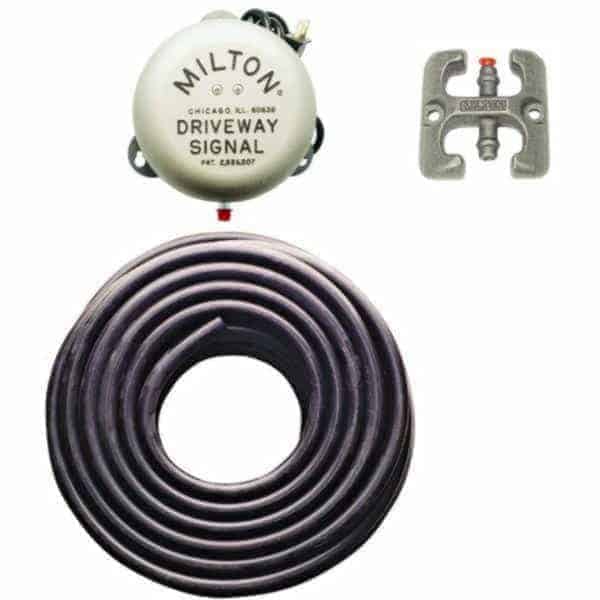
    The best way to think of these sensor types is the “ding” bell sound when approaching a dry cleaner or old-time gas station drive-through. These systems have a rubber hose that stretches across the driveway. When a car, truck, or other heavy item rolls over the hose, the change in air pressure inside the hose triggers the sensor to transmit to a receiver.

    Usually, these products have a simple bell that emits a ding sound. However, as will be shown later, wireless products now give you the best of both worlds: a rubber hose sensor that transmits a radio signal to a remote chime location.

    As you can see, many driveway alert kits are on the market. With all these choices, choosing the right one for your needs can be confusing and challenging. This guide will explain the different types available, how they operate, and considerations for making your decision.

    Photoelectric Beam Driveway Alarms:

    SBB-4000 Break Beam Sensor Transmitters by Dakota Alert
    break beam sensors bbt-4000

    A photoelectric beam driveway alarm uses an infrared light beam to detect movement. This beam shoots across the driveway to another photoelectric sensor or some type of reflector commonly.

    When a car, truck, or person breaks the beam by passing between the two elements, it triggers the sensor which sends an alert to the receiver..

    These were the first types of sensors on the market, along with rubber hose driveway alarms. Over the years, these types of “break-beam” alerts have evolved and are much more robust than ones of years past.

    Driveway Alarm Receivers:

    Almost all receivers will have some core features, with some offering a slightly more robust offering than others. A great thing about driveway alarm receivers is the ability to add additional receivers to your kit.

    All the wireless kits featured on 1800 doorbell feature 1 x sensor/transmitter and 1 x receiver). In almost all cases, you can add receivers from the same brand model line to place receivers throughout your home, office, shop, or warehouse.

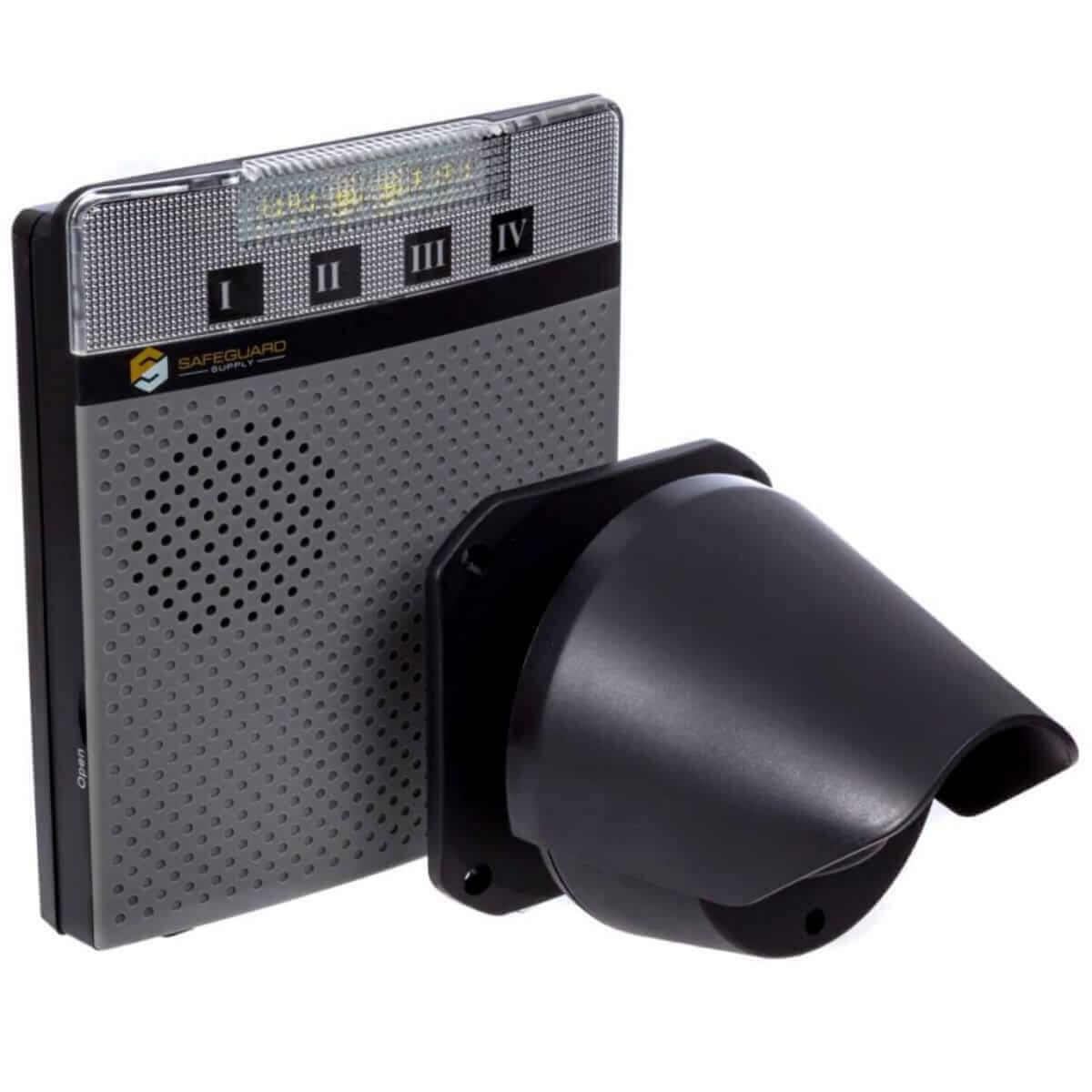
    The two big differences are plugin receivers versus battery-operated receivers, and some have both options. Below are the three different ERA receivers currently offered on secure.1800doorbell.com. The receiver on the left is the ERA-DCRX, which is a plugin receiver using the supplied cord. In the middle is the ERA-RXPG plugin receiver, which plugs directly into a standard wall outlet. On the right is the ERA-VPRX portable door chime receiver with rechargeable batteries and an included charger.

    ERA-DCRX Driveway Alarm Alert Receiver
    ERA-RXPG 4,000 Ft. Range Plugin Door Chime Receiver
    ERA-VPRX Portable Business Doorbell Receiver

    Plugin receivers will plug into a standard wall outlet. As the name implies, battery-operated receivers are powered by batteries.

    At secure.1800doorbell.com, we also have some battery-powered receivers that can be plugged in.

    An example of this is the ERA-VPRX. This portable driveway alarm receiver uses rechargeable batteries with a 6-7 day standby time. The kit includes a wall charger that charges the battery pack while allowing the receiver to continue to function.

    The ERA-DCRX is a desktop receiver with a plug-in transformer, while the ERA-RXPG plugs directly into a standard wall outlet.

    The Range of Wireless Driveway Alert Kits:

    When we discuss range, it is important to note that we are referring to the “line of sight.” This distance is calculated using math using the electrical components of the transmitter and receiver. Understand that in the real world, various factors will reduce the alerting kit’s actual transmission range.

    Terrain, interference, and building materials will reduce the overall transmission range of the driveway alarm kit. Where and how you mount the sensor/transmitter, where in your home or office you place the receiver, and what is in between your receiver and transmitter will all play a significant role.

    For example, we carry the LRA-DR100 Driveway Alarm kit with a range of up to 1,000 ft. While this is a much longer range than you get with some lesser brands, we would not recommend this product for a large office with concrete construction. But if you have an average-sized home, it will work perfectly fine.

    The MURS-BS-KIT is one of the longest-range monitoring kits on the market today with a LOS (line-of-sight) range of several miles. There are some situations where we would 100% recommend this product, like a home with an extremely long driveway, but for an average-sized home, it’s overkill. It’s much more expensive than the LRA-DR1000 and has a shorter battery life. But it’s the go-to kit when you need something over an extremely long distance.

    Several models and brands fall somewhere in the middle. We will discuss all of these models a little further down the page.

    Driveway Monitoring Kits Features

    Finally, the features you need are another deciding factor. Do you need a driveway monitor that works as an intruder alert?

    In our recommendations below, we will cover the features of the specific model, but here, we will list some basic to consider

    • Wireless range – discussed above, this is the line of sight range of the product.
    • Alert sensor type
    • Battery-powered or plugin
    • Can you add more sensors & receivers to the kit
    • Volume, volume control
    • Visual indicators such as a flashing light, LED, or even a strobe
    • Outputs: For example, in the Safeguard Supply ERA-DSDCR kit, the receiver features 4 x 12V DC outputs. This allows you to add strobe lights, sirens, fire alarm bells, and buzzers to the receiver to provide visual indicators and increase volume output.
    • Can the unit integrate with other devices? The ERA-DCRX ( the receiver in the ERA-DSDCR kit) and the Dakota Alert RE-4K-PLUS have a C-FORM relay for integration into other devices.

    Our Driveway Alert Kit Recommendations

    In our next article, we will recommend a driveway alarm kit for each sensor type, with a top recommendation. Stay tuned!

  • How Do Wireless Driveway Alarms Work?

    How Do Wireless Driveway Alarms Work?

    Home security is essential, but it doesn’t come cheap. Property crime is still one of the most common offenses in the US, so it’s no surprise that many homeowners are looking at ways to protect themselves and their homes from criminals. This is where installing a driveway alarm can help add the first line of defense to your property.

    But are driveway alarms reliable and are they easy to install? Do you even need a driveway alarm if you already have a system operating inside your home?

    Of course, you may just want to be notified when a visitor shows up on your doorstep. But, to answer these questions we will look at what components make up a driveway alarm and how it can be useful in preventing your home from being a target.  This article offers a quick overview of “how wireless driveway alarms work.”  If you have any questions, please do not hesitate to call or email us.

    How Does It Work?

    Wireless driveway alarms are devices that send you an alert when someone has stepped foot on your property. This can be especially useful if you have a long driveway where the entrance cannot be seen from the house. Plus, having that extra layer of security gives many homeowners peace of mind not just throughout the day but also at night.

    The alarm is made up of two parts, the transmitter which detects motion, and the receiver. Transmitters are normally placed in a discreet area near the entrance of the driveway and the receiver is kept inside the house in a wall socket. Once the transmitter detects movement, it sends a signal to the receiver which gives off an alert.

    There are of course hardwired versions of driveway alarms, but the main advantages of wireless alarms are that it’s easy to install and the receiver is also portable. Wireless alarms are battery-powered and usually only require an occasional change of batteries when it comes to maintenance.

    Types Of Driveway Alert Sensors

    There are a few different types of sensors that detect motion, and which one you choose will depend on what type of movement you want to monitor. For example, you may want to monitor vehicles only and not people coming down your driveway.

    Passive Infrared Driveway Motion Sensors

    This type of sensor uses heat to sense motion, whether it’s a person, an animal, or a car. Passive infrared sensors have a beam that can sense when something or someone passes through.

    If you’re looking for an affordable option, these types of motion detectors make a good choice. They’re often easy to install and their lower price point makes them an excellent option if you need to secure multiple entry points.

    Magnetic Probe Sensor Driveway Monitors

    As the name suggests, a magnetic probe has sensors that only detect metal objects. This makes it ideal for property owners that do not want to be alerted by anything that moves, such as animals and birds.

    It is a more expensive type of sensor, but it is completely hidden once installed and weatherproof. The magnetic probe has both wired and wireless versions, with the wireless version being simpler to install.

    For long-term protection without the hassle of changing batteries, the wired version of the magnetic probe is worth installing. However, wireless versions can work just as well, with high-quality alarms that can often reach across wide ranges.

    Break-Beam Sensor Driveway Alerts

    These are alarms that have more than one photo beam sensor. For the transmitter to send an alert with the break-beam sensor, all beams must be disturbed/broken at once. This type of sensor is especially useful if you want to detect people but avoid false alarms from animals crossing through the beams, as it is virtually impossible for them to break all the beams at the same time.

    Other Considerations

    When looking at the different types of sensors, you will also need to think about the width of your driveway. Because if the area is too wide, you may find that the sensor may not work. Longer distances will require a stronger sensor for the beam to detect movement, so be sure to check this before buying.

    Another thing to consider is how far away your home is from the entrance of your driveway. What if you plan to bring the receiver with you out into the backyard? Will the signal from the transmitter be strong enough to reach you?

    Distance is not the only factor that can hamper the signal from a driveway alarm. Living in an area with dense forest cover can also be a problem, as some transmitters will have trouble sending signals through trees and woods.

    The thickness of the walls in your home is another area that you should take into account. Although wireless technology is very advanced these days, the transmitter might be unable to penetrate through your property. Should this be the case, then more often than not, the best option would be to use a wired driveway alarm.

    What About Driveway Alarm Cameras?

    For those of you looking for some extra security enhancements, connecting motion-activated cameras can instantly show you a live feed. For homes with long driveways, multiple cameras and sensors will need to be placed strategically to capture all angles. Of course, if you have a shorter driveway, then one sensor should be enough to provide you with a full view of the area.

    Are Driveway Alarms Right For You?

    Burglaries don’t just happen out of the blue. Criminals tend to scope and mark properties in advance before making a move. So it can be especially helpful to have an alert that will draw your attention to early signs of threat.

    Regardless of whether you currently have an internal alarm system set up, driveway alarms will ensure that you are fully aware of what goes on outside of your home. Additionally, it can be a great deterrent for would-be burglars.

    Securing your home doesn’t have to be hard. If you’re looking for more advice on the best wireless alarm systems for your home, then be sure to contact our friendly team for more information.

  • Beefing Up Your Home Security: 5 Benefits of a Wireless Driveway Alarm

    Beefing Up Your Home Security: 5 Benefits of a Wireless Driveway Alarm

    In the United States, only 38% of households have a home security system or security product. While many people want to feel safer in their own homes, many people do not know which security products can help them achieve this. One way that you can improve the security of your home is by installing a wireless driveway alarm. Do you want to learn more about the benefits of a wireless driveway alarm? Keep reading this article for the top 5 reasons why you should get one for your home. One of the biggest benefits of getting a driveway alarm is that it is an effective way to protect the entry points to your home and property. If you have multiple points of entry to your home, you can easily install multiple alarms to make sure the entire perimeter of your property is protected.

    1. Protect Your Entry Points

    This means that you will be able to keep anyone off of your property that is not meant to enter. You can even connect these driveway alarms to your other internal alarms. Whether you want to help identify intruders or unwanted vehicles on your property, or even if you want to help to detect animals, your driveway alarms will protect each entry point of your home.

    2. Cost-Effective Security Option

    Another huge benefit of installing a driveway alarm for your home is that it is a cost-effective security option. Many people do not have enough security measures for their homes because they simply cannot afford them. Even if you cannot afford a complete security system with alarms and cameras, you can get a driveway alarm. You can also find driveway alarms that fit any budget. Whether you choose an alarm with elaborate features or just a basic alarm, there are many different price points that you can select from. Driveway alarms are also cost-effective because they are an upfront investment that will not require a monthly payment. Other alarm systems that are offered by companies require monthly subscriptions to function. If you do not have the budget for this, you can buy a driveway alarm without worrying about hidden costs or other additional fees. Or, you can invest in self-monitored home security systems to avoid monthly fees.

    3. Easy to Install

    Next, driveway alarms are a great option for any homeowner because they are quite easy to install. Often, these alarms also come with several sensors. This means that you can put the sensors around different areas of your property. Whether you have a wireless driveway alarm or a wired alarm, these alarms are set up in just a few minutes. This makes it a great project for people to install on their own, even if they are not experienced with installation. Not only are they easy to install, but they work great with other driveway safety products. For example, you may want to install reflectors, driveway markers, and other products at the same time.

    4. Gives You a Heads Up

    Not only is a driveway sensor a great way to protect the entrance points to your home, but it will also give you a heads-up about any movement on your property. If you have multiple sensors installed, you can keep an eye on several locations on your property. Even if you are not worried about home intruders or other dangers on your property, a driveway alarm can give you a heads-up for any guests who are coming. If you want a little extra preparation when you are expecting company, having a driveway alarm can give you peace of mind. This way, you will not be surprised when someone turns up at your door.

    5. Keep Your Family & Home Safe

    Finally, adding a driveway alarm to your home is an effective solution to help keep your home and your family safe. Because it is so easy to install and is an inexpensive option for home security, it is a no-brainer to purchase one of these alarms. Essentially, driveway alarms act as the first line of defense for your family and your property. If there are any intruders or other dangers on your property, you will be notified promptly and will have more time to prepare and protect yourself. Without a driveway alarm, you may have to rely on other methods to identify potential intruders. If you are not expecting any visitors to your home and you hear your driveway alarm sound, you can make sure the doors and windows of your home are locked and have time for other precautions. You can also quickly look out the window to see if the person on your property is someone you know. If you want an added layer of security for your home, a driveway alarm sensor is an effective way to improve the safety and security of your home and your family.

    Get Your Wireless Driveway Alarm Installed Today

    ERA-DSDCR Long Range Wireless Doorbell Kit the Driveway Informer PRO

    Shop the ERA-DSDCR Long Range Driveway Alarm by Safeguard Supply

    • 4,000 ft range from the outdoor motion sensor to the indoor receiver
    • The driveway sensor detects movement through the zone and sends a wireless signal to the receiver
    • Great for larger areas, penetrates through tough building materials
    • The kit is expandable — add more other sensors like driveway sensors, indoor motion sensors, pushbuttons, and more. Add more receivers to include the ERA-VPRX portable receiver with rechargeable batteries.
    • Transmitter/sensor powered by AA batteries with a life of up to 12 months. The receiver plugs into a standard wall outlet.
    Learn More About the ERA-DSDCR Home security is not something that you should take lightly. While not everyone needs a full security system, having a driveway alarm is very beneficial to any homeowner. What is a wireless driveway alarm? It is something that protects the entry points to your home, is easy to install, and will protect you and your family from intruders. Whether you want to install a driveway alarm or another type of security feature, you must buy these from a reliable and professional company. If you are looking for driveway sensors for your home or wondering “Do I need a wireless driveway alarm”, 1800 Doorbell can help! We provide home security features from entrance alerts to driveway alarms and more. Contact our team to learn more about the best wireless driveway alarm for home security and to get your driveway alarm installed today!
  • A Guide to Using Driveway Alarms for Your Business

    A Guide to Using Driveway Alarms for Your Business

    Burglary is building across the United States. Almost one million burglaries took place in the country in 2019. More than 300,000 businesses were affected. 

    It is essential that you take immediate steps to improve the safety of your business. But you don’t need to break the bank in order to do so. Driveway alarms are a cheap and easy tool to increase your security. 

    What businesses must get driveway alarms? What different alarm systems are there? How can you incorporate an alarm into your system, and what should you do when yours goes off?  Use this article as A Guide to Using Driveway Alarms for Your Business.

    Answer these questions and you can maintain your security for years to come. Here is your quick guide. 

    Determine Your Security Needs

    Before you make any changes to your security system, you should evaluate how your security is currently functioning. Look into the alarm system in your business, and test the locks on your doors and windows. 

    Think about what threats you need to prevent. Thieves may try to break into your building, but you may encounter theft from your own employees. Talk to your employees about what they encounter, and touch base with a security professional. 

    As the name suggests, driveway alarms indicate when a threat is approaching a roadway. It is best for businesses that rely on roadways for their operations, including for deliveries. It is also great for businesses located near backroads, which are common sites for criminal activities.  

    A driveway alarm has a transmitter and a receiver. The transmitter is what detects motion or heat and then sends a signal to the receiver. The receiver is what notifies you that a threat is approaching your business. 

    This means that there has to be minimal interference between the two components. Other signals can throw the receiver off. This also means that you must put the receiver in a location where you can hear the driveway motion alarm. 

    Pick the Right Driveway Alarm System 

    There are three main kinds of driveway alarms. A rubber hose alarm activates when a person or vehicle applies pressure to the hose. It triggers a loud chime or bell that you can hear while you stand inside your business. 

    An infrared alarm senses heat or motion. It can detect people and their vehicles, but a false alarm can get triggered if an animal runs across its path. You must put yours at an angle where animals cannot reach it. 

    A magnetic probe alarm triggers when it detects moving metal. This is perfect if you are concerned about unwanted vehicles. You can bury a probe underground, and it can last for years with minimal maintenance. 

    You may have heard of a wireless driveway alarm. This is any type of driveway alarm that is not connected to anything.

    If you need to spread your sensors apart from your alarm, you should invest in a wireless device. You can get a solar driveway alarm that powers itself through a small panel. 

    You can add accessories to your alarm like a strobe light or speaker. You can also change the noise of your alarm. 

    Incorporate Driveway Alarms Into Your Security System 

    Driveway alarms are one component of your security system. You should follow several distinct business security tips

    Some thieves will be deterred when they hear a business’s alarm go off. But others may hide nearby or try to rush into your building. 

    You can place security cameras along your roadway. Connect them to a monitor inside your office so you can see if anyone is approaching without going near your windows. 

    Install shatterproof glass on your doors and windows. It is essential that you do this for any windows that face your roadway. Put blinds over the windows to prevent a thief from seeing into your building. 

    Move important objects toward the center of your office. Financial documents and hard assets should go into a safe. If you sell weapons like guns or knives, they should be secured in cases located away from the windows. 

    Tell only a few people that you are installing driveway alarms. An employee may leak the information to a thief, which they can use to modify their plan to break into your business. The more secretive your system is, the more effective it will be. 

    Respond to an Alarm 

    Don’t panic if your driveway alarm goes off. Take a look at your security cameras, or look out your window if you are close to the road.

    If you don’t see anything, wait for a minute to see what happens next. You may have a false alarm, but a thief may be triggering your alarm to lure you out of your building. Tell your employees to remain calm and secure important objects. 

    If you do have a security threat, evacuate to a place where you will be safe. This may mean that you will have to hide somewhere in your office.

    Get to that location immediately and call 911. Remain silent until help arrives. Your alarm may draw someone else to your business, and you can ask them for help if they are okay. 

    Drive Away Thieves With Driveway Alarms 

    Driveway alarms are a great tool for easy security. If you are located near roadways or reliant on deliveries, you should get at least one alarm. 

    Rubber hose alarms are perfect for any business looking for simple technology. Infrared alarms detect movement, while magnetic alarms are best for detecting vehicles. 

    Use your alarms as one part of your general security system. Take them seriously and respond promptly when they go off. 

    Don’t hesitate to secure your business. secure.1800doorbell.com provides the best alarms at the click of a button. Contact us today. 

  • Reviews and Advice on Purchasing a Wireless Driveway Alarm System: Driveway Alarm Reviews

    Reviews and Advice on Purchasing a Wireless Driveway Alarm System: Driveway Alarm Reviews

    At secure.1800doorbell.com, we carry a large assortment of driveway alarm products, and it’s easy to get overwhelmed by the number of products featured in our driveway alarm shop. This article offers driveway alarm reviews to help you choose between the top listed products on our website.

    The Driveway Informer 2.0 – Wireless Driveway Alarms Like the ERA-DSDCR Keeps Intruders Away Model DI2000S-A – $119.98

    ERA-DSDCR Wireless Driveway Alarm Kit by Safeguard Supply
    ERA-DSDCR Wireless Driveway Alarm Kit by Safeguard Supply

    At 1800Doorbell.com, our most popular (and most recommended) driveway alarm is the Driveway Informer 2.0 by Safeguard Supply.

    It’s the best because it easily satisfies all the important requirements–and excels in all of the categories above. This is an easy-to-use, yet fully-featured, alarm solution that is also cost-effective. We’ve received tons of positive feedback about the DI2000S-A.   We urge you to compare the Driveway Informer feature list below with your requirements. After that, we won’t be surprised if you decide that the Security 2020 (Model DI2000S-A) is the best solution for you.

    A similar driveway monitor is the DCMA-4000 by Dakota alert. In most ways, the kit works the same as the Safeguard Supply ERA-DSDCR with the following differences.

    • DCMA-4000 sends a driveway monitor alert up to 5,000 ft. The ERA-DSDCR sends the driveway alert up to 4,000 ft.
    • The ERA-DSDCR has 4 x 12v DC outputs to add accessories such as a driveway bell, a siren, a strobe light, or a piezo siren with volume control.
    • The ERA-DSDCR has 1 x C-form relay for connection to external home security alarm products. The DCMA-4000 does not.
    • The driveway monitoring system zone is the same for both products.

    Top 10 Driveway Informer features:

    • Covers the distance with an amazing range of 4000 feet.
    • Flexible with a 360-degree antenna allows line-of-sight adjustments. While direct line-of-site is ideal, the powerful transmitter should get a 4000-foot range in most cases.
    • Customizable for your needs, with up to four monitoring zones and unique audio alerts for each.
    • Expandable with an extra speaker option for an additional location (sold separately).
    • Integrates with your other automated home security products with an accessories connection for items like the Siren, Strobe, or X-10 Interface.
    • Built-in counter with digital display.
    • A long-life battery that handles lots of traffic (2-year life at 500 rings per day!)
    • The user-friendly system is simple to use and install.
    • A cost-effective system is manufactured to tough Military specifications. This driveway alarm will stand up to the elements. The Driveway Informer driveway alarm delivers great value and is built to last.

    Top 10 LRA-DRV1000 – Wireless Driveway Alert Kit by Safeguard Supply – $59.98:

    LRA-DRV1000 Safeguard Supply Wireless Strobe Driveway Alarm Kit W/ 1000 ft. Range View 2
    LRA-DRV1000 Safeguard Supply Wireless Strobe Driveway Alarm Kit W/ 1000 ft. Range

    The LRA-DRV1000 is a driveway alert kit in the LRA series of products by Safeguard Supply.  The outdoor-rated PIR sensor detects movement and sends a wireless signal to a compatible receiver.  In this kit, the receiver is the LRA-DCRXA that features four zones, volume control, and best of all, a bright flashing strobe light you can turn on and off.  Like all products in the LRA series, all transmitters and receivers are compatible with one another so you can expand the system by adding more transmitters and receivers to the kit.

    • 1,000 ft. range provides plenty of power to ensure your driveway alarm works when you need it to.
    • Expandable through adding as many receivers as you want.  Safeguard Supply offers different receiver types to include a plugin strobe receiver and a portable receiver.
    • Bright strobe light.  The receiver allows you the ability to use Sound Only (w/ volume control), Strobe Only, and Sound and Strobe together.

    Driveway Signal Bell Kit 1 Model 8DSBS1  $149.98

    Driveway Signal Bell Kit 1 8dsbs1 V 2 1

    This Signal Bell Kit is a replica of the old-time gas station driveway bell–the type that rings when somebody drives over the black rubber hose on the ground across a driveway. Customers often comment that this type of signal bell was used by full-serve gas stations in the 1950s. It can give your business a vintage or “old-timey” feel, and it’s simple to assemble. The ding-ding sound is loud enough to be heard from anywhere–even in a noisy and busy environment. This Driveway Signal Bell Kit won’t work on a gravel driveway, however.

    • Used on asphalt or concrete only
    • Plugs into an electrical outlet
    • Printed with a patent date of May 12, 1959, listed on the bell’s back and the packaging
    • A sensitive ball system works with up to 300 ft. hose

    MURS-BS-Kit Wireless Driveway Alarm Model MURS-BS-KIT $151.88

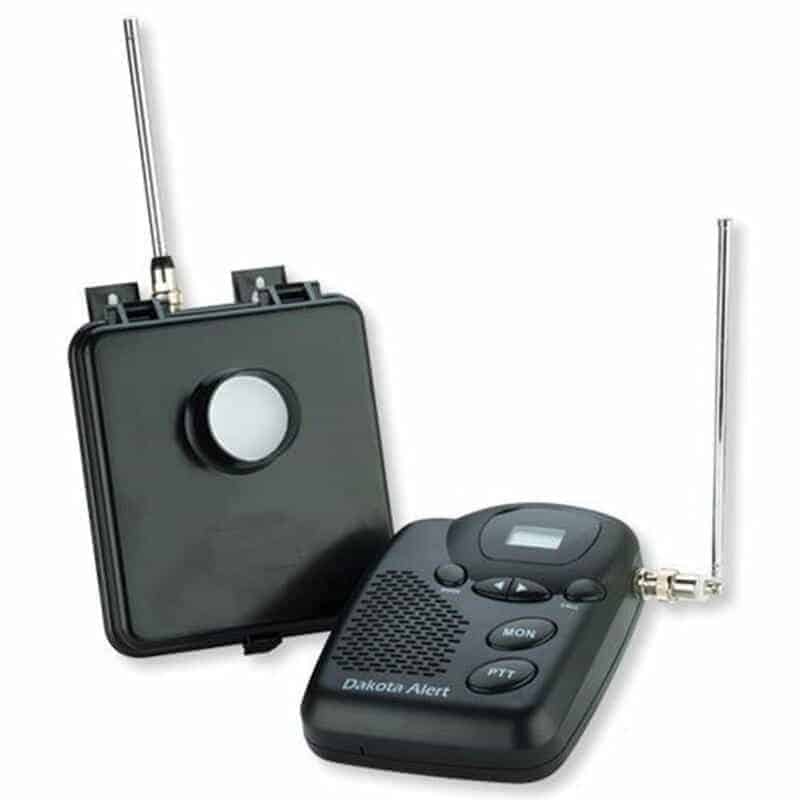
    MURS-PIR-DRIVEWAY-ALERTS Dakota Motion Based Long Range Driveway Alarm – Base Station ReceiverWhen you have a long driveway or far-away gate, or even a corral entrance that you would like to monitor for activity, this long-range system was made for you. Users of this alert typically find it useful that the receiver and monitor work on the same frequency that handheld walkie-talkies use. If you already own or want to purchase walkie-talkies you can have a multi-use device to communicate over large properties like a big storage area or ranch.

    • Compatible with walkie talkies
    • Several-mile range
    • Battery-powered transmitter uses (6 AA) which should last a year under most conditions
    • Detects movement within the zone
    • Base plugs into an electrical outlet
    • Base station with 4 zones with unique vocal alarms

    Whether you’re interested in improved security or just need a warning before visitors turn up at your door, 1800Doorbell.com has many driveway alert options to fit your needs. These alarms can serve as a nice supplement to your home or business security system. Give us a call if you need assistance or have questions, before or after your purchase. Our customer service specialists are happy to help you choose the best solution for your property. We’re also here if you need support during installation, troubleshooting advice, or information about accessories. Contact 1800Doorbell.com today.