1800doorbell

Tag: extender

  • Is it Possible to Make a Doorbell Sound Louder?

    Is it Possible to Make a Doorbell Sound Louder?

    Struggling to Hear Your Doorbell? Here’s How to Fix It

    We’ve all been there—you’re expecting a package delivery or guest, but your wired doorbell is barely audible from the back of the house. Maybe you’ve missed important deliveries or kept visitors waiting simply because you couldn’t hear that faint chime. The good news? You don’t need to replace your entire doorbell system. Doorbell extenders offer a straightforward solution that works with your existing setup.

    Whether you’re dealing with a large home, background noise, or hearing difficulties, a doorbell extender can bridge the gap between your front door and wherever you spend your time. These devices essentially give your current doorbell a voice that carries throughout your entire home.

    In this guide, we’ll walk through the different types of doorbell extenders available, help you choose the right one for your situation, and show you how to set it up. We’ll also tackle the most common questions people have about extending their doorbell’s reach.

    The installation process is simpler than you might think—no need to call an electrician for most setups. Whether you’re tech-savvy or prefer straightforward solutions, there’s likely an option that will work for your home and budget.

    Ready to never miss another doorbell ring? Let’s explore how doorbell extenders can solve your hearing problems once and for all.

    Understanding Doorbell Extenders

    A doorbell extender works like an amplifier for your existing doorbell system. Think of it as adding extra speakers throughout your home that all respond when someone presses your doorbell button. The beauty is that you keep your current doorbell exactly as it is—the extender simply multiplies its reach.

    There are two main approaches to extending your doorbell’s range, and the right choice depends on what type of doorbell you currently have:

    Sound-Triggered Extenders: These clever devices literally “listen” for your doorbell’s chime and then repeat that sound through additional speakers. They work great with traditional mechanical doorbells that produce that classic ding-dong sound.

    Wire-Connected Extenders: These tap directly into your doorbell’s electrical circuit, detecting when current flows through the system. They tend to be more reliable and work well with both traditional and modern doorbell systems.

    Both types can work with multiple receivers, so you can place chimes in your basement workshop, upstairs bedroom, or anywhere else you might not hear the original doorbell.

    The result is a doorbell system that follows you around your home, ensuring you’ll always know when someone’s at the door.
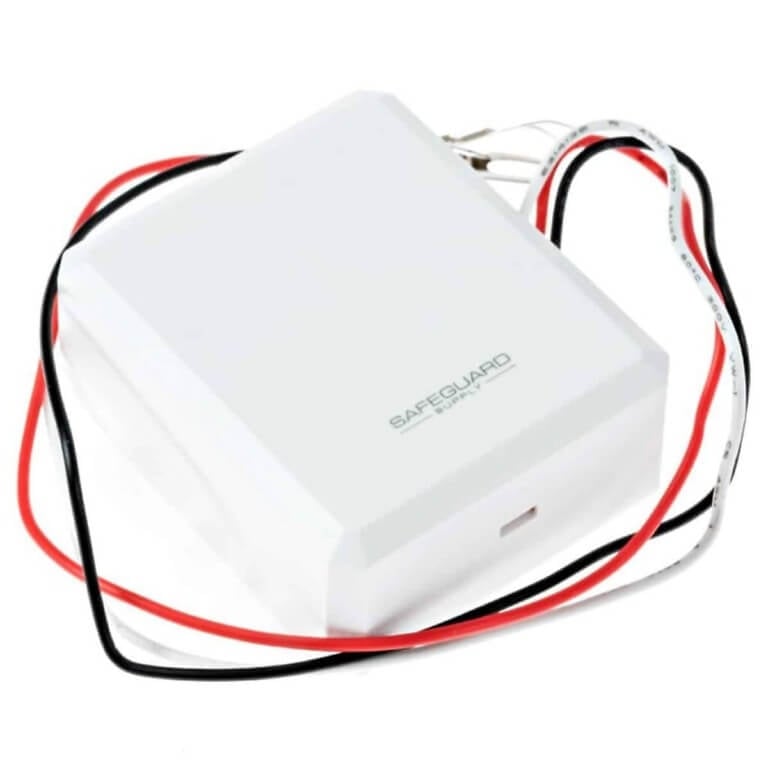
    ERA-EXTX Door Bell Chime Extender
    ERA-EXTX Doorbell Extender
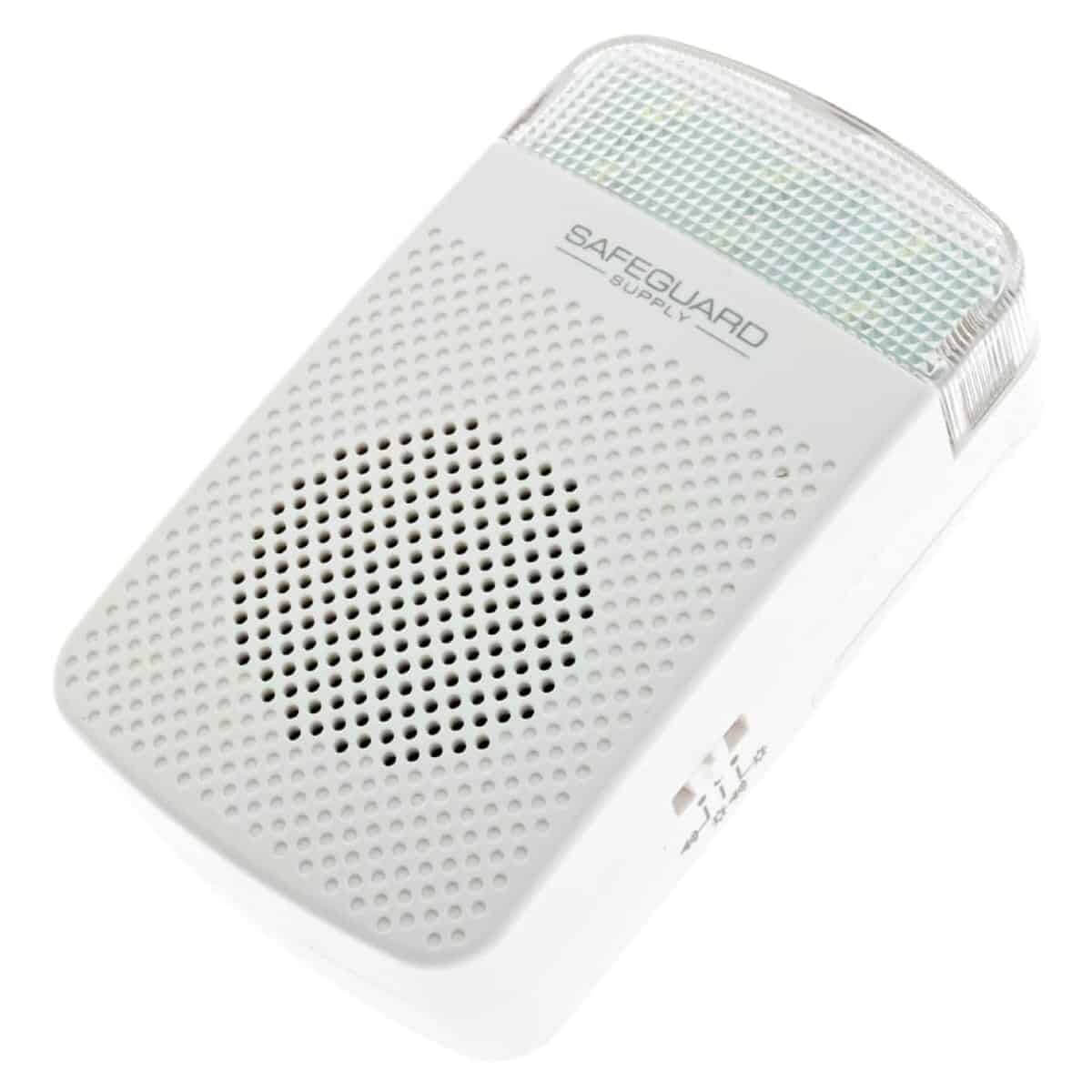
    ERA-RXPG Plugin Receiver for Stores Operation Mode Toggle Switch
    ERA-RXPG Plugin Receiver with Strobe

    Why Doorbell Extenders Make Sense

    The practical benefits of a doorbell extender go beyond just making things louder. In larger homes, even a loud doorbell can get lost in the distance between floors or around corners. If you work from a home office, spend time in a basement, or simply enjoy relaxing in a back bedroom, your current doorbell might as well be silent.

    Modern doorbell extenders also offer features that weren’t available in the past. Many include adjustable volume controls, so you can set different levels for different rooms. Some offer multiple chime options—maybe you want the traditional ding-dong in the living room but prefer a simple beep in your office. Visual alerts like flashing lights can be incredibly helpful for anyone with hearing difficulties or when you’re in a noisy environment.

    How the Technology Works

    Behind the scenes, a doorbell extender creates a simple communication network in your home. The basic setup involves a transmitter that connects to your existing doorbell system and one or more receivers that you place where you need to hear the chime.

    When someone presses your doorbell button, your original chime sounds as usual. Simultaneously, the transmitter detects this activity—either by sensing the electrical current or hearing the sound—and immediately sends a radio signal to all connected receivers. These receivers then produce their own chime, creating a coordinated announcement throughout your home.

    The whole process happens so quickly that the sounds appear to be simultaneous. Most systems use standard radio frequencies that work reliably through walls and floors, typically providing coverage for several thousand square feet.

    Weighing Your Options

    Like any home improvement, doorbell extenders have both advantages and limitations worth considering. On the positive side, they work with virtually any existing wired doorbell, the installation is usually straightforward, and you can expand the system by adding more receivers as needed.

    The main considerations involve placement and power. Plug-in receivers need to be near electrical outlets, which might limit where you can put them. Battery-powered options offer more flexibility but require occasional battery changes. Some systems also require the transmitter to be wired into your doorbell circuit, which might need an electrician if you’re not comfortable with electrical work.

    Range can be another factor in larger homes or those with thick walls, though most quality systems provide adequate coverage for typical residential situations.

    Common Questions Answered

    What’s the simplest way to make my doorbell louder?

    A doorbell extender with plug-in receivers is usually the easiest solution. You can have additional chimes throughout your home without rewiring anything. If you want to keep things even simpler, look for sound-triggered extenders that don’t require any connection to your existing doorbell wiring.

    How far can I extend my doorbell’s reach?

    Most residential doorbell extenders provide reliable coverage up to 1,000-4,000 feet, depending on the system and your home’s construction. This is typically more than enough for even large homes. If you have an unusually large property or outbuildings, look for commercial-grade systems with extended range capabilities.

    Can I add a chime to my second floor?

    Absolutely. This is one of the most common uses for doorbell extenders. Simply place a receiver upstairs wherever you spend time. Wireless receivers make this especially easy since you won’t need to run any cables between floors.

    Is it okay to have multiple chimes going off at once?

    Modern doorbell extenders are designed to handle multiple receivers without timing issues. Unlike trying to wire multiple traditional chimes (which can cause problems), wireless extender systems coordinate all the chimes to sound together properly.

    Can I adjust the volume on my doorbell?

    While most traditional wired doorbells don’t have volume controls, doorbell extenders often do. This means you can set the perfect volume level for each room where you place a receiver.

    What else can I do to improve my doorbell’s effectiveness?

    Beyond extenders, consider the location of your current doorbell chime. Sometimes moving it to a more central location helps. For outdoor doorbells, ensure the button mechanism is working properly—a weak button press might not trigger the chime reliably. Also, if you have a battery-powered doorbell, fresh batteries can make a significant difference in performance.

    Making the Right Choice

    Missing visitors and deliveries because you can’t hear your doorbell is frustrating, but it’s a problem with a straightforward solution. Doorbell extenders offer a practical way to extend your doorbell’s reach without replacing your entire system or running new wires throughout your home.

    The key is choosing the right type for your situation. If you have a traditional mechanical doorbell and want the simplest installation, a sound-triggered extender might be perfect. If you want the most reliable performance and don’t mind a bit of wiring, a hardwired extender could be the better choice.

    Either way, you’ll end up with a doorbell system that works throughout your entire home, ensuring you never miss another important visitor or delivery. For more information about specific extender options, check out our doorbell extender selection.
  • How to Make an Old Doorbell Louder

    How to Make an Old Doorbell Louder

    Since secure.1800doorbell.com started back in 1998, we continue to get a common question, “How Can I Make my Old Doorbell Louder?” This is a great question

    How Wired Doorbells Work

    Most wired doorbells create sound when an internal hammer strikes a small metal plate inside the wired doorbell chime mechanics. When the outside wired push button is pressed, it caused the hammer to strike the metal plate. Most wired doorbells have two hammers and two metal plates. When the doorbell is triggered, the first hammer strikes a plate creating the “ding” sound and a second hammer strikes a second plate to create the “dong” sound. Together, this creates the standard “ding-dong” sound when a typically wired doorbell is activated. If you have a second push button connected (usually on a back or side door), only one of the hammers strikes a plate to create the one-tone, “ding” sound.

    Wired Doorbells Aren’t Very Loud

    Noting the paragraph above (make an old doorbell louder), the sound is created from a very simple process; a small hammer striking a metal plate inside the doorbell mechanism. It’s not hard to understand why the common wired doorbell isn’t very loud. Most wired doorbells will create a sound in the range of 75-85 dBA. It’s usually loud enough to hear in the basic areas of your home, but if you’re down in the basement or your bedroom watching television, they just aren’t loud enough to hear.

    Because of the way wired doorbells are made, there’s not a lot you can do to increase the sound from the wired doorbell itself. Some manufacturers can play with the style of the doorbell in an attempt to create resonance chambers that “echo” the sound a little more, but that might only increase the sound by a few decibels. We go back to the original question posed in this article, how to make a wired doorbell in my home louder?

    There is an easy solution and that’s called a “doorbell extender.” These are easy-to-install wireless products that allow you to hear your wired doorbell throughout your home or office. These products offer the benefit of getting to keep the pretty push-button outside to greet visitors and the attractive doorbell in your foyer while making the system easier to hear throughout your home.

    What is a Wired Doorbell Extender

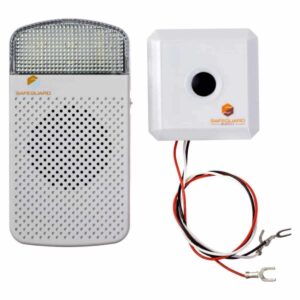
    Wired doorbell extenders” work alongside your traditional wired doorbell. When the wired doorbell in your home is triggered, the doorbell extender will transmit a radio signal to a compatible receiver. This compatible receiver is either a plugin or battery-operated wireless door chime receiver that will play a melody or tune when triggered by the transmitter. Virtually all wired doorbell extenders consist of two components, the transmitter, and the receiver.

    There are two different flavors of transmitters. One version of the transmitter features a small microphone that essentially listens for a doorbell sound. When this sound is detected, it triggers the unit to send the radio signal to the receiver, which then plays the chime sound. The transmitter is typically mounted near the wired doorbell (usually in the foyer of your home) with the small microphone being close enough to hear the doorbell sound.

    The major drawback of this type of system is the occasional false alarm produced when the unit “thinks” it hears a doorbell sound. A doorbell sound on the television, music, or even a random noise it interprets as a doorbell sound could trigger the unit to send the radio signal.

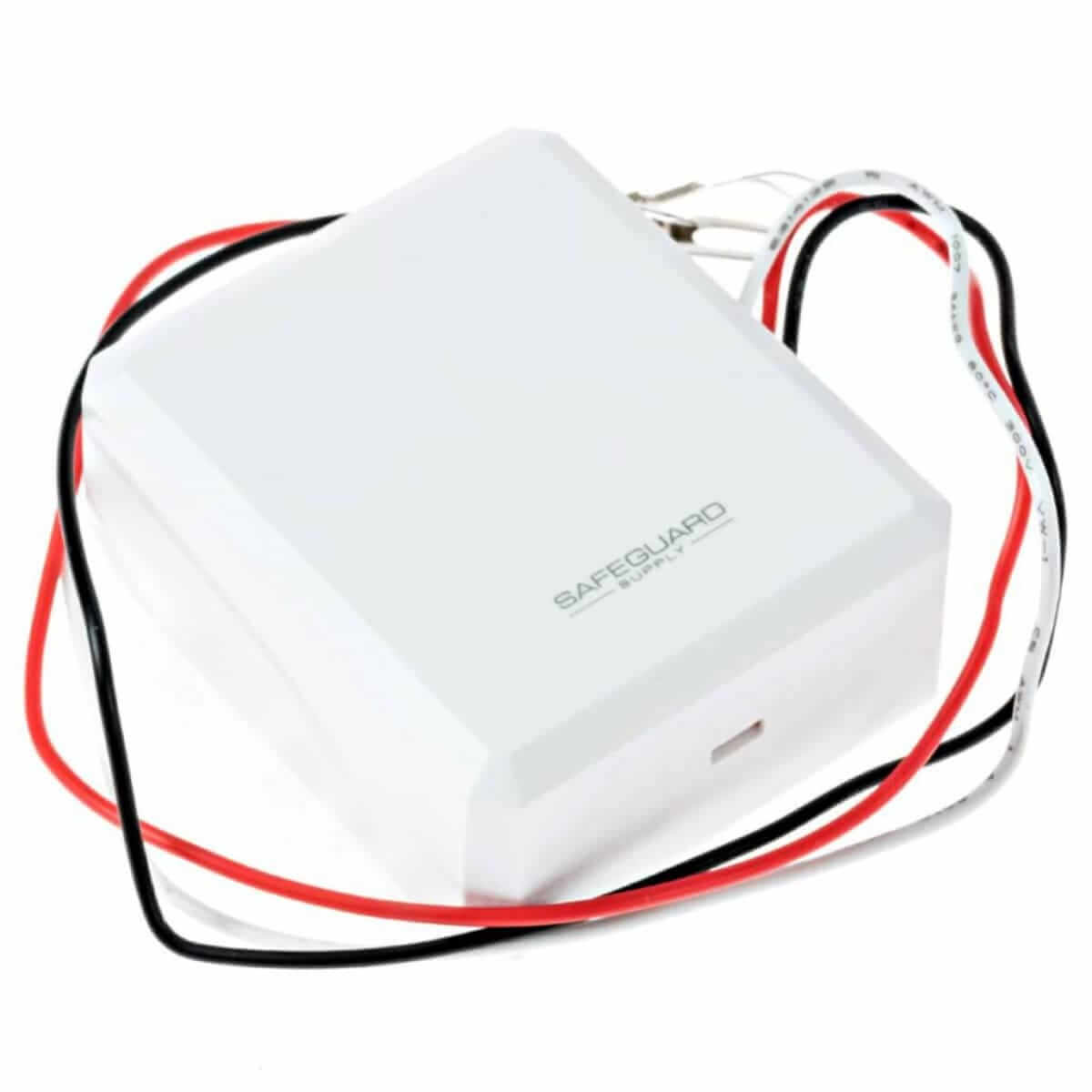
    The second type, and the type we carry here at secure.1800doorbell.com, wires into the existing wired doorbell in your home. The same electrical signal that triggers the wired doorbell hammer to strike the metal plate also triggers the transmitter to send a radio signal. This system tends to be much more reliable as it only triggers when the doorbell itself is triggered.

    How Basic Wired Doorbells Are Wired In Your Home

    To understand the wiring on these products, let’s break down a few wired doorbell terms. First is the wired doorbell push button. This is the button people will see mounted next to the front door of your home. They may be lighted or non-lighted, and all the doorbell extenders we feature on secure.1800doorbell.com work with 2-wired doorbell push buttons (one for the front door and one for the second door, for example.)

    Next is the wired doorbell. This is the unit that produces the actual chime sound and is typically hanging in the foyer of your home or in a hallway. A standard wired doorbell that plays the ding-dong sound work well with the doorbell extenders we feature on this site. Intercom-based doorbell systems and most video doorbells tend not to work well with a wired doorbell extender.

    The third, and final major piece, is the wired doorbell transformer. This is a small device that wires into the 120 voltage of your home and converts the power into a lower voltage the wired doorbell can handle, usually between 12V-16V. The electrician who installed the doorbell system in your home may have installed the doorbell transformer in the garage, in the attic, or even in the wall behind the wired doorbell.

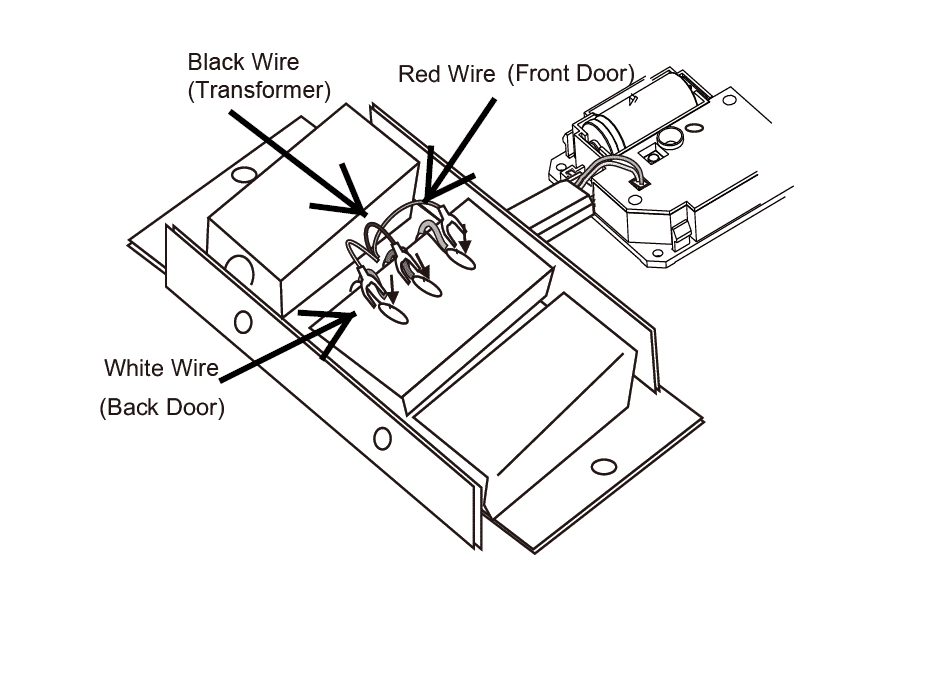
    Wired doorbell systems in your homework in a loop and when the power supply is interrupted, the disruption causes the hammer in the doorbell to trigger. When lifting the cover off your wired doorbell you will see three terminal screws. These screws are typically labeled something like “front,” “second” and “terminal” (they may be labeled differently.) One of the screws is for the front doorbell push button wire, another is for a second door push button wire, and the third is for the wired doorbell transformer. The front doorbell push button will have two wires; one wire into the “front” screw on the wired doorbell, and the other connects to a wire from the wired doorbell transformer. On the doorbell transformer, one wire will connect to the “terminal” screw on the wired doorbell and the other wire will connect to the “font” wire coming off the second wired doorbell push button.

    How to Wire a Doorbell Extender

    As mentioned earlier in this article, a doorbell extender kit consists of two main components; a transmitter and a receiver. The transmitter is a small device with three wires coming out of it. One of the wires connects to the “font” screw on the wired doorbell, another connects to the “back,” or “second” screw on the wired doorbell, and the third connects to the “terminal” screw on the wired doorbell.

    The transmitter comes with a high-powered lithium battery that should last 2-4 years before replacement. This battery is used to power the transmitter to send a radio signal to the compatible receiver when triggered. Once wired into the wired doorbell, the transmitter is may be mounted on top of the doorbell cabinet, beside it, or if there’s enough room, hidden inside the cabinet.

    How to Wire A Doorbell Extender to a Wired Doorbell

    When a visitor pushes the doorbell button outside, the increase in amperage running through the circuit will cause your wired doorbell to chime as usual, and at the same time, trigger the transmitter to send a wireless signal to the receiver.

    Ways to Increase the Sound of a Doorbell Extender

    The benefit of using wireless systems in your home is that the receivers tend to have more features than the old doorbell that might be installed in your home. For example, models on 1800doorbell feature volume control, strobe light, and the choice of different sound options. In addition to this, the two models we carry have a range of 1,000 ft. (LRA-EXTX) and 4,000 ft. (ERA-EXTX) to guarantee the product has the power needed to traverse long distances and through the building materials found in your home. Another benefit is that you can add additional receivers throughout your home.

    For example, you could place a plugin receiver in the kitchen, the garage, the basement, and the upstairs bedroom to ensure you don’t miss a visitor to your home. As long as the receiver is within range, the unit will trigger when a visitor pushes the push button outside your home.

    Another important aspect is the fact that you can mix and match receiver types, along with different transmitters and sensors to augment your system as long as they are in the same model line. For example, if you were to purchase the ERA-EXKIT, you can add desktop receivers, motion sensors, wireless push buttons, driveway monitors, as well as more plugin receivers to grow your system.

    Choosing the Right Doorbell Extender System

    There are two different model lines or series of doorbell extenders featured on 1800doorbell. For the most part, the systems are very similar and come down to the wireless range of the system.

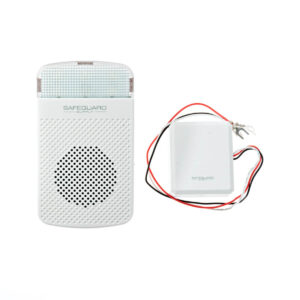
    ERA-EXKIT Wireless Door Chime Extender

    If you have a larger home or office or want to put a receiver in a basement or detached garage, you may want to use the ERA series of products.

    The ERA series of products by Safeguard Supply was created to cater to the commercial industry. Commercial locations tend to have larger distances to traverse and thicker building materials such as brick, concrete, and even steel rebar, and the 4,000 ft. wireless range of this series makes it ideal. If you are ever thinking of adding additional sensor types, like an outdoor driveway monitor, and you have a larger yard, you may also want to go with this product line.

    LRA-EX1000S and LRA-EX1000 Wireless Doorbell Extenders

    The wireless range of both of these kits (from the transmitter to the receiver) is up to 1,000 ft. Keep in mind, that whenever we mention a wireless range, this is always the distance measured in a laboratory. This line of sight is measured with zero interference and although all real-world usage of the product will have interference, this product is ideal for smaller and mid-sized homes. Since the extender is located inside the home, the 1,000 ft. range should work for most homes of this size. The difference between the ERA-EX1000S and the ERA-EX1000 is the receiver type, plugin, and desktop respectively.